Search
 The Employer Handbook Blog
ADA reasonable accommodations for these Looney Tunes


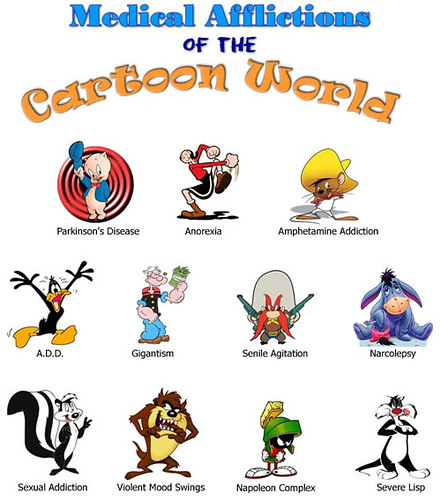
Where did you think I was going with this post?
(And you call yourselves Human Resource professionals).
Just kidding. You know I love you.

Where did you think I was going with this post?
(And you call yourselves Human Resource professionals).
Just kidding. You know I love you.
In Centucky Kentucky, it’s not retaliation to fire employees who complain about sexual favoritism.
Then again making apple-pie moonshine and using a butcher cleaver to slice off the arm of a Detroit gangster isn’t frowned upon either. At least, that’s what watching Justified teaches me.
But even in Kentucky, they have laws. No, it’s true.
After the jump, you’ll see a KY federal court’s rationale for the latest sexual-favoritism ruling. And I’ll provide some tips for dealing with employees who complain about cushy assignments given to employees who get freaky with management.
I assure you that what inspired this post had nothing to do with the facts of the case; namely:
- the female plaintiff claiming that her female-lawyer boss groped her; or
- the plantiff’s Facebook posts about pole-dancing and calling her breasts “milk factories”.
That’s all purely coincidental. Indeed, it sounds like something out of Costanza’s desk drawer.
Actually, I’m posting this to share a very well-reasoned social-media-discovery judicial opinion that is a big win for employers. You’ll see what I mean after the jump…

In anticipation of the current flu season, you decided to mandate that all employees get immunized. The problem is that one of your employees, a vegan, who won’t ingest any animal or animal by-products — especially not the microwaveable scrapple-wrapped tripe pops I keep in the lunchroom freezer — refuses to get a flu shot because it’s against her religious and philosophical beliefs.
What’s her religion, you ask? Why veganism, of course.
 Same s**t; different year.
In 2010, an Ohio temp agency paid $650K as part of a Consent Agreement with the EEOC to settle claims that it had used code words in considering and assigning (or declining) job applicants. The code include words such as “chocolate cupcake” for young African American women, “hockey player” for young white males, “figure skater” for white females, “basketball player” for black males, and “small hands” for women in general.
Fast forward…
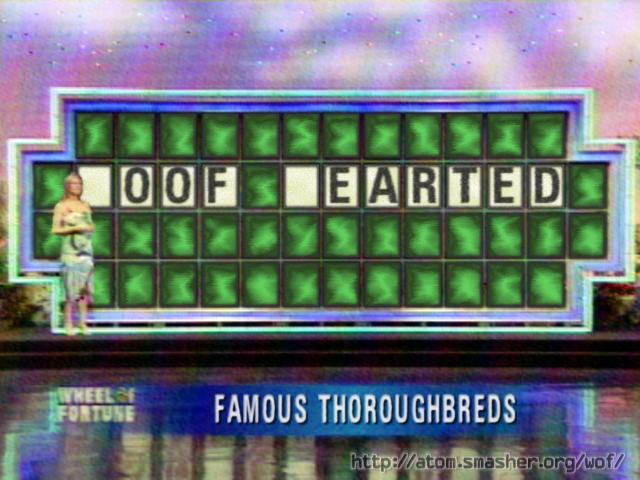 The Employer Handbook generally likes to end the year on a classy, high note. Consequently….
The Smoking Gun reports here that, earlier this month, the Social Security Administration issued this 5-page formal reprimand to an employee for his “awful and unpleasant” flatulence.
{As opposed to my ambrosial flatulence. So lovely.}

Thus far, you’ve managed to keep your equal-employment-opportunity nose clean. Good for you. In fact, with the economy the way it is, combined with the dwindling resources available to our federal agencies — including the U.S. Equal Employment Opportunity Commission — your odds of facing a federal investigation based on a complaint of discrimination or harassment are fairly slim.
But…
On Tuesday, the EEOC announced its Strategic Enforcement Plan. And within that plan, you’ll find six areas of EEOC focus over the next four years:
“Oy, Sharon! Will you help me out here?”
“Come on, Ozzy! Yellow in the front, brown in —.”
“Bloody hell, Sharon! I’m trying to comprehend this federal court decision from the District of Minnesota.”
You have an employee who hurts herself on the job and becomes disabled. Although she recovers to the point where she can perform the essential functions of her position without the need for accommodation, she requests a transfer to another one of your facilities so that she has better access to ongoing medical treatment.
Does the law require you to grant that transfer?
In this recent case (Sanchez v. Vilsack), the Tenth Circuit Court of Appeals ruled that the Rehabilitation Act, which prohibits discrimination in federal employment, and courts interpret like the Americans with Disabilities Act, may require this.