Search
HR Is Not a Theology Department. Here’s How to Review Religious Accommodation Requests.
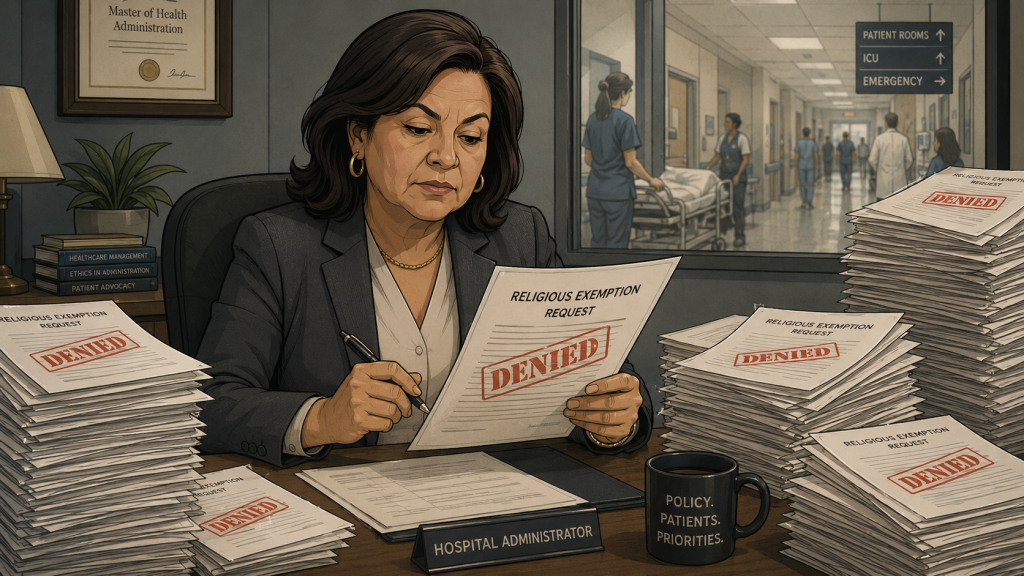
HR can ask an employee to explain a religious conflict. The trouble begins when the review turns into a theological examination.

HR can ask an employee to explain a religious conflict. The trouble begins when the review turns into a theological examination.

A job applicant told a polygraph examiner that she consumed ayahuasca as part of her religion. An agency adjudicator labeled it “recent illegal drug use,” and the tentative job offer disappeared.

An employee requested a religious exemption from a vaccine mandate but initially refused to answer most of her employer’s follow-up questions. By the time she completed the form, the employer said its decision was final.
You’ve probably seen the headlines. Two flight attendants fired for posting about the Equality Act, a Ninth Circuit reversal, and the usual takes about religion vs. LGBTQ rights in the workplace. Here’s what those takes mostly missed.



Granting a religious accommodation request and then placing the employee on indefinite unpaid leave can itself be retaliation. A federal district court in Illinois recently refused to dismiss a Title VII religious discrimination and retaliation lawsuit built on exactly that theory.

Who would have guessed that the most interesting religious discrimination issue of the week would show up on a Major League Baseball field?

A teacher gets twice the students, a warning for observing a religious holiday, and a misconduct investigation after venting on a union Facebook page. She loses every claim.

Sometimes the facts supporting a religious accommodation denial are so strong that skipping the accommodation process doesn’t sink you. This healthcare employer found that out — and the 9th Circuit’s reasoning tells you exactly why.

A school district police officer posted a prayer on Facebook criticizing his supervisors. He was fired. His lawsuit raised constitutional claims, a retaliation claim, and a religious discrimination claim. The Fifth Circuit affirmed dismissal on all of them, and the reasons why are a useful lesson for any employer.