HobbyLobbyStowOhio.JPGI teased it in Friday’s post.

Last week, a Michigan federal court held (here) that a workplace dress code that requires one gender to conform to a sex stereotype (e.g., men must wear suits, and women must wear dresses) is “direct evidence” of sex discrimination. But, the employer in the Michigan case refused to waver from the letter of the dress code, and avoided a sex discrimination claim under Title VII.

Why? Because Hobby Lobby.

Continue reading

Grand Palace dress code

Just for today, head on over to LinkedIn, and check out my post about how strict application of your dress code could result in a nasty sex discrimination claim.

(And a little teaser for Monday — I’ll explain why the Supreme Court’s Hobby Lobby decision may trump Title VII and allow some employers to discriminate).

Aroldis Chapman 2010 (3).jpg

It is fairly common for Major League Baseball pitchers to have music played when they enter a ballgame. For example, the great Mariano Rivera famously entered games in the ninth inning to Metallica’s Enter SandmanAroldis Chapman (pictured above), can hurl a baseball 103 miles per hour with his left hand. He enters games to the sweet soothing Wake Up by Rage Against the Machine.

Except, something changed earlier this week.

Continue reading

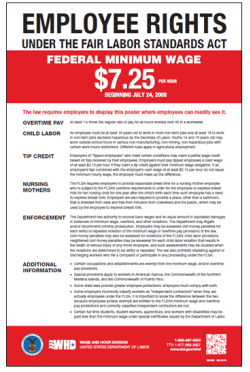
flsaposterWe know from Friday’s post that 89% of you are federal wage and hour minimum-wage all-stars. To celebrate, and because I love each and every one of you, the least I could do is hook you up with the U.S. Department of Labor’s new Fair Labor Standards Act (FLSA) Minimum Wage Poster.

Continue reading

Since July 24, 2009, the federal minimum wage for covered nonexempt employees has been $7.25 per hour. Many states and cities have raised that floor, with some cities, like Seattle, headed to $15/hr.

But, federally, despite pressure from many to raise it, we’ve been stuck at a $7.25 minimum wage for over 7 years.

Continue reading

BroadmoorRecordRuin.jpg
The Americans with Disabilities Act requires an employer to provide a reasonable accommodation to an employee with a disability, when doing so will permit that employee to perform the essential functions of the job. Examples of reasonable accommodations include reassigning non-essential job functions to other employees, a transfer to another open position for which the employee is qualified, and temporary light-duty assignments.

But what about permanent light duty?

Continue reading

“Doing What’s Right – Not Just What’s Legal”
Contact Information