Search
Articles Posted in Sexual Orientation
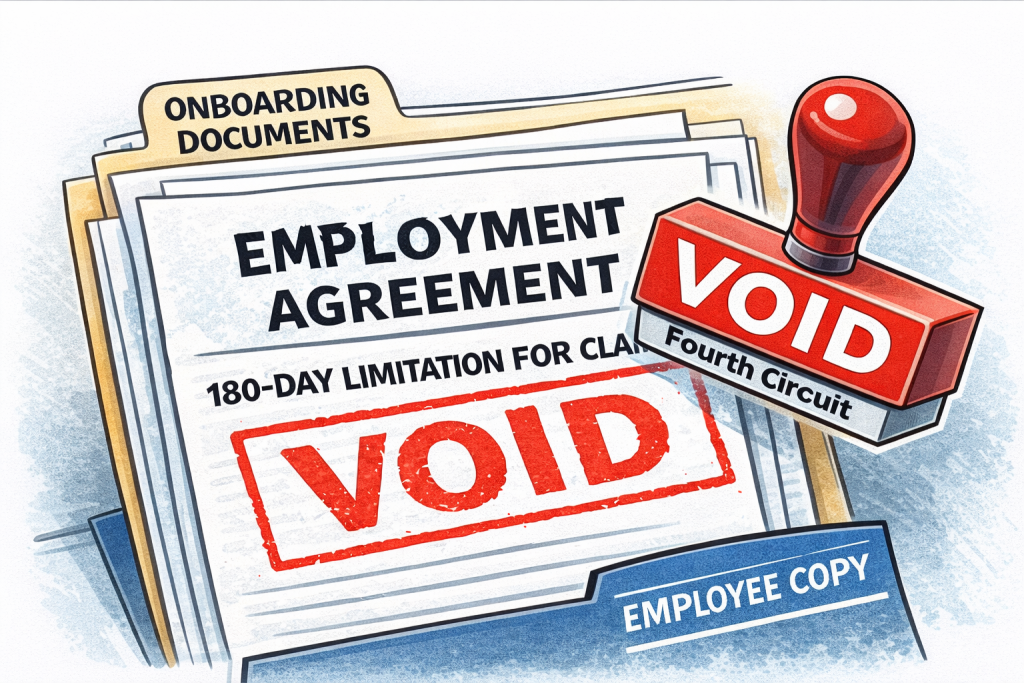
Can employers make employees sign a contract shortening the time to bring Title VII and ADEA claims?

Some employers try. The Fourth Circuit just explained why that trick doesn’t work for these federal discrimination claims. Continue reading
🎧 I Went on a Podcast to Talk About the Supreme Court’s Ames Decision. Here’s Why Employers Should Listen.
You already know the plaintiff won. What you might not know is what that means for your workplace policies, documentation practices, and DEI strategy. I broke it all down on this week’s On Record PR podcast. Continue reading
Bias Doesn’t Care If You’re Straight. Now the Supreme Court Doesn’t Either.

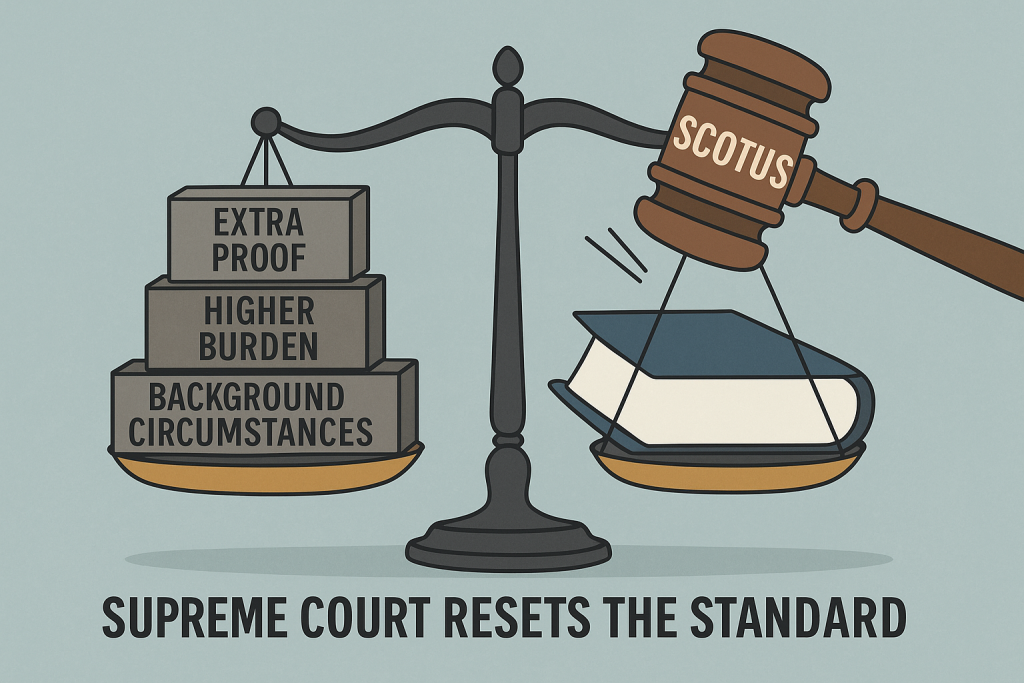
Heterosexual employees don’t have to clear a higher hurdle than gay employees to claim discrimination. The Supreme Court just said so—unanimously.
This case could reshape how Title VII claims are litigated—and it’s one employers should be paying close attention to. Continue reading
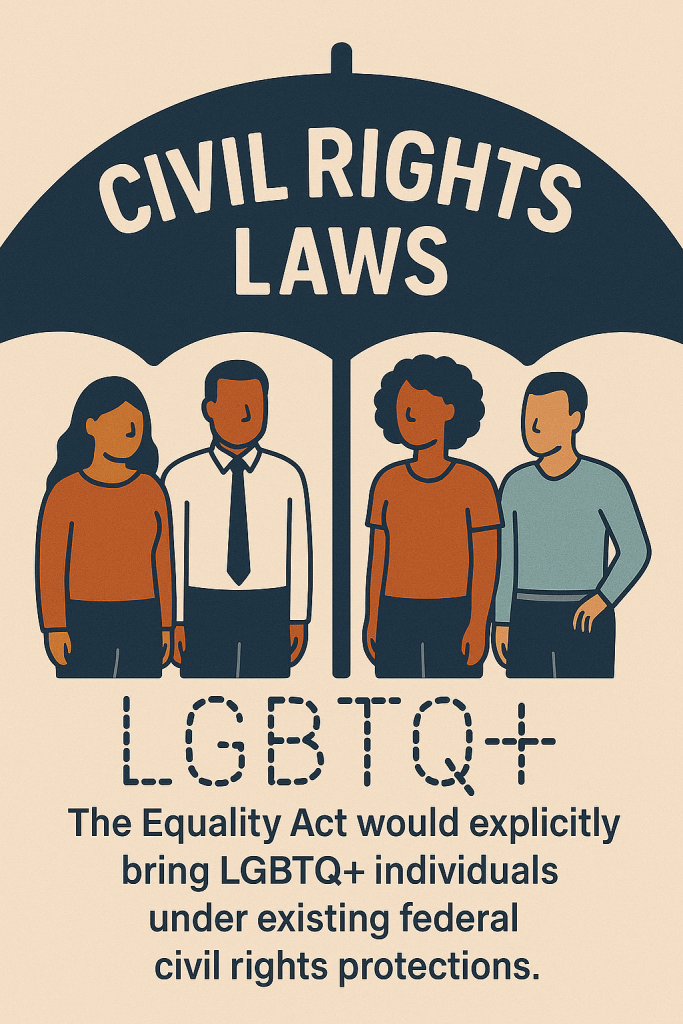
Congress Revives LGBTQ+ Rights Bill: What Employers Should Know

This week, lawmakers in both the House and Senate reintroduced the Equality Act, a bill that would explicitly prohibit discrimination based on sexual orientation and gender identity across numerous areas of federal law.
Although the bill has strong Democratic support, it lacks bipartisan backing—and given the political composition of Congress and the current administration’s stance, it is unlikely to become law during this session. Still, its reintroduction offers employers a timely opportunity to review existing policies and ensure compliance with current law. Continue reading

AI Predicts Unanimous Supreme Court Ruling on Workplace Discrimination

Yesterday, the Supreme Court heard oral argument in Ames v. Ohio Department of Youth Services, a case where a heterosexual employee claimed her employer discriminated against her in violation of Title VII of the Civil Rights Act of 1964.
The key legal question isn’t whether she has a claim but whether plaintiffs in the so-called “majority” must clear an additional hurdle—proving “background circumstances” that show their employer is an unusual one that discriminates against the majority.
I don’t have a crystal ball, but maybe artificial intelligence does. I uploaded the oral argument transcript and asked three separate AI assistants (Harvey.AI, ChatGPT, and Microsoft Copilot) to predict how each justice will rule and why. All three foresee a unanimous decision to scrap the “background circumstances” test. Here’s why:
From Protection to Rejection: How The EEOC’s New Stance on Trans Rights and Gender Identity Impacts Employers
On Saturday, the Associated Press reported that the Equal Employment Opportunity Commission (EEOC) moved to drop several lawsuits related to gender identity discrimination. Let’s examine what caused this change in direction and the implications for employers. Continue reading
Why is the EEOC suddenly deleting gender identity discrimination resources from its website?

Earlier this week, I searched for LGBTQ+ resources on the U.S. Equal Employment Opportunity Commission (EEOC) website. On Google, I found a page titled “Moving Towards Equality in the Workplace for LGBTQI+ Employees.” But when I clicked the link, I got an error message: “The requested page could not be found.” The same thing happened with several other links.
Now I know why. Continue reading
Can employers legally favor transgender employees over cisgender employees?

The words “cisgender” or “non-transgender” employee appear nowhere in Title VII of the Civil Rights Act of 1964, the federal workplace law that outlaws gender discrimination. But, according to a Pennsylvania federal judge, “that does not preclude the possibility that discrimination against both a cisgender male and cisgender female may be independent Title VII violations.”
I’ll explain why. Continue reading
Must employers excuse workers with strong religious beliefs from respect-in-the-workplace training covering LGBT topics

After taking a few days off and rocking out in Seattle, I’m back to blogging about employment law. 🤘🤘🤘
Today, we pull back the curtain and reveal how the U.S. Equal Employment Opportunity Commission will address failure-to-accommodate claims under the Supreme Court’s new religious accommodation standard established last year in Groff v. DeJoy. Continue reading
The Employer Handbook Blog