Search
Will Marco Rubio’s new federal paid-leave legislation be the one to emerge from the pack?

By Social Security Administration (Social Security Administration) [Public domain], via Wikimedia Commons

By Social Security Administration (Social Security Administration) [Public domain], via Wikimedia Commons
How many of you, like me, work out at Planet Fitness?
I like PF because it’s relatively close to the Bloggerdome and it’s $10/month. Now, if only they’d implement my many suggestion box notes to add a set of 100-pound dumbbells for bicep curls.
Sun’s out guns out. Amirite?

Image Credit: Photofunia.com
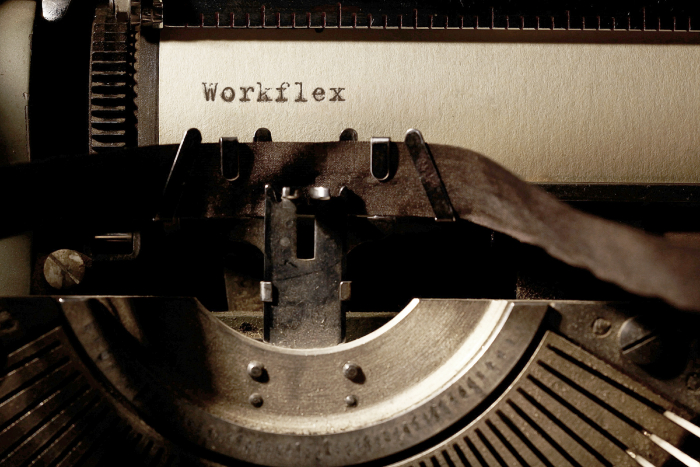
Back in November, U.S. Rep. Mimi Walters (R-Calif.) along with co-sponsors U.S. Reps. Cathy McMorris Rodgers (R-Wash.) and Elise Stefanik (R-N.Y.) introduced the Workflex in the 21st Century Act. I had a big post here about Workflex, which The Society for Human Resource Development (SHRM) has endorsed and touted as “a first-of-its-kind combination of guaranteed paid leave and increased options for flexible work arrangements.”
Should I wait patiently while you click that link and refresh your recollection about Workflex?
Yeah ok, I’ll wait.
I’ll even wait for you to read this SHRM Fact Sheet too. Go ahead.
Now that you’re up to speed, you may be wondering, how does Eric get his teeth so white? whatever happened to Workflex?
Fortunately, I have a big update.

Source: https://eeotraining.eeoc.gov
Yep, it’s that time of year.
The U.S. Equal Employment Opportunity Commission’s Training Institute is hosting its Examining Conflicts in Employment Laws (EXCEL) Training Conference in Washington, DC. Continue reading

Image Credit: Pixabay.com (https://pixabay.com/en/mail-message-email-send-message-1454731/)
In 2014, the National Labor Relations Board ruled here in a case called Purple Communications that employees can use company email to try to form a union. Specifically, the Board held that “employee use of email for statutorily protected communication on nonworking time must presumptively be permitted by employers who have chosen to give employees access to their email systems.”
Yeah, I like my plain English better too.
Fast forward to 2018, and of all the places in the world, a federal appellate court in California — yes California — may be the one to change this. Continue reading

Image Credit: Wikipedia (https://en.wikipedia.org/wiki/File:Trileptal_tablets.jpg) CC BY-SA 3.0, Link
During this July 4th holiday week, I don’t expect many of you to read this blog. So, thank you to those who do stick around. And, come mid-week, I’ll set off some legal backyard fireworks in your honor.
***Updates shopping list***
And I’ll bring my A-game. B-plus, at least. For the rest of the week, you can expect nothing less from me than Russia’s performance against Spain in the World Cup.
We’re going to start off by revisiting an issue, the surface of which we began to scratch a few months ago: opioids and the workplace.

Image Credit: Pixabay.com (https://pixabay.com/en/update-upgrade-renew-improve-1672346/)
If you’re new to the field, you’ll have to take our word on it. But, HR-compliance professionals know that drafting an employee handbook that is 100% compliant got a lot tougher over the past several years.
Let’s forget about paid-sick-leave laws, ban-the-box, and other state/local law matters. I’m just talking about how strict the National Labor Relations Board had become in interpreting employee handbook policies for union and non-union employers. (Remember that the National Labor Relations Act is not limited to unionized employers.)
Fortunately, relief is on the way. And I have nine ways in which you can now update your handbook with the blessing of the Board’s General Counsel. Continue reading

Image Credit: Pixabay.com (https://pixabay.com/en/eyes-surprise-wow-expression-open-312093/)
Yesterday morning, I read my friend Jon Hyman’s post on LinkedIn about a lawsuit in which a person of color alleged that various supervisors and managers:
Allegedly, a group of white employees also hung a sign in the workplace that said, “WHITE ONLY.” Continue reading

Image Credit: PXhere.com (https://pxhere.com/en/photo/854901)
Well, there’s always a chance the court might, you know, enforce it.
By Photograph by Franz Jantzen, Collection of the Supreme Court of the United States [Public domain], via Wikimedia Commons