As reported here in September, the State of New Jersey was recommending passage of the New Jersey Trade Secrets Act.

Well, welcome to the party, pal. (Or is it Powell?). Last week, NJ became the 47th state to adopt a version of the uniform trade secrets act as Governor Christie signed the NJTSA into law. The new law provides for both legal relief (damages for actual loss an unjust enrichment, punitive damages, attorney’s fees) in the event of an actual misappropriation of trade secrets, and injunctive relief should there be an actual or threatened misappropriation.

https://www.youtube.com/watch?v=qHm9MG9xw1o
https://www.youtube.com/watch?v=FFOzayDpWoI

Last year, here and here, I discussed legislation that would prohibit Philadelphia employers from asking job applicants about certain arrests and making any personnel decisions based on records of an arrest that does not result in a conviction. That legislation is now the law. That law is the Philadelphia Fair Criminal Record Screening Standards Act.

Let’s practice…

Back in 2005, a Pennsylvania federal court recognized in this opinion that an employee’s FMLA rights become sacrosanct upon requesting FMLA — even if the employee is not yet FMLA-eligible — provided that the employee has satisfied all FMLA service requirements when the FMLA begins. Where would this most likely arise? Why with pregnancy, of course. Something like:

    • Female employee starts work;


    • A few months later, she gets pregnant and requests FMLA to commence upon childbirth; and


  • She gets fired before giving birth.

Hey, those sound like the facts of Pereda v. Brookdale Senior Living Communities, Inc., a case decided in the Eleventh Circuit Court of Appeals last week. More on this case, together with a big helping of FMLA tips for employers, after the jump…

* * *

Continue reading


I’ve been slacking, folks.

Not since November have I blogged about a defendant’s motion to compel a motion to compel an individual’s social-media content. Since then, several more Pennsylvania courts have weighed in on this burgeoning area.

I’m sorry to each and every one of you. I have let you down. Will you ever stop judging forgive me?

Oh, let’s kiss and make nice. I’ll get you caught up on the social-media-litigation goings-ons after the jump…

* * *

Continue reading

According to FacesOfLawsuitAbuse.org, the lawsuit that keeps those lawyer jokes flowing is…

Convict sues couple he kidnapped for not helping him evade police. A man who kidnapped a couple at knifepoint while he was running from the police is now suing the victims, claiming that they promised to hide him in exchange for an unspecified amount of money. The plaintiff, currently in jail, is seeking $235,000 for the alleged “breach of contract.”

And from the ridiculous to the sublime just-about-as ridiculous…

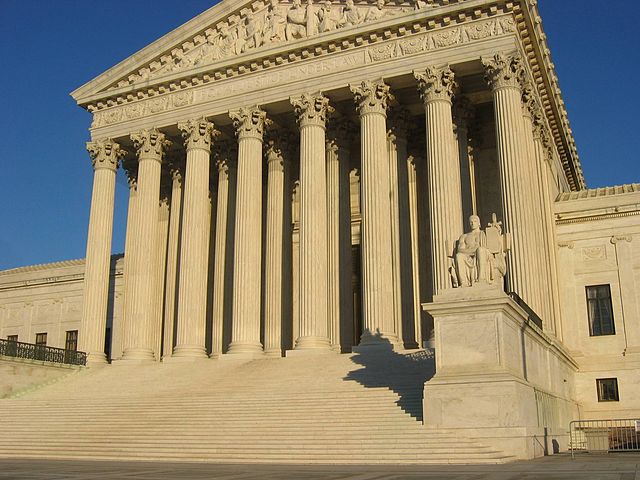
Thumbnail image for Supreme Court.jpgYesterday, in Hosanna-Tabor Evangelical Lutheran Church and School v. EEOC, the United States Supreme Court unanimously held that the Establishment and Free Exercise Clauses of the First Amendment bar employment-discrimination lawsuits by ministers against their churches. More on this decision and some helpful reminders for private-sector employers after the jump

* * *

Continue reading

Starting this year, employees who receive severance pay in excess of 40% of the average annual wage in Pennsylvania will have their unemployment compensation benefits offset. Currently, that 40% number is $17,853.00.

As Jonathan Segal, Legislative Director for PA State Council of SHRM, notes here, employers should be very careful not to represent anything in a severance agreement that an employee could reasonably construe as suggesting that this change in the law will not apply. He adds here that employers should also consider beefing up their severance-agreement-release language to confirm that the release is effective even if severance is offset or reduced under PA law.

You can read more on the change in the law here.

No inflatable rats here, folks. Just some organizing shenanigans.

Last week, the National Labor Relations Board was tasked with determining whether a union may use the photograph of an employee, without his authorization, on union-organizing materials. Click through to find out how the NLRB decided this one…

* * *

Continue reading

Wall_clock.jpg

To prove disability discrimination under the Americans with Disabilities Act (ADA), a plaintiff, at a minimum, must prove that:

  1. she is disabled;
  2. she is otherwise qualified to perform the job requirements, with or without reasonable accommodation; and
  3. she was discharged (or otherwise suffered an adverse employment action) solely on account of her disability

After the jump, I have a recent federal court decision from Michigan which addresses the second prong above; specifically, whether and when working a minimum number of hours a week is an essential job function, such that if a disabled employee can’t work those hours, she can be fired — legally.

* * *

Continue reading

“Doing What’s Right – Not Just What’s Legal”
Contact Information