Search
Why Two Single-Slur Cases Never Reached a Jury
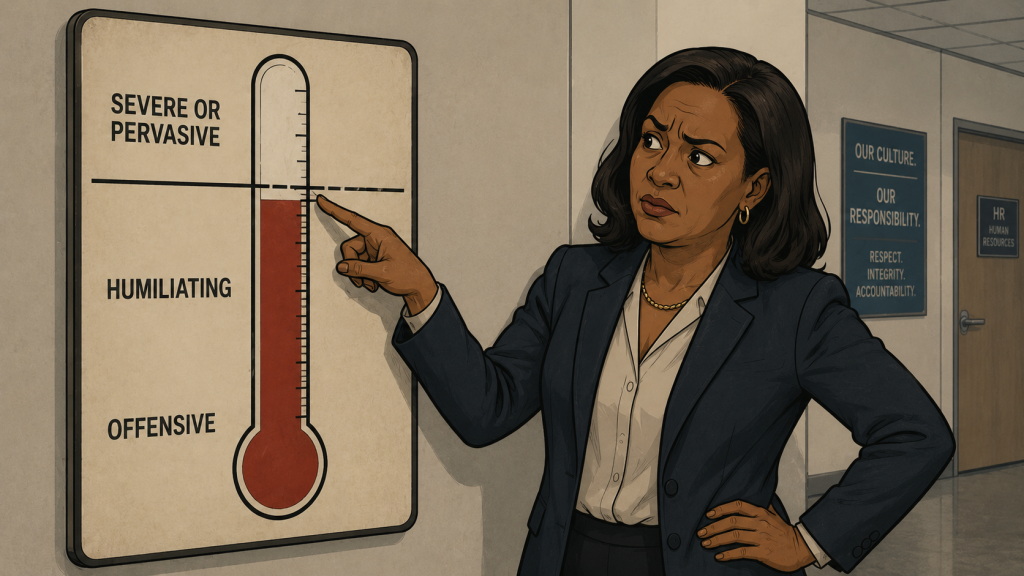
A single slur can sink an employer. It can also survive summary judgment. Two recent federal decisions show why context — especially who said it and how — still controls. Continue reading

A single slur can sink an employer. It can also survive summary judgment. Two recent federal decisions show why context — especially who said it and how — still controls. Continue reading

Two arguments show up in almost every termination lawsuit: that the employer’s reason changed, and that it didn’t follow its own policy. The Eleventh Circuit recently explained why neither argument, without more, is enough to get a case to a jury. Continue reading

Not every workplace conflict that creates turbulence makes it to a jury. This one didn’t. The employer’s investigation held up under the honest-belief doctrine. Continue reading

Most employment cases fall apart because the evidence is thin or the comparators don’t line up.
This one fell apart because of what the employee herself admitted – under oath. Continue reading

Courts see plenty of promotion disputes that boil down to one familiar complaint: I should have gotten the job.
The Fourth Circuit just explained why that argument usually is not enough. Continue reading

Sometimes the biggest workplace stories are the ones that hit closest to home for HR professionals. A recent jury verdict involving the Society for Human Resource Management (SHRM) is one of those moments, not because of who the defendant was, but because the issues are ones every employer faces. Continue reading

Most employers are not trying to police anyone’s hairstyle, but vague grooming or “professional appearance” rules can sometimes cause problems. Pennsylvania’s upcoming CROWN Act aims to prevent that by making it clear that hair texture and protective styles are protected traits under the PHRA. That means it is a good time for employers to review their policies and make sure they line up with the new standards. Continue reading

Some lawsuits keep you guessing. This one did not. When a court reviews missed deadlines, clear directives, and an internal investigation confirming the same issues, the outcome writes itself.
And as the Fourth Circuit reminded everyone, reporting discrimination does not make documented performance problems disappear. Continue reading

Two employees break the same rule. One gets fired. The other gets another chance.
That’s not just a management headache; it’s a discrimination lawsuit waiting to happen. Continue reading

A recent federal case shows how a workplace investigation can flip fast—from harassment complaint to defamation claim. The employer followed the playbook and won. The accuser did not. Continue reading