Articles Posted in Attorney Practice Tips

Casting CatsWelcome everyone to the Employment Law Blog Carnival: Hollywood Casting Call Edition.

[Editor’s Note: The original theme for this post was the “Employment Law Blog Carnival: Sex, Drugs, and Rock & Roll Edition.” I had this bright idea to begin by cutting and pasting the lyrics to Guns N’ Roses’ “My Michelle,” and, let’s just say I bailed after the first line.]

So that leaves us with Plan B, where, after the jump, I have aggregated some of the best, recent posts from around the employment-law blogosphere and fit them together into a single theme: an open casting call.

Because just the other day, this theme came to me after waking from a Codeine/Claritin-D/Mucinex DM-induced slumber, in which I dreamt about casting a recent post of mine — the one where an employee lost out on an FMLA retaliation claim when her employer fired her after finding Facebook photos of her drinking at a local festival — while on FMLA. My movie will star Kim Kardashian, in her silver screen debut, as the employee. And Alan Thicke, who played Dr. Jason Seaver on “Growing Pains,” could play the company decision-maker. We’ll call it “FML Aye Yai Yai!

[Editor’s NoteI’m throwing Thicke a bone here. Don’t you think? According to IMDB.com, he just finished production on “Fugget About It“, in which ex New York mobster Jimmy Falcone joins the Witness Protection Program and is relocated, with his family, to Regina, Saskatchewan, Canada. Fugget about it, indeed.]

So that’s the idea. More great posts and imaginative casting decisions, after the jump…

* * *

Continue reading

thatswhathesaid.png

I’m gearing up to host the Employment Law Blog Carnival on Wednesday, so I’m mailing it in today with a quick shout out to Venkat Balasubramani posting over at Eric Goldman’s Technology and Marketing Law Blog.

Admittedly, I have fallen behind on updating you, my loyal readers, on the world of social media and discovery. Mostly, because the most recent jurisprudence has been from outside of the Pennsylvania and everything pales in comparison to this great Commonwealth. Except, most recently, for the Philadelphia Eagles.

Speaking of which, have you heard this one?

Many times on this blog (e.g., here, here, and here), I’ve discussed the discovery of a plaintiff’s social media information in pending litigation. More often than not, these issues arise in personal injury actions where the defendant believes that the plaintiff’s injury isn’t as a severe as he claims it to be. So, it seeks access to plaintiff’s Facebook information where it believes it will find pictures of the plaintiff boozing or frolicking or what-have-you.

Although less common in employment discrimination cases, from time-to-time, social media discovery issues do crop up. I’ll discuss a new one decided late last month and offer some related tips for employers after the jump…

* * *

Continue reading

I got this as a Google Alert on Monday. The case is Davids v. Novartis Pharmaceuticals Corp. Allow me to set the stage for you.

    • Plaintiff sues, claiming ongoing suffering from osteonecrosis of the jaw (if you click the link, don’t look at the picture on the right. Ewwwww)
    • Defendant corporation realizes that plaintiff has a Facebook account and serves a request for production of Facebook documents.

Well, at least that’s what a federal court recently told a defendant-employer in this ruling.

In Tompkins v. Detroit Metropolitan Airport, the plaintiff suffered a slip-and-fall and later claimed back and other injuries. She sued her employer, who subsequently demanded that Tompkins provide full access to her Facebook account. Acknowledging that Facebook information that a user shares only with a few Facebook friends may still be discoverable, the United States District Court for the Eastern District of Michigan, emphasized that there are limits to the Facebook discovery that a party may pursue:

[M]aterial posted on a “private” Facebook page, that is accessible to a selected group of recipients but not available for viewing by the general public, is generally not privileged, nor is it protected by common law or civil law notions of privacy. Nevertheless, the Defendant does not have a generalized right to rummage at will through information that Plaintiff has limited from public view. [T]here must be a threshold showing that the requested information is reasonably calculated to lead to the discovery of admissible evidence.


I’ve been slacking, folks.

Not since November have I blogged about a defendant’s motion to compel a motion to compel an individual’s social-media content. Since then, several more Pennsylvania courts have weighed in on this burgeoning area.

I’m sorry to each and every one of you. I have let you down. Will you ever stop judging forgive me?

Oh, let’s kiss and make nice. I’ll get you caught up on the social-media-litigation goings-ons after the jump…

* * *

Continue reading

What a whirlwind 12 months it’s been for Edith Employee! Or, should I say, Edith “former” Employee?

Last year, she was an employee for ABC Company. This year, she is suing ABC for sexual harassment. Among other things, Edith claims damages for physical and psychological injuries, including the inability to work, anxiety, post-traumatic stress disorder, and the loss of enjoyment of life.

And, right now, we find the parties entrenched in some scorched-earth discovery. ABC Company has just requested “all of plaintiff’s Facebook records compiled after the incidents alleged in the complaint, including any records previously deleted or archived.”

Can ABC do that? Will Edith have to turn over all of these records? The answer follows after the jump..

* * *

Continue reading

Today is Rosh Hashanah (ראש השנה), the Jewish New Year. I’m Jewish. So, I’m not taking a deposition today. And if you are involved in a case with Jewish parties or attorneys, you shouldn’t be either.

However, according to this article, these plaintiff’s attorneys didn’t get the memo. So, defense counsel filed this motion. And the Court entered this Order, rescheduling the deposition and sanctioning the plaintiff’s attorneys “in an amount to be determined.”

Oy vey and L’shanah tovah.

Welcome back to “Fact or Fiction” a/k/a “Quick Answers to Quick Questions” a/k/a QATQQ f/k/a “I don’t feel like writing a long blog post”. But before I dispense with the brevity, allow me to pat myself on the back as, yesterday, both the ABA Law Journal and the Wall Street Journal recognized one of my recent blog posts.

***A-thank you. Thank you very much. You’re all too kind.***

On the heels of this case from the Second Circuit that I read about yesterday, I figured that today we should discuss releases. Cue the music…

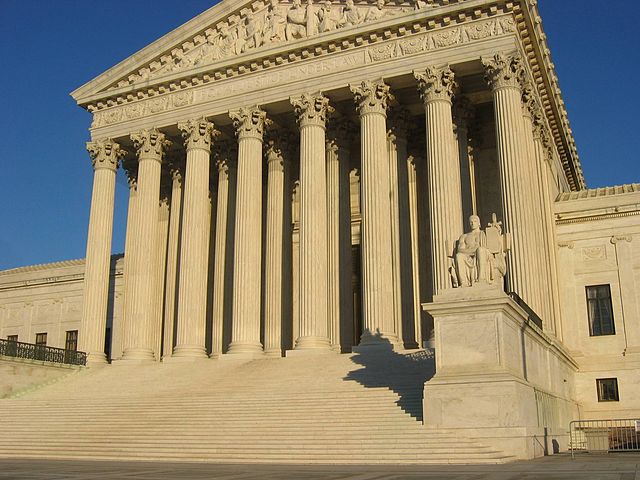
Thumbnail image for Supreme Court.jpgIn an employment discrimination action asserted under federal law, an employee-plaintiff may recover a reasonable attorney’s fee if the plaintiff prevails. So too may an employer-defendant recover fees if it prevails and the court determines that the plaintiff’s suit is frivolous.

But what happens if an employee-plaintiff asserts multiple claims against an employer-defendant and only some of them are deemed frivolous? What, if anything, may the defendant recover in attorney’s fees?

The answer after the jump…

* * *

Continue reading

“Doing What’s Right – Not Just What’s Legal”
Contact Information