bridge.jpg

Today, I get to sleep in because The Employer Handbook has a guest blogger. It’s Andrew Kim, a summer associate at Dilworth Paxson LLP:

* * *

Some people have no problem with heights (as seen above). But Darrell Miller, a bridge worker, had acrophobia (a.k.a. the fear of heights). In fact, Mr. Miller had suffered a panic attack due to that very fear while working on the bridge crew for the Illinois Department of Transportation (IDOT). He then sought a reasonable accommodation so that he wouldn’t have to work on big bridges. IDOT refused. Did it violate the Americans with Disabilities Act?

Find out after the jump . . .

* * *
Continue reading

Yesterday, the EEOC held a meeting to discuss what it deems a “major national problem”; namely, deliberate discrimination against job seekers based on their race, sex, age, national origin or other prohibited basis.

After the jump, I’ll summarize the meeting and offer some tips for employers to help them stay off of the EEOC’s radar.

* * *

Continue reading

The National Labor Relations Board (NLRB) has proposed amendments to its existing rules and regulations that will vastly change the way union-elections are conducted. The NLRB spin on these amendments is that they will “reduce unnecessary litigation, streamline pre- and post-election procedures, and facilitate the use of electronic communications and document filing.”

Is this a good thing or a bad thing for employers? I’ll detail the proposed changes, after the jump.

* * *

Continue reading

As reported on this blog yesterday, as well as in a gazillion other news outlets — but probably here first firstish — the U.S. Supreme Court has overturned certification of a potential class of 1.5 million current and former female employees seeking relief against Wal-Mart for alleged gender discrimination.

After the jump, a break down of the Opinion and what it means for employers, big and small.

* * *

Continue reading

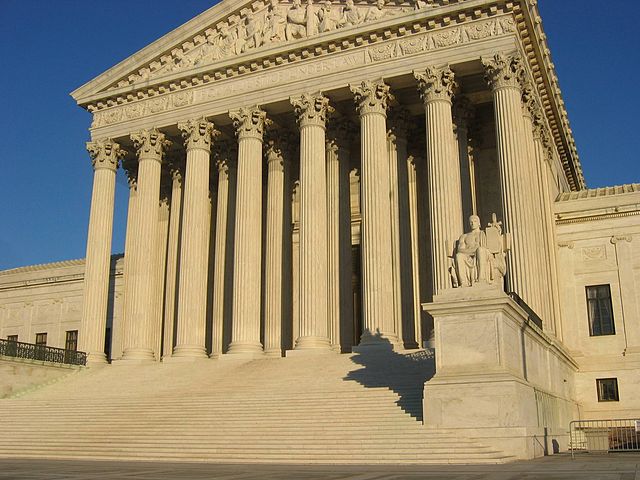
Thumbnail image for Supreme Court.jpgThe United States Supreme Court has just overturned a Ninth Circuit decision that would have allowed 1.5 million female employees to pursue a class-action gender discrimination lawsuit against Wal-Mart Stores, Inc. You can read a copy of the Supreme Court’s opinion here.

I’ll have more on this decision tomorrow at The Employer Handbook.

There once was an employer in Racine.
With a manager whose antics were racy.
The court said, “You lose!”
Now, tell everyone the news.
And if you disobey, it’ll cost you big money.

*** Although I feel rhyming “Racine” with “racy” was pure Shakespeare, I’m fairly certain that Edward Lear’s corpse just pissed itself ***

After the jump, it’s the employer, found liable for sexual harassment, that refused to abide by a court-ordered notice requiring it to inform its employees about the verdict…

* * *
Continue reading

In the workplace, messing around on Facebook may earn an employee a pink slip. In the political arena, Facebook faux pas can cost a Congressman his seat in Congress — although it could result in a job with Hustler. [SFW].

But, in the courtroom, Facebook shenanigans may lead to hard time in the clink. This is especially true in the UK, where the BBC reports that a juror who contacted a defendant via Facebook, causing a £6m drug mistrial, has been jailed for eight months for contempt of court.

DAAAAAAAAAYUM!


The Americans with Disabilities Act (ADA) prohibits discrimination in the workplace against disabled individuals. By law, if an employer knows that an employee or applicant is disabled, it must reasonably accommodate the known disability, if doing so would not impose an “undue hardship” on the operation of the employer’s business. There are many types of reasonable accommodations, from modifying facilities to reassignment to a vacant position.

Leave from work may also be a reasonable accommodation. But how much? And how much is too much?

Find out, after the jump…

* * *

Continue reading

Welcome to the inaugural edition of “Fact or Fiction” a/k/a “Quick Answers to Quick Questions” a/k/a QATQQ f/k/a “I don’t feel like writing a long blog post“.

So, I was recently asked whether a younger employee may have a federal age-discrimination claim against his employer if the company treats a similarly-situated older employee better.

The answer is no. In 2004, the U.S. Supreme Court in General Dynamics Land Systems, Inc. v. Cline held that the Age Discrimination in Employment Act of 1967 (ADEA) does not forbid discriminatory preference for the old over the young.

“Doing What’s Right – Not Just What’s Legal”
Contact Information