Articles Posted in Unions (labor relations)

In December 2006, 247 union workers went on strike at the Kohler manufacturing plant in Searcy, Arkansas. Three months later, Kohler hired 123 replacement workers.

Kohler and the Union settled their dispute in March 2008. As part of the settlement, Kohler agreed to reinstate the striking strikers. Kohler then fired the replacement workers and returned 103 of the original 247 striking workers to their former positions. 111 of the replacement workers then filed suit under the Worker Adjustment and Retraining Notification Act (“WARN”) alleging that they should have been given at least 60-days notice before being laid off.

Did Kohler violate WARN? Find out after the jump…


* * *

Continue reading

The National Labor Relations Board (NLRB) has proposed amendments to its existing rules and regulations that will vastly change the way union-elections are conducted. The NLRB spin on these amendments is that they will “reduce unnecessary litigation, streamline pre- and post-election procedures, and facilitate the use of electronic communications and document filing.”

Is this a good thing or a bad thing for employers? I’ll detail the proposed changes, after the jump.

* * *

Continue reading

Fueled by the remaining adrenaline from the Bruins 4-0 beating of the Canucks — 2 more wins… just 2 more — I am banging out this blog post just before the clock strikes 12. I have news of a new Twitter firing involving a “social media specialist” and an update on an NLRB action from May condoning the firing of a newspaper reporter for abusing Twitter.

All this, after the jump.

* * *

Continue reading

I’m guessing that social media is not at the top of either side’s list of demands.

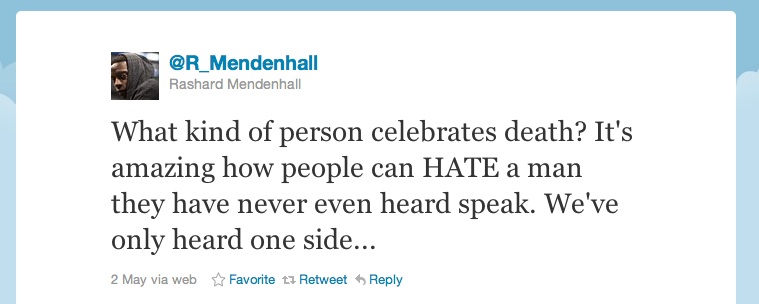
However, player tweets like this and, in particular, this one from Pittsburgh Steelers running back Rashard Mendenhall following the death of Osama bin Laden have some speculating that a new collective bargaining agreement could include restrictions on player use of social media.

What could those restrictions be? And will the players agree to them? 

More after the jump.

* * *

Continue reading

Many of you have seen the rat on the right. Well, maybe not that particular rat, but a large inflatable rat, nonetheless. Usually, a union will position the large rodent in front of a business or job site as part of a protest effort.

But, just because a union uses it as a protest symbol doesn’t make it legal. Does it?

Is the rat even legal?

Find out after the jump.

* * *

Continue reading

As I previously reported, on May 9, 2011, the National Labor Relations Board issued a Complaint, in which it alleges that a NY non-profit company fired five employees for complaining on Facebook about working conditions. Now, Law 360 reports that the NLRB has issued a second complaint against a Chicago-area luxury car dealership alleging the company ran afoul of federal labor laws by firing a sales employee over a message he posted on Facebook.

Molly DiBianca at The Delaware Employment Law Blog brought this second complaint to my attention and you can read her write-up on it here.

Can a company create and enforce a policy that requires employees on paid sick leave to remain close to their homes, unless they obtain the company’s permission?

Would that policy infringe on an employee’s FMLA rights?

Good questions.

The answers are after the jump.

* * *

Continue reading

As some of you may know, word has surfaced about a Complaint that the National Labor Relations Board filed last week against a NY non-profit. The NLRB alleges that company fired five employees for complaining on Facebook about working conditions.

The NLRB has issued a press release and much has already been written about this Complaint by some great employment-law bloggers. So be sure to check out the links below:


I was considering three topics for today’s post:

  1. A teacher who was fired for watching 67 seconds of pornography;
  2. This smokin-hot cheerleader, fired for the NSFW-version of the photo on the right, who has filed a national-origin discrimination claim against the Indianapolis Colts; or
  3. A National Labor Relations Board Advice Memorandum on employee use of Twitter in the workplace.

I went with No. 3. I stand by my decision. 

Now, how do I erase my browser history?

While I figure that out, you hit jump for more on why the National Labor Relations Board found no unfair labor practice when: (a) a unionized newspaper company, (b) with no social media policy, (c) which encouraged its employees to use Twitter, fired a reporter based on a few tweets.

* * *

Continue reading

“Doing What’s Right – Not Just What’s Legal”
Contact Information