Search
 The Employer Handbook Blog
Baseball has a new social media policy. And it may be unlawful.


I’ll tell you why, after the jump…

I’ll tell you why, after the jump…
 Because it’ll cost you your job.
Dale Gibson of The Triangle Business Journal reports here that a waiter at The Angus Barn in Raleigh, NC posted on the internet a copy of Peyton Manning’s credit card receipt from a recent dinner there. Manning may not have a job, but he tips like a boss! Not like Mr. Pink. (Go to YouTube and search for “Reservoir Dogs – Tipping Scene” — you’ll find a number of hysterical, albeit completely NSFW videos about tipping etiquette).
 On Monday I had the privilege of presenting “Social Media for HR: Practical Guidance from a Generation Y Attorney” to a packed house at the SHRM 2012 Employment Law and Legislative Conference in Washingon, DC. I killed (naturally) and the audience of attorneys and HR professionals was fantastic. During the course of this interactive session, some of what the audience had to say really surprised me. And it may surprise you too. Click through to find out what real HR pros are doing to address social media in he workplace…
 About a year, I wondered whether employers should ever require job applicants to divulge Facebook passwords. Ultimately, I concluded then — and still believe now — that while employers may choose to use social media as part of a background-check process, you’re playing with fire if you start asking job applicants to divulge social-media passwords to make it easier to vet them.
Two states are now taking steps to make it illegal to force job candidates to reveal online user-names and passwords. One of those states is taking it one step further…
What two states and what they doing?!? (And what’s with that creepy image on the right). Aaaaah!!!! Click through to find out…
I got this as a Google Alert on Monday. The case is Davids v. Novartis Pharmaceuticals Corp. Allow me to set the stage for you.
- Plaintiff sues, claiming ongoing suffering from osteonecrosis of the jaw (if you click the link, don’t look at the picture on the right. Ewwwww)
- Defendant corporation realizes that plaintiff has a Facebook account and serves a request for production of Facebook documents.
 Yesterday, I had the absolute privilege of moderating a panel on social media in the workplace at TLNT Transform in Austin, TX. Transform is for talent managers and HR leaders who are looking for cutting-edge insights and best practices from innovative and forward-thinking companies.
Three HR Rockstars, Karren Fink, Laurie Ruettimann, and Rebecca Meissner, made my job as moderator on the social-media panel a breeze. If you can get past my initial crappy lawyer joke — and that, apparently, I don’t know my right from my left — it’s worth watching. Here is a link to the video.
What were you doing yesterday between 3 and 4 PM EST?
Me? I was tweeting with the great people at SHRM’s We Know Next and several other Twitter stars, answering questions and otherwise making insightful snarky comments that sniffed insightful but were generally closer to snarky, on the topic of “Social Media and HR – Policies and Legal Pitfalls.”
If you were part of the dialogue, thank you for participating. (And muchas gracias to SHRM for inviting me to be a part of #NextChat). If you couldn’t make it, click through to see what you missed and to get a crash course in Social Media 101 for HR…
 A little birdie told me that Jason Mraz wrote this song about me and you.
Uh, oh. Meyer’s off his meds again. No folks, allow me to explain.
Like you could do better…
If When “Facebookutioner” catches on, you read it here first.
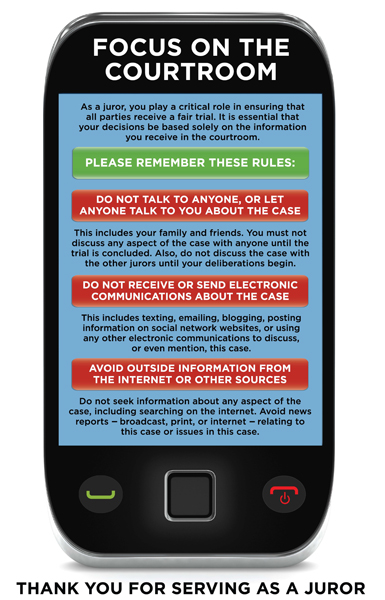
But seriously folks, let’s talk about what judges are doing about jury use of social media during trial…
According to this survey, in which 508 federal judges completed questionnaires, only 30 respondents (5.9%) are aware of instances in which jurors have used social media during trial or deliberation.
Find out after the jump…
At least that’s what this survey from Millenial Branding says. (It’s also on this infographic if you’re lazy). According to the survey, which consisted of 4 million Gen-Y (ages 18-29) Facebook profiles from Identified.com’s database of 50 million, nearly two-thirds of Gen-Y fail to list their employer on their profiles. However, they average 16 co-worker friends.
More on this, along with some tips for employers, after the jump…