Search
 The Employer Handbook Blog
Three wins for readers of The Employer Handbook


Image Credit: Flickr.com (https://www.flickr.com/photos/keithallison/27388069805) //embedr.flickr.com/assets/client-code.js
And it’s only Tuesday! Continue reading

Image Credit: Flickr.com (https://www.flickr.com/photos/keithallison/27388069805) //embedr.flickr.com/assets/client-code.js
And it’s only Tuesday! Continue reading
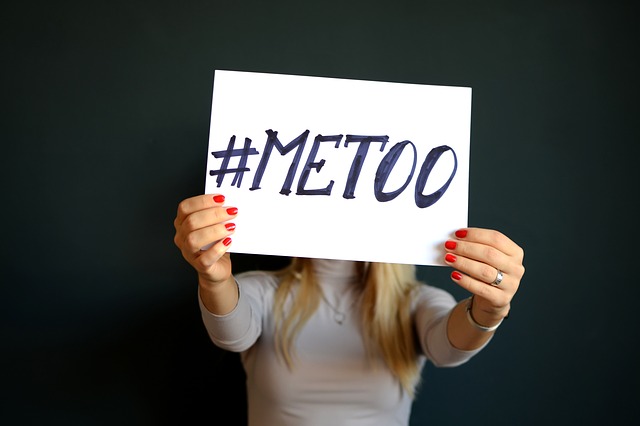
Image Credit: Pixabay.com (https://pixabay.com/en/metoo-women-harassment-sexual-2859980/)
On October 15, 2017, actress Alyssa Milano urged socal media user to share their stories of sexual harassment using the hashtag #MeToo.
Maybe you’ve heard of it.
Of course, you have. As have the millions of others who have used the hashtag since.
This post goes inside numbers to detail the proliferation of the #MeToo movement social media.
Continue reading

By Missatikamekw [CC BY-SA 4.0 ], from Wikimedia Commons
Image Credit: Photofunia.com (http://photofunia.com/results/5b9a4b7e46867953)
In most federal courts in this country, a plaintiff arguing a Title VII violation because he or she was discriminated against based on his/her LGBT status will lose.
That’s a fact.
That’s because Title VII prohibits discrimination based on one’s “sex.” And, most courts don’t construe “sex” to include “sexual orientation” or “gender identity.” But that’s not to say that LGBT discrimination cases generally lack merit. Continue reading

By Nederlands Instituut voor de Classificatie voor Audiovisueel Materiaal (NICAM) (http://www.kijkwijzer.nl/upload/download_pc/7.pdf) [Public domain], via Wikimedia Commons
Will I sacrifice quality for quantity? Since you’re not paying me anything to blog, you bet I will. Hopefully, you won’t see it that way. But, if feel otherwise, go jump in a lake I’m sorry. Continue reading

Public Domain, Link
It’s right there in the statute.
Under New Jersey and Delaware state law, you can’t discriminate against an employee based on his or her sexual orientation or gender identity.
Now, you won’t find the words “sexual orientation” or “gender identity” anywhere in the Pennsylvania Human Relations Act. But, starting this month, the Pennsylvania Human Relations Commission is treating both “sexual orientation” and “gender identity” as protected classes.
“Speak, English, Eric!”
LGBT discrimination is against the law in all three states in the tri-state area — at least according to the state agencies that administer each law. Continue reading

Georges Biard [CC BY-SA 3.0 ], from Wikimedia Commons
Asia Argento is one of the women who had accused Harvey Weinstein of sexual assault. She is also a leading advocate for the #MeToo movement. Continue reading

By Joe Ravi, CC BY-SA 3.0, Link
Surely, you remember the days (weeks) of horrible headlines that dogged United Airlines after the incident in which passengers filmed security dragging down the aisle a bloodied passenger who refused to give up his seat to an airline employee.
Well, United may soon be back above the fold again. And it’s for all the wrong reasons. Continue reading
Screenshot from YouTube.com
No. Continue reading

Image Credit: Pexels.com (https://www.pexels.com/photo/alone-bed-bedroom-blur-271897/)
Usually, after my kids go to bed is when I write my blog posts for the following day. Last night that didn’t happen. Instead, while putting my two boys to bed, I fell asleep on the spare bed in their room. #Parenting
So, I apologize for the tardy post today. Continue reading