Search
 The Employer Handbook Blog
Supervisor’s advice to sexually-harassed employee: “Pray…”


 Worst. advice. ever.
More on this doozy involving two Denny’s waitresses after the jump…
* * *

Worst. advice. ever.
More on this doozy involving two Denny’s waitresses after the jump…
* * *
My loyal readers know that yesterday the U.S. Equal Employment Opportunity Commission held a public meeting to discuss pregnancy discrimination and caregiver issues.
Conversely, my disloyal readers can go to hell. No, no, I forgive you. Just send me a check and we’ll call it even.
*** Takes meds ***
*** Flashes Men In Black red light ***
Ah, yes, pregnancy discrimination. Click through for a summary of what happened at yesterday’s EEOC meeting…

The U.S. Equal Employment Opportunity Commission (EEOC) will hold a public meeting on the subject of pregnancy discrimination and caregiver issues at 9:30 a.m. today in Washington, DC. If you are in the area, feel free to stop by. The meeting is open to the public.
https://www.youtube.com/watch?v=99j0zLuNhi8
According to this press release, the Commission will examine “recent trends in discrimination against pregnant workers and workers with caregiving responsibilities, examining these two forms of discrimination as a continuum.”
Yesterday, Greece came through with a long-awaited economic reform deal. Congratulations to them.
What I want to know, however, is what the heck the Greek government was thinking when it recently expanded a list of state-recognized disability categories to include pedophiles, exhibitionists and kleptomaniacs. Bailout money back, please.
At Res Ipsa Loquitor, Jonathan Turley notes that the Greek government already recognizes pyromaniacs, compulsive gamblers, fetishists and sadomasochists as persons entitled to ask for government assistance.
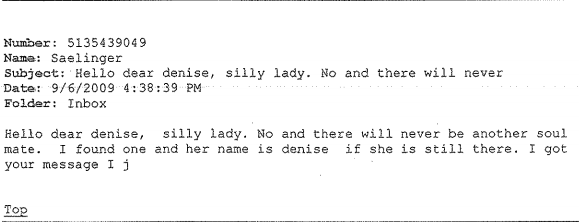
Hey there, Casanova. Dontchaknow that the victim always keeps the text messages? Always! But does the victim win the sexual-harassment case about which I am blogging after the jump? Hint: no.
Oh, come on! Don’t let that deter you! Click through anyway to pad my hit count and because you know I have the rest of the text messages and all of the dirty deets from a recent Bible Belt federal-court decision.
See you on the other side…
 For the second year in a row, it was retaliation. Of the nearly 100,000 Charges of Discrimination that employees filed with the EEOC in 2011, retaliation claims accounted for just over 37% of them. Race claims were just behind at 35.4%. Sex was third at 28.5%.
A complete breakdown of 2011 EEOC charge statistics can be found here.
Today we have a guest blogger at The Employer Handbook. It’s Janette Levey Frisch. Janette is In-House Counsel at Joule, Inc. where she provides comprehensive legal representation and support to a staffing company with five subsidiaries throughout the East Coast. You can connect with Janette on Twitter here and on LinkedIn here.
Janette’s post on criminal background checks, which includes some best practices for employers, follows after the jump…
(Want to guest blog at The Employer Handbook? Email me.)
* * *
According to FacesOfLawsuitAbuse.org, the lawsuit that keeps those lawyer jokes flowing is…
Convict sues couple he kidnapped for not helping him evade police. A man who kidnapped a couple at knifepoint while he was running from the police is now suing the victims, claiming that they promised to hide him in exchange for an unspecified amount of money. The plaintiff, currently in jail, is seeking $235,000 for the alleged “breach of contract.”
And from the ridiculous to the sublime just-about-as ridiculous…
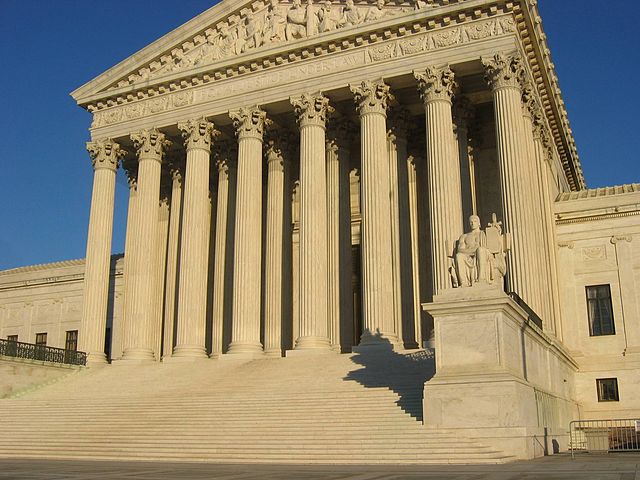 Yesterday, in Hosanna-Tabor Evangelical Lutheran Church and School v. EEOC, the United States Supreme Court unanimously held that the Establishment and Free Exercise Clauses of the First Amendment bar employment-discrimination lawsuits by ministers against their churches. More on this decision and some helpful reminders for private-sector employers after the jump…
Starting this year, employees who receive severance pay in excess of 40% of the average annual wage in Pennsylvania will have their unemployment compensation benefits offset. Currently, that 40% number is $17,853.00.
As Jonathan Segal, Legislative Director for PA State Council of SHRM, notes here, employers should be very careful not to represent anything in a severance agreement that an employee could reasonably construe as suggesting that this change in the law will not apply. He adds here that employers should also consider beefing up their severance-agreement-release language to confirm that the release is effective even if severance is offset or reduced under PA law.
You can read more on the change in the law here.