Search
 The Employer Handbook Blog
“Focus on Your Health” Is Not a Lawful Reason to Fire Someone


Whatever the actual reason for firing an employee, the written explanation becomes evidence. A Mississippi restaurant is about to find out what that means. Continue reading

Whatever the actual reason for firing an employee, the written explanation becomes evidence. A Mississippi restaurant is about to find out what that means. Continue reading
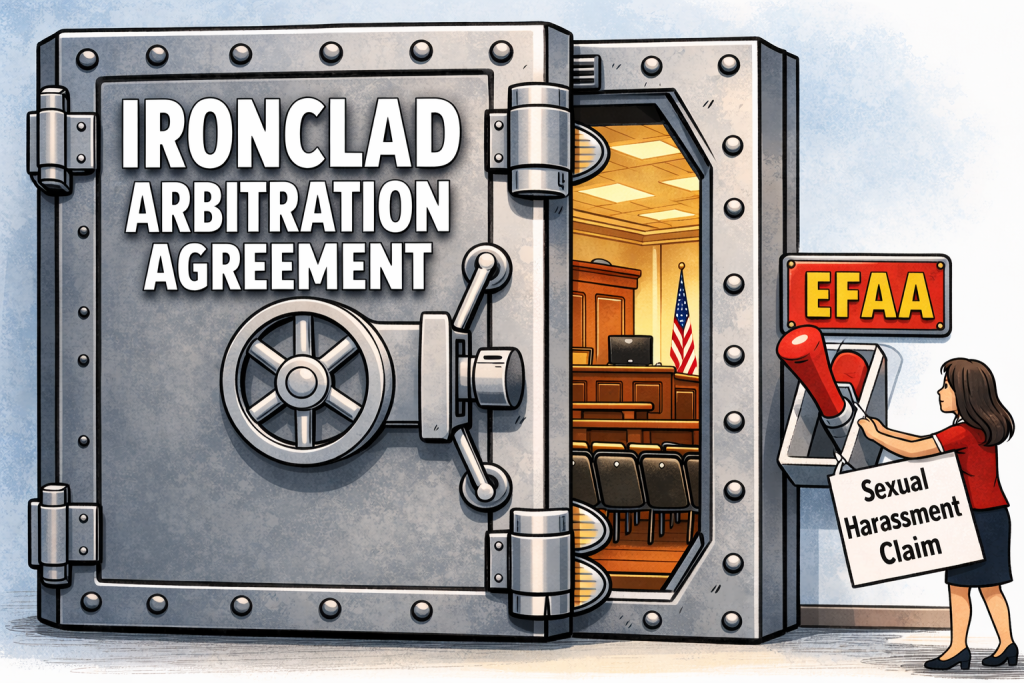
Employers that rely on arbitration agreements should pay attention to a recent Sixth Circuit decision. One plausible sexual-harassment claim can keep an entire lawsuit in court—even claims that would otherwise go to arbitration. Continue reading
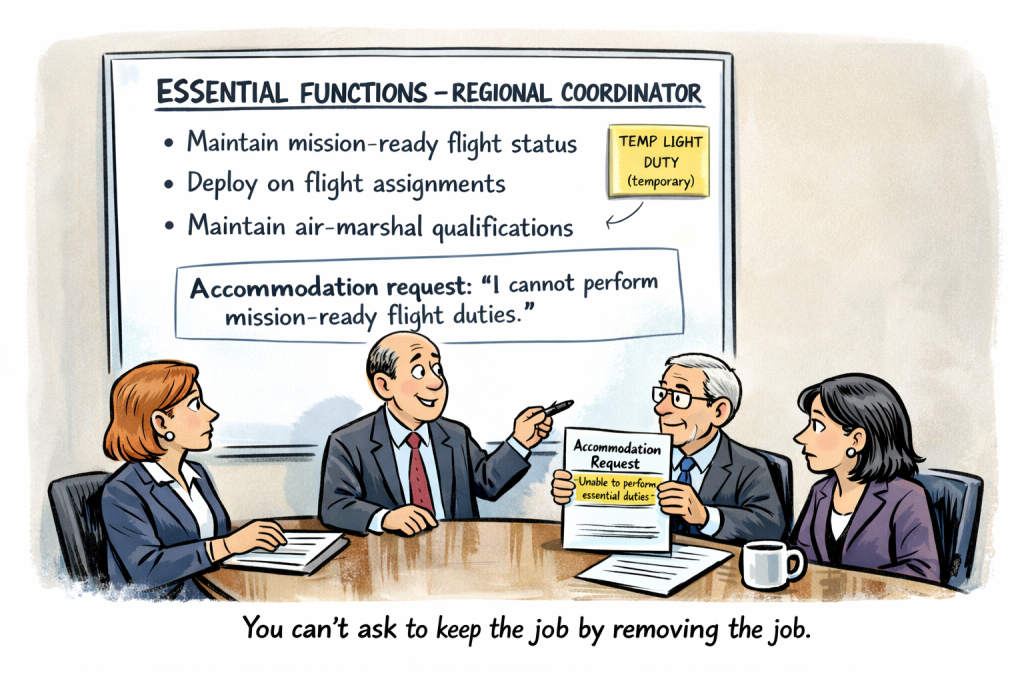
Sometimes the accommodation request itself tells the whole story.
In a recent Fourth Circuit Rehabilitation Act decision, a federal air marshal asked to stay in a ground-based role permanently after medical conditions prevented her from flying. But in doing so, she also acknowledged that she could not perform the essential duties of the job she wanted to keep.

At the British Academy Film Awards – better known as the BAFTAs, the U.K.’s version of the Oscars – a man with Tourette’s Syndrome interrupted the ceremony while actors Michael B. Jordan and Delroy Lindo were presenting an award, shouting a racial slur.
That public moment raises a workplace question: If an employee with Tourette’s involuntarily uses the N-word around Black colleagues or the B-word around women, does the Americans with Disabilities Act (ADA) require the employer to keep him in his job? Continue reading
Remote work policies are tightening. But the Americans with Disabilities Act did not disappear when companies decided the office feels collaborative again.
Last week, the U.S. Equal Employment Opportunity Commission issued federal-sector guidance on telework accommodations for employees with disabilities. Although written for federal agencies under the Rehabilitation Act, that statute incorporates ADA standards. So if you are a private employer navigating return-to-office mandates, this guidance is directly relevant. Continue reading
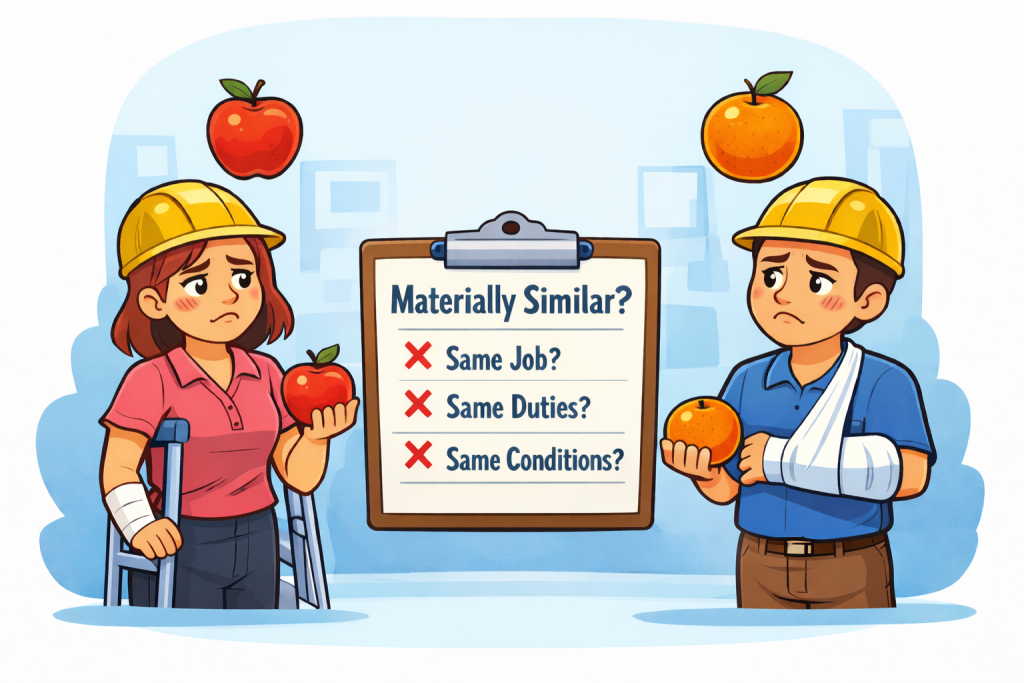
When employees say, “You helped him when he was injured but refused to help me,” it sounds like discrimination. It also sounds like a failure-to-accommodate dispute. A recent Ninth Circuit decision shows why that framing matters, and why getting it wrong can sink the case before it ever reaches a jury. Continue reading

Hiring can feel like a checklist: background check, drug test, start date. But when an applicant raises a disability-related issue, those boxes stop being routine, and the Americans with Disabilities Act (ADA) starts asking questions. Continue reading
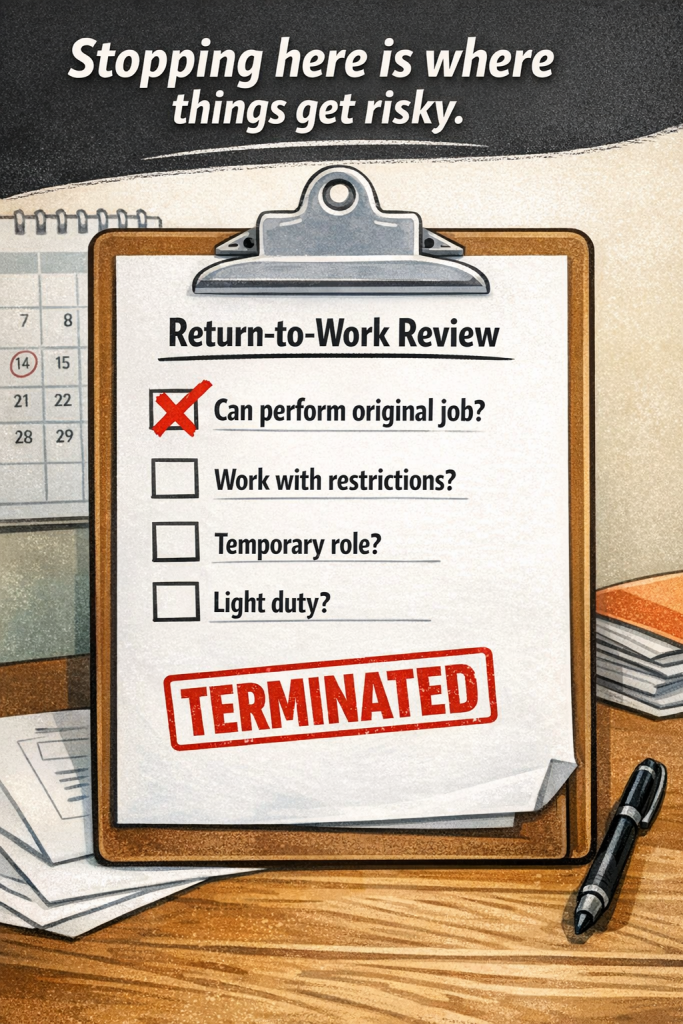
Deciding too early that accommodation is impossible can shape everything that follows. This case shows why courts often let juries sort it out.
In a recent ADA decision from the Northern District of Illinois, an employer decided an injured employee could not return as a bus operator under her medical restrictions. After that decision, the employer relied on its absence-without-leave policy to terminate her. The court refused to end the case at summary judgment. Continue reading

A single recruiting phone call. No application. No interview. And yet, enough evidence for a federal judge to let an ADA hiring case move forward. Continue reading
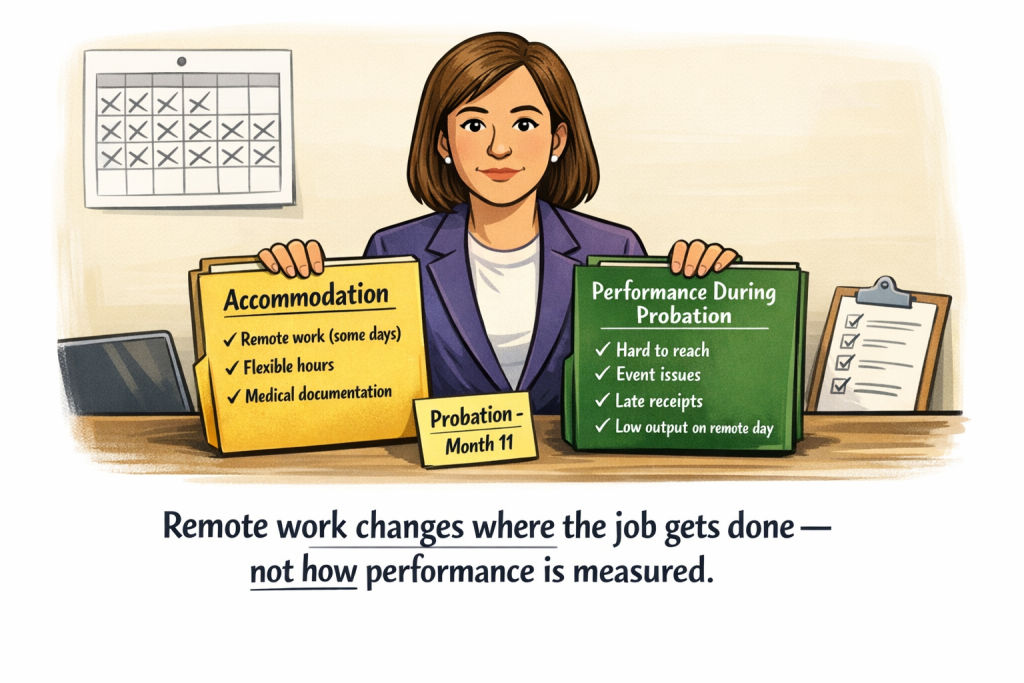
When an employee’s health takes a turn, the instinct is to be flexible. The legal risk is assuming flexibility means you cannot enforce expectations. Continue reading