Search
 The Employer Handbook Blog
A Valentine’s Day reminder from The Employer Handbook


Happy Valentine’s Day! x.o.x.o.
– The Employer Handbook

Happy Valentine’s Day! x.o.x.o.
– The Employer Handbook
The Family and Medical Leave Act allows an employer to require that a employee’s request for FMLA leave be supported by a certification issued by the employee’s health care provider. An example of one of the right ways to do this, from a recent federal-court decision, follows after the jump…
Yesterday, Greece came through with a long-awaited economic reform deal. Congratulations to them.
What I want to know, however, is what the heck the Greek government was thinking when it recently expanded a list of state-recognized disability categories to include pedophiles, exhibitionists and kleptomaniacs. Bailout money back, please.
At Res Ipsa Loquitor, Jonathan Turley notes that the Greek government already recognizes pyromaniacs, compulsive gamblers, fetishists and sadomasochists as persons entitled to ask for government assistance.
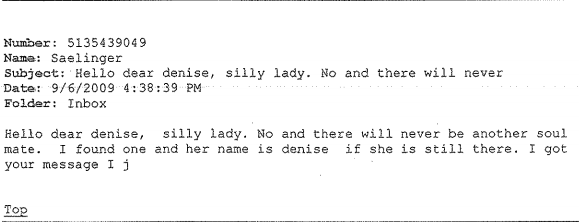
Hey there, Casanova. Dontchaknow that the victim always keeps the text messages? Always! But does the victim win the sexual-harassment case about which I am blogging after the jump? Hint: no.
Oh, come on! Don’t let that deter you! Click through anyway to pad my hit count and because you know I have the rest of the text messages and all of the dirty deets from a recent Bible Belt federal-court decision.
See you on the other side…
Like you could do better…
If When “Facebookutioner” catches on, you read it here first.
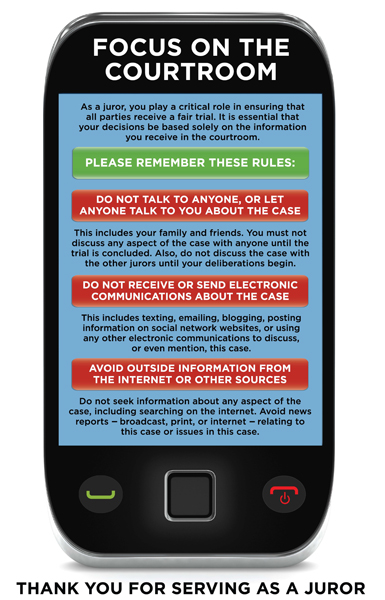
But seriously folks, let’s talk about what judges are doing about jury use of social media during trial…
According to this survey, in which 508 federal judges completed questionnaires, only 30 respondents (5.9%) are aware of instances in which jurors have used social media during trial or deliberation.
Find out after the jump…
 For the second year in a row, it was retaliation. Of the nearly 100,000 Charges of Discrimination that employees filed with the EEOC in 2011, retaliation claims accounted for just over 37% of them. Race claims were just behind at 35.4%. Sex was third at 28.5%.
A complete breakdown of 2011 EEOC charge statistics can be found here.
Humblebrag alert.
Reporters call me all the time. It’s a wonder that I can get any work done.
Why, just last week, I was speaking to a reporter about an action recently initiated by current and former employees of the FDA, alleging that the agency unlawfully monitored their private emails. During our discussion, I mentioned another case — this one called Stengart v. Loving Care Agency — in which the NJ Supreme Court held that an employee who emails her attorney from a company computer may have a reasonable expectation of privacy in those emails provided that the employee uses a password-protected web-based email account.
Ah, serendipity! The following day, I read about another case decided last week in which the NJ Superior Court reaffirmed that many employee emails are not private. More on this case and a best practice for employers after the jump…
Today we have a guest blogger at The Employer Handbook. It’s Janette Levey Frisch. Janette is In-House Counsel at Joule, Inc. where she provides comprehensive legal representation and support to a staffing company with five subsidiaries throughout the East Coast. You can connect with Janette on Twitter here and on LinkedIn here.
Janette’s post on criminal background checks, which includes some best practices for employers, follows after the jump…
(Want to guest blog at The Employer Handbook? Email me.)
* * *
In Pennsylvania, as in most states, an employee without a contract for a specific term of employment is deemed an at-will employee. Subject to certain exceptions (e.g., discrimination, violations of public policy), an at-will employee can be terminated for any reason or no reason at all.
How hard is it to overcome the at-will employment presumption? Pretty darn hard, as the Third Circuit Court of Appeals reminded us last week. More on this decision and some tips for employers after the jump…
In this case of first impression in the Third Circuit Court of Appeals, which covers PA, NJ, DE, and USVI, the court ruled that a supervisor in a public agency may be subject to personal liability under the Family and Medical Leave Act. The court further emphasized that there is “no reason to distinguish between public agencies and private employers under the FMLA insofar as individual liability is concerned.”
Details after the jump…
* * *