Articles Posted in Discrimination and Unlawful Harassment

noun-security-7629746-1024x1024

Recently, the U.S. Equal Employment Opportunity Commission has garnered headlines (and blog posts) over a shift in enforcement priorities to issues such as “anti-American” bias in hiring and defending women’s rights to single-sex spaces, such as bathrooms and locker rooms, in the workplace. To say these were previously on the backburner would be an understatement, unless the stove had ten or so rows of burners.

But, don’t get it twisted. Continue reading

noun-grease-7538429-1024x1024
Title VII, the federal antidiscrimination law prohibiting race discrimination, is not a general civility code. An aggrieved employee must establish that they were subjected to behavior based on their race that was severe or pervasive enough to interfere with their working conditions. As we learned yesterday, no rational person would countenance the claims of a white employee offended about discussions and initiatives focused on antiracism and racial justice.

Conversely, a recent decision from the Sixth Circuit Court of Appeals serves as a lesson for employers on unlawful racial harassment, retaliation, and HR missteps.

Slurs, Stereotypes, and Grease?!?

noun-job-posting-6287878-1024x1024

Diversity, equity, and inclusion—better known as DEI—has been a hot topic lately. While DEI itself isn’t inherently illegal, critics have latched onto the idea of so-called “illegal DEI.” What exactly does that mean? Unclear. But a recent federal court case involving a law student who said she was discouraged from applying for a summer internship because of diversity-focused hiring criteria was giving me “illegal DEI” vibes.

The catch? Even if everything she claimed was true, the court never actually ruled on whether the hiring policy was legal or not. Here’s why.

The Lawsuit That Never Got Off the Ground

noun-atheism-3741-1024x1024

Religious discrimination laws protect more than just those who attend church, temple, or mosque. Did you know that they also protect those who don’t subscribe to any religious belief at all? A recent lawsuit in Colorado alleges that atheists, too, can face workplace discrimination—and that’s just as unlawful as treating someone unfairly for practicing a religion. Continue reading

noun-rainbow-2212997-1024x1024

Some people seem to think the workplace is their personal soapbox, where they can broadcast whatever pops into their heads—no matter how offensive, misguided, or just plain dumb. One former employee learned this the hard way when he posted an anti-LGBTQ+ comment on the company intranet, mistakenly thinking it was an anonymous survey response. His employer quickly shut that down, and so did the courts. When he appealed all the way to the Supreme Court, hoping for a lifeline, the justices responded yesterday with a firm “no thanks.”

Turns out, the highest court in the land had better things to do than entertain a “my bigotry is protected” argument. Continue reading

noun-investigation-7610556-1024x1024

In a recent employment discrimination case, the plaintiff, a Black employee, claimed his termination following a workplace investigation into complaints about his conduct at work, was racially motivated. The employer tried to dismiss the case, but failed. Find out why and I’ll throw in a few takeaways about the importance of conducting fair and unbiased workplace investigations. Continue reading

noun-calendar-6553648-1024x1024

Especially if you’re gonna claim discrimination when you eventually get fired.

That’s among the takeaways from a recent federal appellate court ruling reinforcing the importance of enforcing workplace policies, particularly those related to safety. Continue reading

noun-supreme-court-149365
Yesterday, the Supreme Court heard oral argument in Ames v. Ohio Department of Youth Services, a case where a heterosexual employee claimed her employer discriminated against her in violation of Title VII of the Civil Rights Act of 1964.

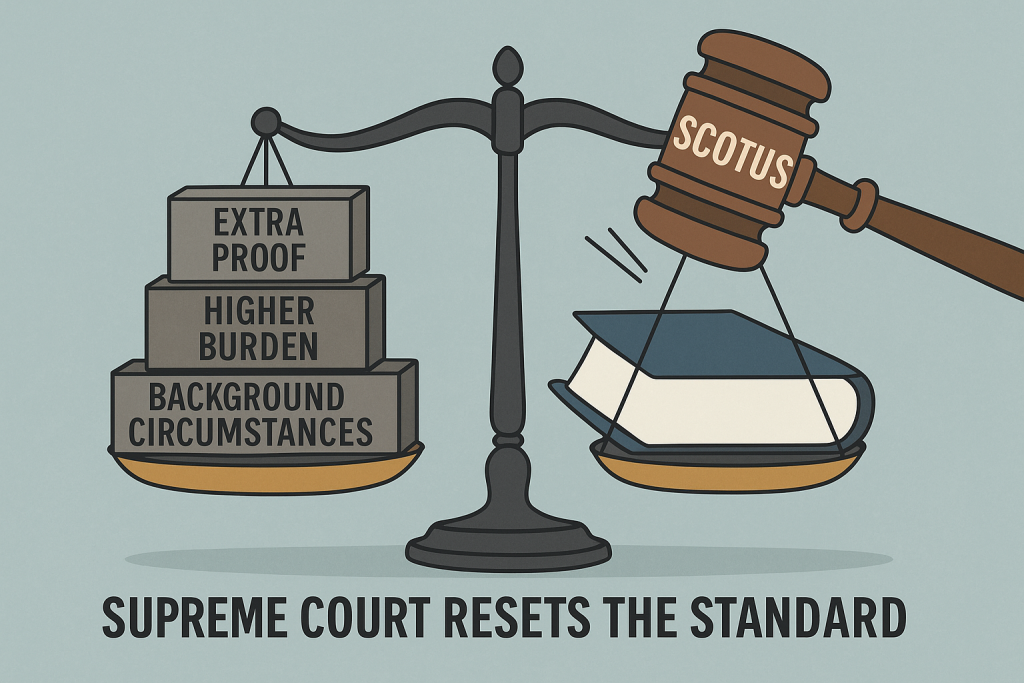
The key legal question isn’t whether she has a claim but whether plaintiffs in the so-called “majority” must clear an additional hurdle—proving “background circumstances” that show their employer is an unusual one that discriminates against the majority.

I don’t have a crystal ball, but maybe artificial intelligence does. I uploaded the oral argument transcript and asked three separate AI assistants (Harvey.AI, ChatGPT, and Microsoft Copilot) to predict how each justice will rule and why. All three foresee a unanimous decision to scrap the “background circumstances” test. Here’s why:

“Doing What’s Right – Not Just What’s Legal”
Contact Information