Search
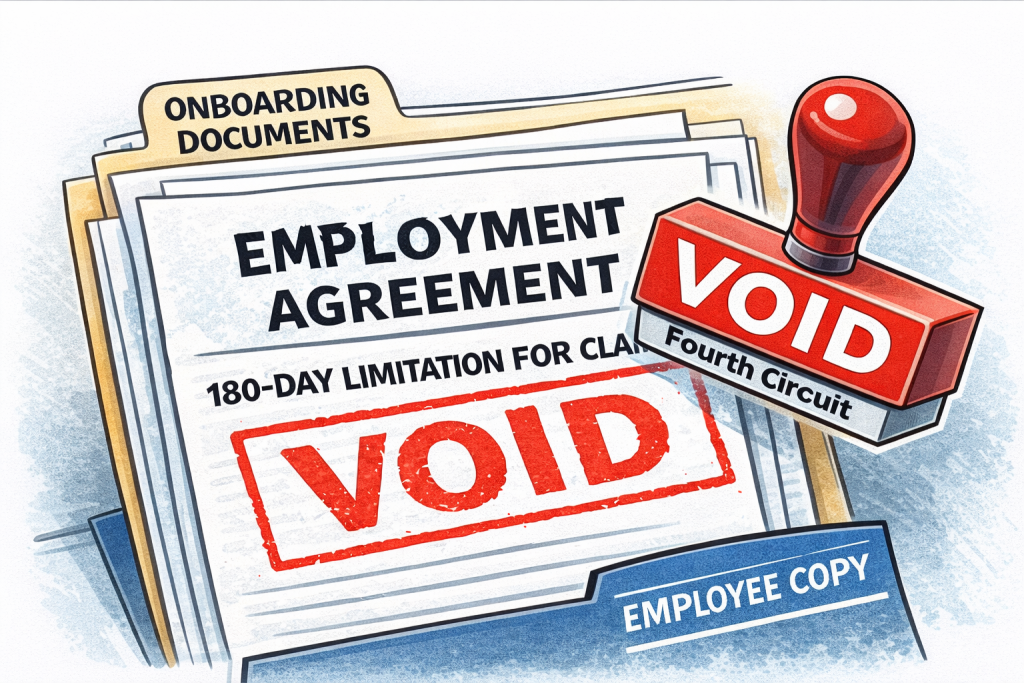
Can employers make employees sign a contract shortening the time to bring Title VII and ADEA claims?

Some employers try. The Fourth Circuit just explained why that trick doesn’t work for these federal discrimination claims. Continue reading

Some employers try. The Fourth Circuit just explained why that trick doesn’t work for these federal discrimination claims. Continue reading

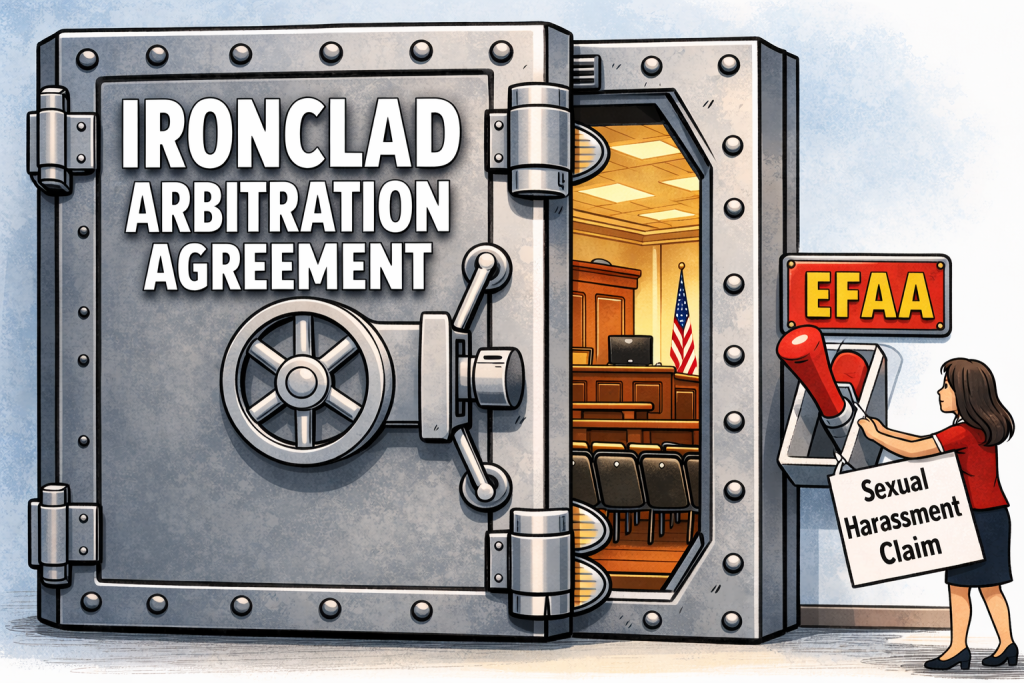
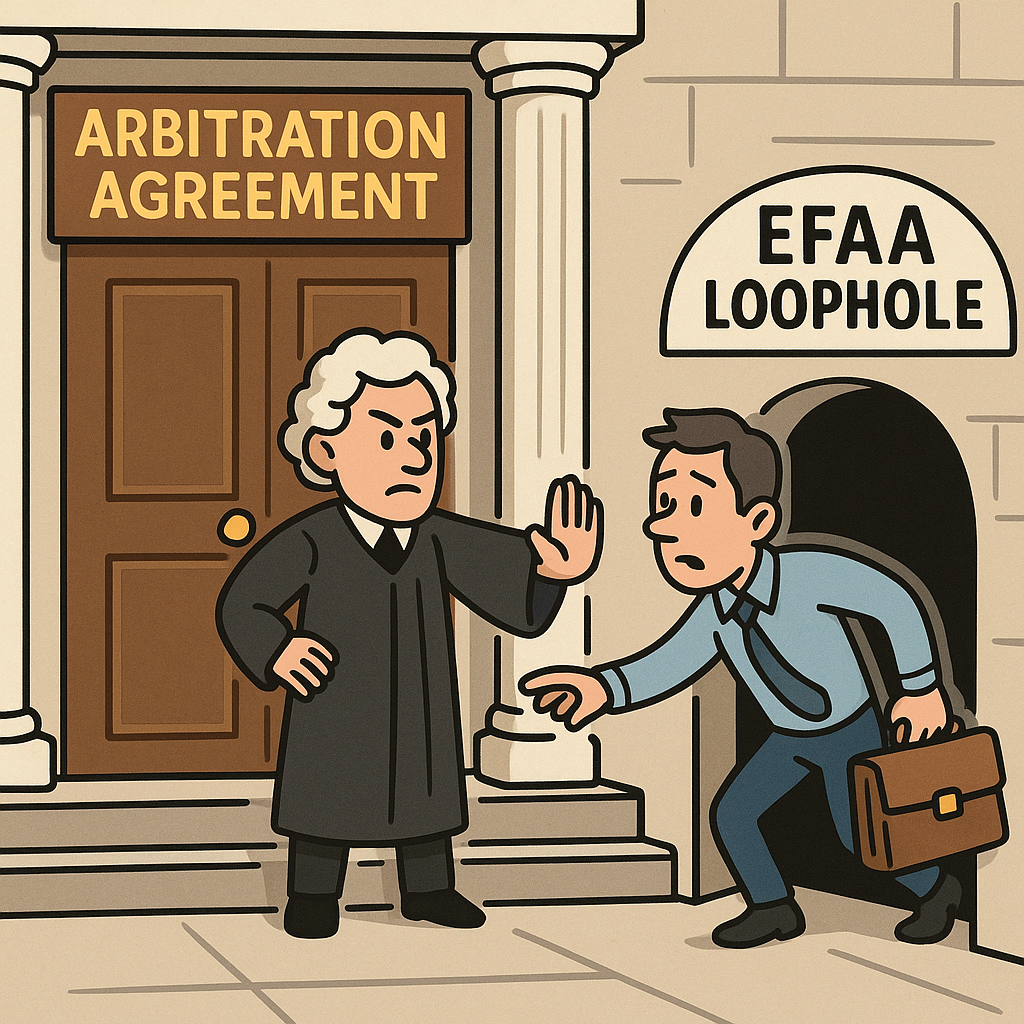
Under basic contract law, yes. But thanks to the Ending Forced Arbitration Act, that may not be the end of the story. Continue reading

Sometimes courts resolve complex employment issues. And sometimes they are asked whether an employee suffered legal harm because she didn’t get to say goodbye to coworkers.
Buckle up. Continue reading

Employees and supervisors often assume that any inappropriate physical contact is automatically a hostile work environment. But the Eleventh Circuit continues to apply one of the strictest “severe or pervasive” standards in the country. This case shows just how high that bar is.
This is part two of the series. Yesterday’s post covered why a criminal subpoena did not count as Title VII “participation.” Today, we look at the employee’s hostile work environment claim. Continue reading

Sometimes the timing writes the headline for you. On October 31, a federal court in New Jersey decided a harassment case that involved an unforgettable Halloween costume and a reminder that bad taste is not always a legal violation. Continue reading

The Supreme Court recently made it easier for employees to prove discrimination, lowering the bar from “serious harm” to “some harm.” That change came from a 2024 sex discrimination case, but its reasoning can influence other Title VII claims too. A new decision from the federal court in the Eastern District of Pennsylvania shows that even when courts apply that softer standard to quid pro quo harassment claims, retaliation still requires a higher level of proof, and neither test was met here. Continue reading

In 2022, Congress passed a law that makes it harder for employers to require arbitration in certain workplace cases. Some employees are now trying to use that law to keep sex discrimination lawsuits in court. A recent case in Connecticut shows the limits of that strategy: not every sex discrimination claim counts as sexual harassment, and only sexual harassment (or sexual assault) cases are exempt from arbitration. Continue reading

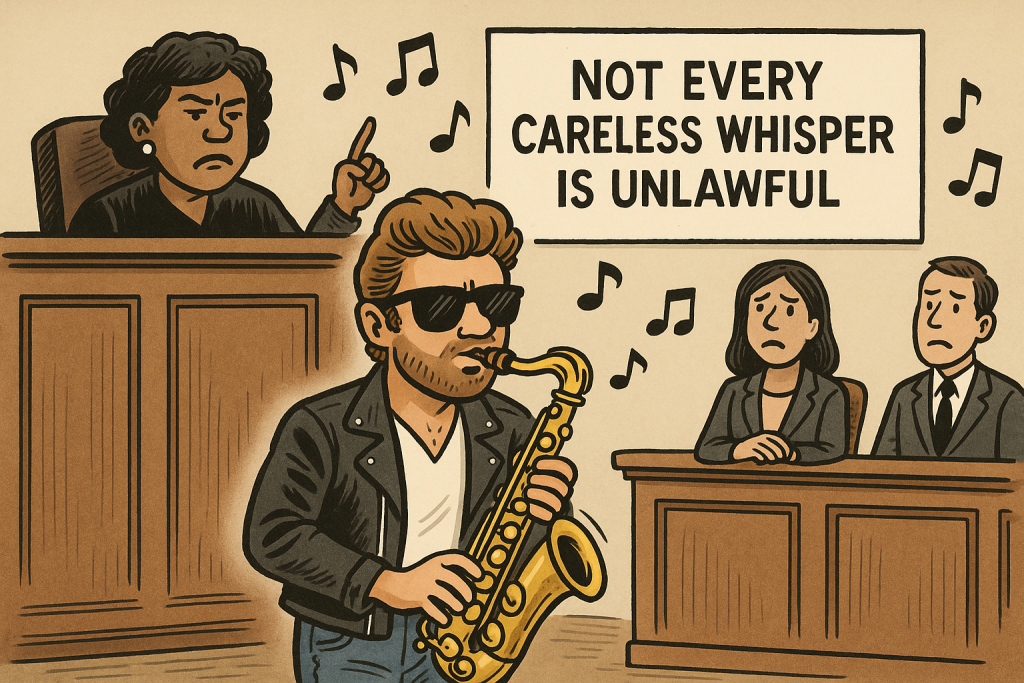
Before we get to the law, let’s admit it: anytime a case involves a supervisor leaning in to whisper in someone’s ear, you can almost hear George Michael’s sax riff in the background. But as this recent federal court decision shows, not every whisper, awkward or otherwise, creates a viable harassment or retaliation claim. Continue reading

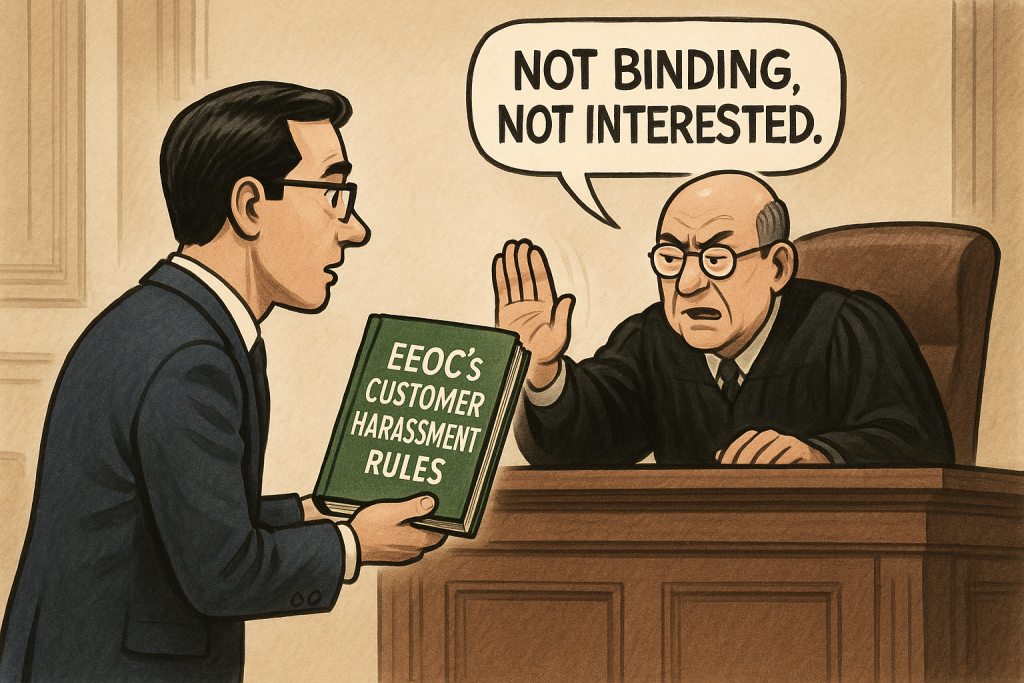
When a customer harasses an employee, the EEOC says employers are liable if they knew or should have known and didn’t act. The Sixth Circuit says: not unless you intended it to happen. Continue reading

You think you’ve solved the problem. You separate the employee from the alleged harasser. You tell him not to contact her—ever. Years pass without incident. Then one day, the same two people cross paths again, and a decision that stops short of firing her, but directly threatens her pay and job security, is enough to keep a quid pro quo sexual harassment claim alive. Continue reading