Search
 The Employer Handbook Blog

They Said The Executive Team Made the Firing Decision. Then the Executives Denied Being Involved.


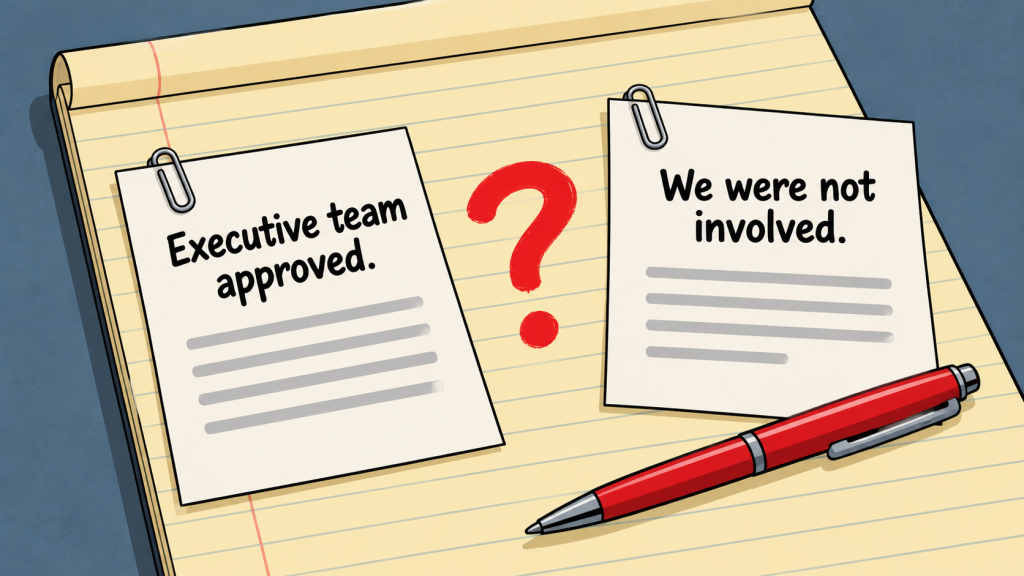
Before telling an employee that the CEO approved her firing, it helps to check with the CEO. Especially if someone may eventually ask the CEO about it under oath.
TL;DR: A Michigan federal court let a longtime sales employee proceed with her age, sex, and disability discrimination claims. The company blamed poor performance and a workforce reduction. But its account of who made the decision fell apart during discovery, and its own performance records raised questions about why she was selected. Her disability-based hostile work environment claims were dismissed.
A merit raise in May. A performance firing in January.
The employee was 55 and had spent 21 years with the technology company and its predecessor. A serious fall during a business trip left her with injuries requiring multiple surgeries and continuing physical and psychological problems.
She kept selling. In May 2024, the company gave her a 10% merit raise, something her supervisor acknowledged it rarely did. A December sales leaderboard put her 12th out of 24 representatives.
The next month, the company fired her. According to her testimony, HR blamed poor sales performance and said the CEO had approved the decision. She asked about a performance improvement plan, a process described in the handbook, but was told she wouldn’t get one.
The executive team made the call? That was news to the executives.
In its answers to interrogatories, the company said six employees had been selected for a performance-based layoff. Its executive leadership team, it said, had decided to terminate the lowest performers.
Naturally, the employee wanted to question those executives. The court ordered their depositions but gave them a way out: Swear they had no involvement in her termination, and they wouldn’t have to appear.
According to the opinion, the executives disclaimed involvement. The CEO did sit for a deposition. He testified that the executive team never met to discuss the terminations, he wasn’t involved, and he didn’t know how the supervisor and HR picked the employees.
Then the supervisor complicated things further. Four younger men included in the supposed performance layoff actually lost their jobs because their department closed. Only the plaintiff and another woman over 50 were let go in the performance layoff.
The court called this a “suspiciously fluid narrative of the termination process.” Those contradictions gave a jury grounds to question whether the company’s explanation was a cover for discrimination.
If missing quota gets you fired, why did most of the team stay?
The company had a fair point: The employee admitted missing her sales quotas for several years. But only five of 24 representatives hit their full quotas in 2024. Younger employees with worse numbers kept their jobs.
She also testified that the two women over 50 received unusually large quota increases. A younger man received some of her accounts, and evidence suggested her supervisor had just as many sales representatives after the supposed workforce reduction.
The company could still win at trial. But with these disputes, the court couldn’t take the discrimination claims away from a jury.
Three things to sort out before the next termination meeting
Know who made the decision before naming names
Saying the CEO approved a firing gives the employee a specific account to test. Confirm who recommended, reviewed, and approved the decision before explaining it to the employee or answering discovery.
Check whether the numbers explain the selection
Missing quota doesn’t explain much when most of the team missed it. Compare the employees selected with those retained, including whether they were working toward comparable targets.
Be ready to explain the raise and the skipped improvement plan
A merit raise doesn’t prevent a later performance firing. But if the company recently rewarded someone and then skips its usual improvement process, it should be able to explain what changed and why.
Invoking executive approval may end a termination conversation. It can also determine whose deposition comes next.