Search
 The Employer Handbook Blog
The Moment FMLA Protection Kicks In Might Be Earlier Than You Think


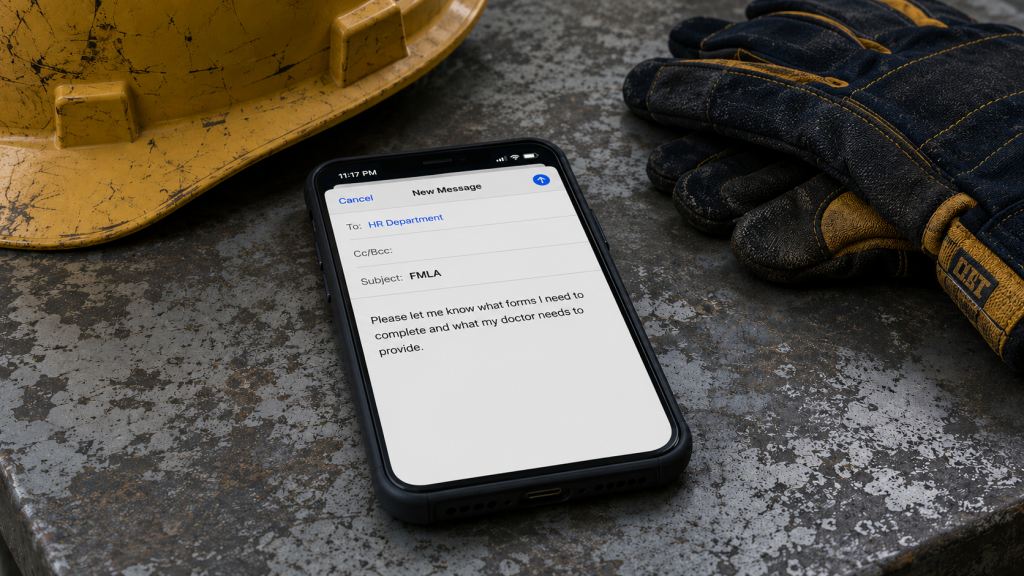
It didn’t take a formal leave request. It didn’t take a doctor’s note. One email asking for FMLA forms was enough to trigger retaliation protection.
TL;DR: An employee with a long disciplinary history asked his HR contact how to request FMLA leave and was fired about two weeks later. The Sixth Circuit held that requesting FMLA paperwork is protected activity, reversing the district court on that point, but affirmed summary judgment for the employer because two-plus years of documented performance problems and a signed last-chance agreement made pretext impossible to show.
The employee worked as a field technician for a heavy equipment company. His disciplinary file read like a cautionary tale — for the employee, not the employer: attendance warnings, performance improvement plans, and a “last chance” agreement signed in October 2018 warning that any further violation meant termination. Two months later, a supervisor accused the employee of not wearing steel-toed boots. The employee emailed HR saying he was mentally distraught and having an anxiety attack. HR responded by mentioning FMLA as an option and directing him to another contact. He emailed that contact the same day, asking what forms he needed to submit for FMLA leave for his “medical condition.” HR sent him the forms. He never returned them. A few weeks later, he was fired.
The Sixth Circuit granted summary judgment for the employer, but not before correcting the district court on an important point.
Asking About FMLA Is Already Protected — Even Before the Forms Come Back
The district court had ruled that simply requesting information about the FMLA process wasn’t “protected activity.” The Sixth Circuit disagreed. Relying on its 2023 decision in Milman v. Fieger & Fieger, the court held that the FMLA protects the “exercise or attempt to exercise” statutory rights, and that includes the very first step toward requesting leave. Asking for the paperwork is that first step. Firing an employee the moment they ask how the FMLA works, the court explained, would allow employers to “evade liability as a matter of course” by pulling the trigger before the employee could establish entitlement.
The employee’s failure to return the forms didn’t change that analysis. Whether an employee followed through on the paperwork goes to causation and pretext, not to whether the initial inquiry was protected.
Why the Employer Still Won: The Last-Chance Agreement Did the Heavy Lifting
The employer prevailed because the employee couldn’t show pretext. The documented performance history, accumulated over more than two years before any FMLA inquiry, was extensive and uncontested. And the last-chance agreement was decisive: once the employee signed it, any further policy violation was contractually sufficient grounds for termination. The record showed numerous violations between October 2018 and January 2019, including failure to follow required procedures, using unapproved personal vehicles on company property, and overcharging customers.
Temporal proximity alone wasn’t enough. Two weeks between the FMLA inquiry and termination can support a prima facie inference of retaliation, but the court made clear it can’t carry the pretext showing on its own.
This combination — protected activity established, pretext foreclosed by documentation — is exactly the outcome that robust performance management makes possible. The employer didn’t win because it got lucky. It won because it had done the work.
The Documentation That Saves You
Performance records predating any FMLA inquiry are the primary defense. The reason this employer won wasn’t the last-chance agreement in isolation, it was the two-plus years of disciplinary records that preceded it. An LCA signed days before a termination looks retaliatory. One signed months before an FMLA inquiry, as part of a documented progression, looks legitimate.
The FMLA clock may start at the inquiry, not the paperwork. The Sixth Circuit has now made clear that requesting FMLA forms is protected activity, but not every circuit has addressed the question the same way. Regardless of jurisdiction, the safest practice is to treat any employee conversation about FMLA as the start of a protected period and loop in HR immediately.
Last-chance agreements need to be acted on, not just signed. The LCA here was credible because it reflected a genuine documented progression, but employers who have grounds to terminate under an LCA and wait, even unintentionally, until after an FMLA inquiry create exactly the timing problem this employer narrowly avoided. If the violations are serious enough to warrant an LCA, they should be serious enough to warrant prompt action when they continue.
Performance documentation isn’t just good HR practice. In FMLA retaliation cases, it’s often the whole ballgame.