Search
 The Employer Handbook Blog

FMLA Leave Is Over. When Does the ADA Require More Time Off?


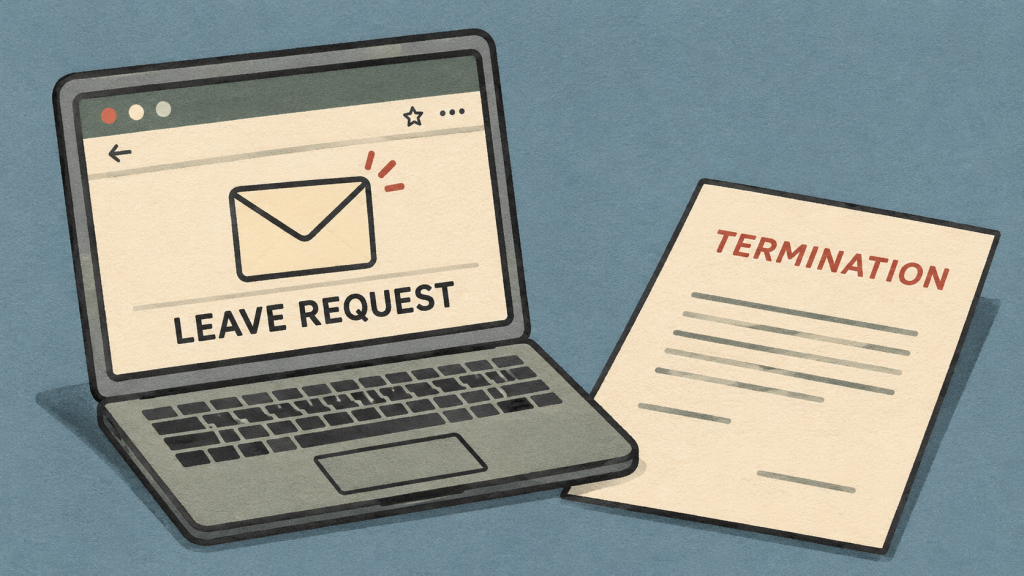
On the last day of her FMLA leave, a retail sales associate emailed HR to ask what other leave was available. Two days later, she got a termination letter.
TL;DR: The Tenth Circuit revived three ADA claims after a retailer fired an employee who asked for more medical leave. A jury could find that HR knew about her limitations and that a few more weeks of leave could have been a reasonable accommodation.
📄 Read the Tenth Circuit’s opinion
She thought she was ready to go back to work
A sales associate at an appliance store got sick in March 2020. She figured she’d be back in a few days. She ended up making several trips to the emergency room, and the retailer approved 12 weeks of FMLA leave.
By April, she felt better. Her doctor cleared her, and HR asked her supervisor to arrange her return. Three days later, she emailed HR again. The weakness had come back.
By May, she was dealing with stomach pain. Her doctor scheduled an endoscopy, and she asked HR what would happen if she used up all 12 weeks. HR suggested waiting to see what the doctor found. Then the endoscopy got pushed back to June 9. HR expected her back at work on June 8.
She sent HR a doctor’s note advising her to stay home until her symptoms improved and she had the results. She testified that she told HR by phone she expected to return a few weeks after the procedure, once her doctor figured out how to treat her.
When HR called again, she emailed that she was having trouble speaking and asked what to do. HR wanted a phone call and left the email unanswered. She asked again about leave on June 8. The next day, HR told her the job was still available and suggested she could resign if she couldn’t come back.
The retailer fired her on June 10. Its letter acknowledged that she’d asked for more time for what the company described as a gastrointestinal disorder unrelated to her original leave. It also said she hadn’t returned or contacted the company.
When is “a few weeks” enough?
Under the ADA, an employer may have to grant additional unpaid leave after FMLA runs out if the employee needs it because of a disability, the leave would reasonably allow the employee to return and do the essential parts of the job, and it would not cause undue hardship. The employer needs enough information to understand that the employee is asking for help with a disability. Symptoms and their effect on the employee can give the employer that information before a formal diagnosis. The EEOC’s leave guidance explains how to evaluate those requests.
So what did HR know? The sales associate had described trouble breathing and speaking. She’d sent a doctor’s note and tied her request to an upcoming procedure. The retailer’s own letter acknowledged the connection between the medical condition and the leave request. A jury could find that HR understood both what she was dealing with and why she needed more time.
Then there’s the harder question. Would more leave help her get back to work? The Tenth Circuit requires a workable estimate of when symptoms will improve enough for the employee to do the job. Open-ended leave falls short. An estimate can be enough.
Here, the note explained why she needed to stay out. According to her testimony, she told HR she expected to return a few weeks after a scheduled test that would help her doctor decide how to treat her. The test could have changed that estimate. A jury could still find that the request was reasonable based on what HR knew at the time.
The retailer had won summary judgment. The Tenth Circuit revived all three ADA claims, leaving open whether the employee had a qualifying disability.
Before the return date, give the person who can stop a termination the full leave record. The calendar tells them when FMLA ends. The emails, call notes, and medical note tell them what still needs an answer.
What HR can check before closing out FMLA leave
The ADA can require more leave after FMLA ends
If an employee needs a few more weeks because of a disability and that time would reasonably allow them to return and do the essential parts of the job, the ADA can require unpaid leave unless it would cause undue hardship. Here, the employee’s estimate was a few more weeks after her endoscopy. Before denying a request like hers, assess what covering those extra weeks would actually mean for the business.
The return estimate may be outside the doctor’s note
The note said she needed the test results and time for her symptoms to improve. The estimate of a few weeks came from the employee, according to her testimony. Put both in the leave record. If the estimate depends on a scheduled procedure, agree on when you’ll check back about the expected return.
HR can have notice before there’s a diagnosis
An employee can ask for an ADA accommodation simply by explaining what their condition keeps them from doing and why they need more time off. When a request comes in as an “FMLA extension,” read it alongside what the employee has already told HR about their symptoms and limitations. If those communications connect the request to a possible disability, follow up on what you still need to know while the employee is waiting for a diagnosis.
The termination letter explained the firing. It also gave the EEOC evidence that HR understood why she’d asked for more time.