Search
 The Employer Handbook Blog
A $10+ Million Verdict Against SHRM. A Second Fight Over Who Pays It.


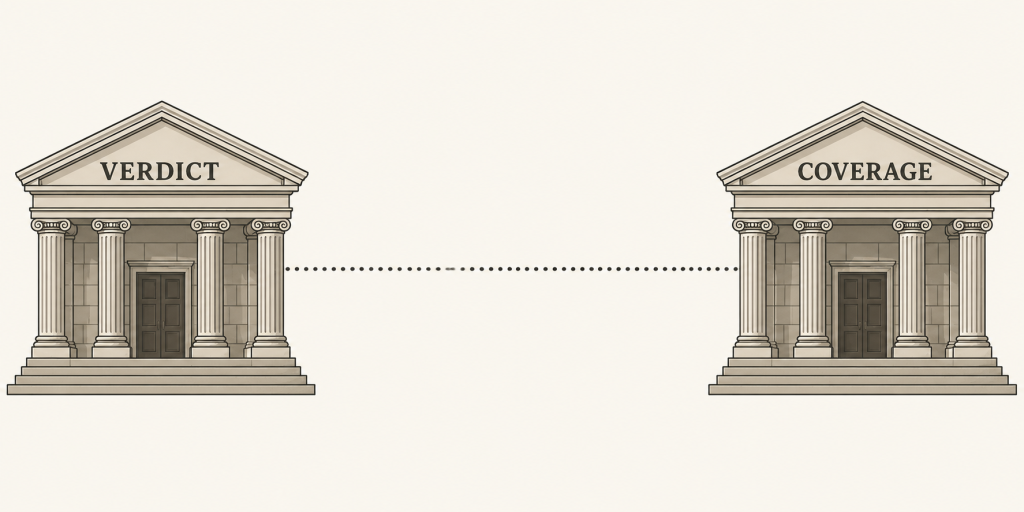
Last year, a jury hit the Society for Human Resource Management (SHRM), the professional association many HR practitioners look to for certifications and guidance, with a $10 million punitive damages verdict. Now its own insurance company says that’s SHRM’s bill to pay, not theirs.
TL;DR: SHRM’s employment practices insurer has filed a declaratory judgment complaint asking a federal court to rule that it owes nothing toward a $10 million punitive damages award entered against SHRM in an underlying race discrimination and retaliation case, arguing Virginia law bars insurance coverage for punitive damages tied to intentional conduct.
The Underlying Verdict That Started This
A former SHRM employee sued the organization in Colorado federal court in 2022, alleging race discrimination and retaliation under Section 1981. A jury sided with her on December 5, 2025, awarding $11.5 million total: $1.5 million compensatory, $10 million punitive, finding SHRM would not have fired her but for her race and her complaints about discrimination. SHRM asked the court to set the verdict aside; in April 2026, the judge refused, calling SHRM’s arguments unconvincing given the trial evidence. SHRM has appealed to the Tenth Circuit.
That verdict alone would be a significant story. But it isn’t the story SHRM’s insurer wants front and center right now.
The Insurer Says the Punitive Damages Aren’t Its Problem
According to the complaint, the insurer had issued SHRM an employment practices liability policy and agreed to defend the case, but did so under a reservation of rights specific to how the policy defines “Damages.” It alleges the insurer told SHRM in writing after the verdict it wouldn’t cover the punitive portion, SHRM’s coverage counsel asked it to withdraw that position, and it declined. In July 2026, the insurer sued, asking a federal court to formally declare it has no obligation to pay.
The complaint’s legal argument rests on the policy’s own text and Virginia law. According to the complaint, an endorsement to the policy defines covered “Damages” in two connected parts.
- First, the definition lists what counts as covered, and “punitive and exemplary damages” are on that list, so the policy doesn’t exclude them outright.
- Second, that same definition carries a built-in condition: punitive and exemplary damages are covered “unless uninsurable pursuant to any applicable law,” and the definition specifies that for a risk located in Virginia, Virginia law is what decides whether they’re insurable. SHRM’s headquarters and the policy itself point to Virginia as the relevant location. Under Virginia Code Section 38.2-227, insurers can’t cover punitive damages tied to intentional acts, only negligence. Because Section 1981 liability and the jury instructions both required a finding of intentional discrimination, the insurer claims this verdict lands squarely in the category its own policy carves back out.
No court has ruled on either argument, and SHRM hasn’t filed a public response.
Why an Insurance Complaint Belongs on an Employment Law Blog
This fight is about who writes the check after a workplace dispute is over, and that’s precisely the piece anyone managing employment risk should watch. A jury found intentional discrimination, and the insurer now argues that makes the verdict’s punitive portion uninsured. A discrimination verdict and a coverage denial are two separate problems, either enough to plan around. No court has agreed with the insurer’s argument yet, but if your EPLI policy has a Virginia nexus or similar exclusion, the same argument could be made about your coverage.
A Policy That “Covers” Punitive Damages May Still Have a Condition Attached
According to the complaint, this policy included punitive damages as covered, but only “unless uninsurable” under a specific state’s law, an exception that can eliminate coverage entirely, and the insurer flagged that exact carve-out in its reservation of rights when it agreed to defend the case. If accurate, that’s a useful reminder that a reservation of rights isn’t a one-time formality; it can be a standing question mark that resurfaces years later, right before the number on the table gets real.
The State Whose Law Controls May Not Be the One You’d Guess
The underlying case was tried in Colorado, but according to the complaint, the coverage fight runs on Virginia law because that’s what the policy specifies. Employers tend to assume coverage follows the state where a claim is filed or the employee worked. It can instead follow whatever state the policy names, and that state’s rule decides the outcome.
A Settlement Doesn’t Come With a Punitive Damages Surprise Later
A negotiated settlement forecloses punitive exposure; a jury verdict doesn’t. Once a jury finds intentional discrimination, punitive damages and any coverage fight that follows are largely out of the employer’s hands, as this case shows. That risk is worth weighing honestly before deciding whether to settle or try a discrimination case.
A punitive damages verdict is rare. A coverage denial on top of it is the double whammy. Most employers never draw either card. This is what it looks like to draw both.