Search
 The Employer Handbook Blog
The Racial Slur the CEO Knew About. The $21 Million Verdict That Followed.


A racial slur used in 2007 was still admissible evidence at a 2024 trial. The employer’s failure to address it helped produce a $21 million verdict.
TL;DR: A physician employed for 21 years as medical director of a hospital clinic sued under the Washington Law Against Discrimination, claiming a race-based hostile work environment and retaliation. After a 16-day trial, the jury returned a $21 million verdict. A Washington appellate court affirmed, upholding the verdict, the evidentiary rulings, and the trial court’s refusal to reduce the damages award.
Twenty-One Years of Feeling Unwelcome, One Slur That Started It All
The employee served as medical director of a satellite clinic serving primarily African American patients from 1999 to 2020. He testified that for his entire tenure, staff doubted his intelligence and competence because of his race, and that he was “a person not welcome in the space that [he] really felt was [his] professional home.”
In 2007, a senior leader at an affiliated research institute called the employee the N-word in front of another employee. The incident was reported to the foundation president, HR, and the CEO. Nothing happened. The man who used the slur continued working at the hospital until 2020. When the employee raised it with the hospital’s medical director, he changed the subject.
In 2019, the employee raised concerns at a board meeting that the hospital was deprioritizing funding for the African American community the clinic served. Months later, a HIPAA investigation was opened against him, then expanded into a broad leadership review ending in a recommendation for a “360 review” and executive coaching. He testified he knew those tools were used to push people out and resigned. The jury found both a hostile work environment and retaliation and awarded $21 million. The appellate court affirmed.
Why a 2007 Slur Was Still Evidence in 2024
The hospital argued the slur fell outside the statute of limitations. The court rejected that under the continuing violation doctrine, which works like this: a hostile environment develops through the cumulative effect of individual acts over time. As long as one act of discrimination falls within the limitations period, the entire history of that hostile environment is fair game. The plaintiff doesn’t need a slur within the last three years. He needs to show the earlier conduct was part of the same ongoing hostile environment as something that did fall within the period. The standard for linking those acts together, the court noted, is not high.
The employee testified that conditions never improved during his 21-year tenure, and that the CEO later praised the man who had used the slur even after it was reported. That was enough for the jury to draw the connection.
The Post-Departure Report That Went to the Jury
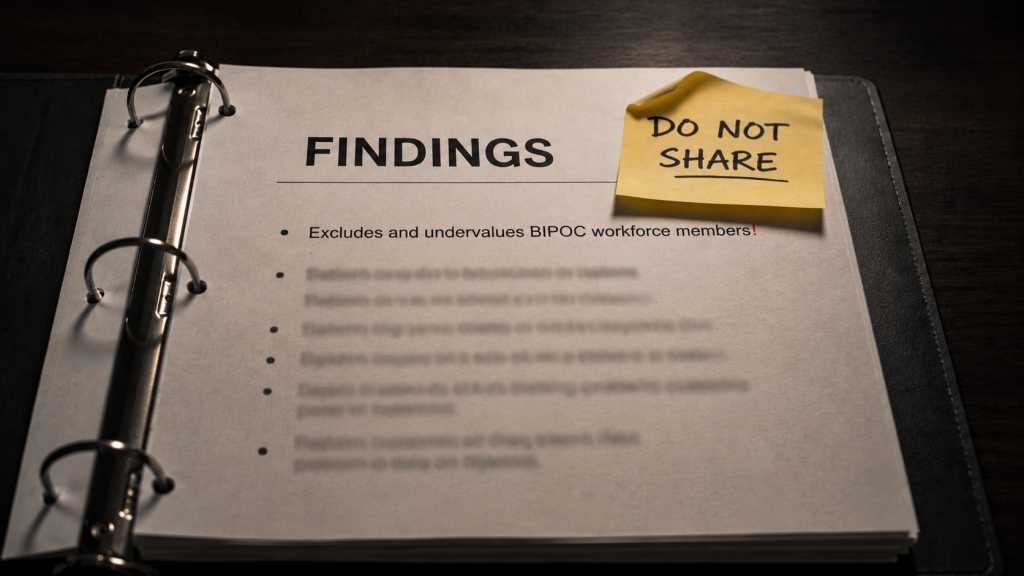
After the employee resigned, the hospital hired outside counsel to assess racial equity. The report found the hospital had failed to adequately investigate the slur allegation and that the work environment “excludes and undervalues BIPOC workforce members.” The hospital tried to keep the report out of evidence as a subsequent remedial measure. The court admitted it.
The subsequent remedial measures rule protects evidence of corrective actions taken after an incident from being used to prove liability. The theory is that employers shouldn’t be penalized for fixing problems. But the rule covers the implementation of fixes, not the investigation reports that identify them. An investigation into what went wrong is not a remedial measure. It is a document that describes the problem, and this one described it in damaging detail.
What Employers Should Take From This
An unaddressed complaint is not a closed file. The slur reached the CEO in 2007. Nothing happened. Seventeen years later it was part of a $21 million verdict. Every complaint buried without meaningful follow-up extends the liability window for every future claim.
A candid post-incident investigation report is admissible evidence. Commissioning an outside assessment can look like accountability. It can also produce a written record of everything that went wrong. Before commissioning one, understand that candid findings may be admissible at trial.
When an investigation expands after protected activity, the expansion could seem like retaliation. The inquiry here started as HIPAA and grew into a broad leadership review after the employee spoke up at a board meeting. That sequence supported the retaliation verdict. If an investigation legitimately needs to expand, document the business reason at the time, not after the lawsuit is filed.
This case is decided under Washington state law, but the continuing violation doctrine, the subsequent remedial measures rule, and the retaliation framework all have direct federal analogs under Title VII. The $21 million is Washington-sized. The mistakes that produced it are not.