Search
 The Employer Handbook Blog
Fired a Medical Marijuana User After a Drug Test? A Pennsylvania Court Says Not So Fast.


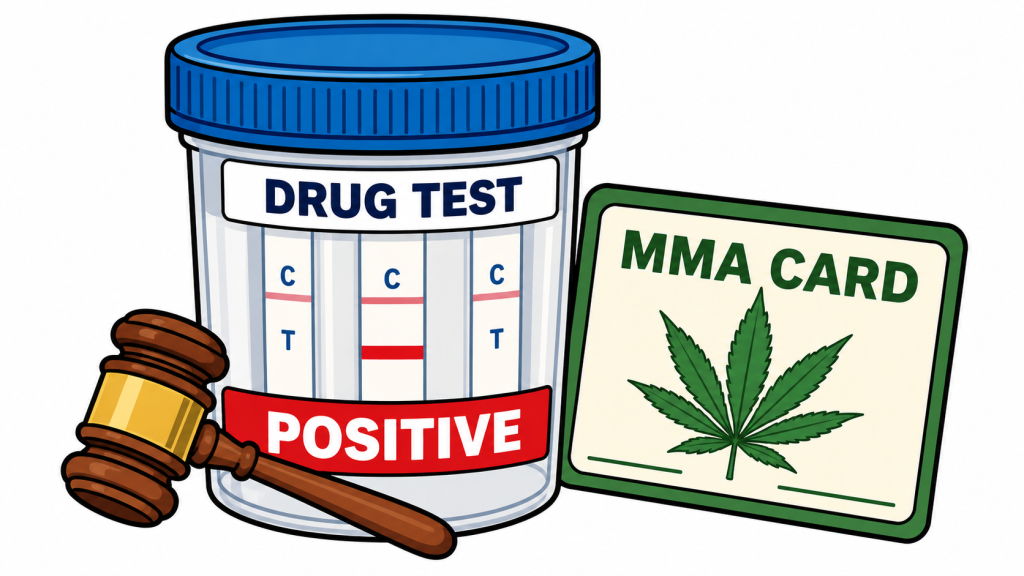
Firing a medical marijuana user after a positive drug test may seem straightforward — until a federal court explains why it isn’t.
TL;DR: A Pennsylvania federal court denied summary judgment to a farm-supply retailer that fired a medical marijuana cardholder after a positive post-injury drug test, holding that Pennsylvania’s Medical Marijuana Act is not preempted by the federal Controlled Substances Act. The employer’s argument that employing a marijuana user would violate federal gun laws also failed because the employee’s actual access to firearms was disputed. The case goes to trial.
A Drug Test, a Workers’ Comp Claim, and a Firing
The employee in this case disclosed his Pennsylvania medical marijuana card to his manager on his very first day of work in January 2023. He was hired as a stocker, eventually promoted through two roles, and by early 2024 was working as a department lead of consumables. In January 2024, he suffered a workplace injury. The employer’s policy required a drug test before he could return. He tested positive for THC. The employer fired him in February 2024.
The employee sued under Pennsylvania’s Medical Marijuana Act (MMA), which prohibits employers from taking adverse action against employees “solely on the basis of such employee’s status as an individual who is certified to use medical marijuana.” He also brought a common law wrongful discharge claim tied to his workers’ compensation filing. The court denied summary judgment on all claims.
Why the Federal Preemption Defense Didn’t Work
The employer’s core argument was that federal law wipes out Pennsylvania’s marijuana protections entirely — marijuana is illegal under the Controlled Substances Act (CSA), so any state protections must give way. The court rejected both forms of conflict preemption the employer raised. On obstacle preemption, the CSA targets people who use, possess, and distribute drugs illegally. It says nothing about what private employers can do to employees who use marijuana off-duty. Congress has also blocked the Justice Department from interfering with state medical marijuana laws every year since 2015 — a deliberate choice, not an oversight.
The impossibility preemption argument was more creative: the store sells firearms and ammunition, and federal law prohibits drug users from possessing guns, so employing a marijuana user would expose the company to federal firearms liability. The court found a factual dispute that killed this argument. The employee declared under oath that he had no Gun Barn access, no keys to locked inventory, and no more access to the merchandise than any customer walking off the street. That question goes to a jury.
One Footnote Worth Flagging
The court noted that on April 28, 2026, the Justice Department reclassified medical marijuana from Schedule I to Schedule III. The opinion applied Schedule I analysis because that was the law when the employee was fired. But Schedule III status removes one of the principal arguments for federal preemption, an argument that was already losing in court.
Three Drug-Testing Practices This Case Should Prompt You to Revisit
The preemption defenses failed here, but the underlying employer mistakes are avoidable.
Post-injury testing policies that don’t account for impairment are your biggest exposure. THC metabolites can remain in the system for weeks after off-duty use. If your policy requires automatic termination on any positive result regardless of whether impairment was plausible, you may be in the same position this employer is in.
The firearms exception is fact-specific, not categorical. The court rejected the gun-law argument because the employee’s actual duties kept him away from firearms. A blanket assertion that any employee might handle guns someday isn’t legal cover. You need documented, specific job duties.
Schedule III reclassification is a policy-review trigger. Categorical zero-tolerance policies built on federal preemption are getting harder to defend. If your drug-testing policy hasn’t been reviewed recently, that review is overdue.
This is a Pennsylvania case, but the preemption argument it rejected isn’t unique to Pennsylvania. Employers in any state with medical marijuana protections are running the same risk with the same zero-tolerance policies.