Search
 The Employer Handbook Blog
Before You Fire Someone for FMLA Paperwork Problems, Make Sure Your System Worked


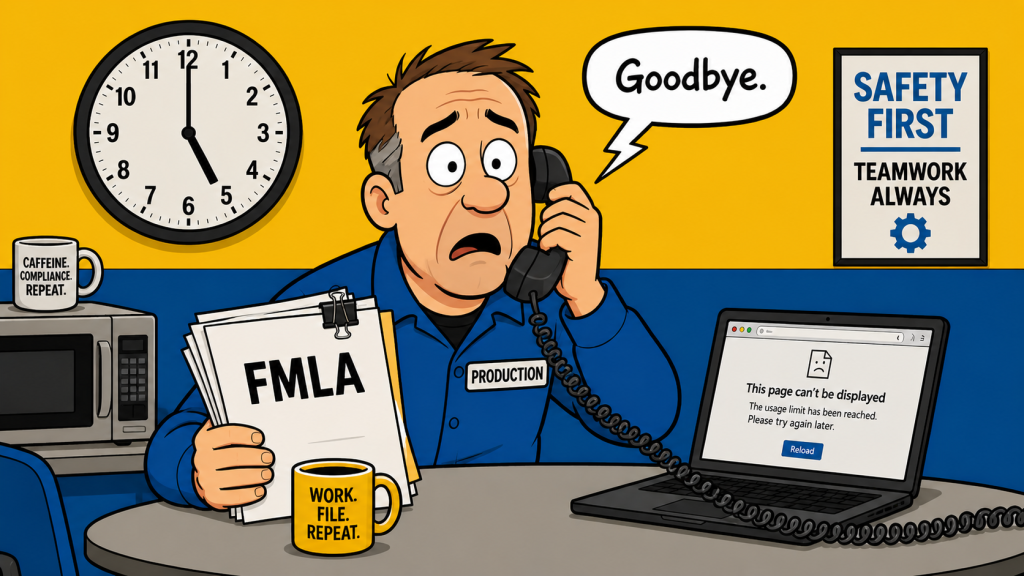
A 19-year employee couldn’t reach his FMLA administrator. The phone system hung up on callers at 5 p.m. An HR rep told him not to worry. Then he was fired for dishonest FMLA reporting.
TL;DR: A Wisconsin federal court denied summary judgment to the employer on both FMLA interference and retaliation claims brought by a production employee terminated after his company switched FMLA administration to a third-party administrator whose phone system was, in the employee’s words, “almost impossible to get ahold of anybody.” The court found a reasonable jury could conclude the TPA’s broken system discouraged the employee from taking FMLA leave, and that the employer’s stated reasons for firing him were causally connected to his FMLA use. Both claims go to trial.
When the Phone System Hangs Up on You, That Is Not FMLA Compliance
The employee had worked at the same manufacturing facility since 2005. He was approved for intermittent FMLA leave in early 2023 to care for his mother, who had ovarian cancer, and for his own migraines.
In July 2023, the employer switched FMLA administration to a third-party insurer. The employee tried to report his absences through the new system. The phone line left him on hold and disconnected callers still waiting at 5 p.m. He was hung up on four or five times. The website and automated service didn’t work either. His supervisor told him during the transition that as long as his paperwork was correct, he wouldn’t be penalized if the TPA’s system failed.
By October 2023, the employee had accumulated 54 attendance points and received a Decision-Making Leave. He called the TPA to back-report his absences as FMLA leave. An HR rep reviewed his file and told him, “You’re covered. Don’t worry about it. We’ll take care of everything.” He stopped pursuing it.
Three months later, he was fired for excessive absenteeism, dishonest FMLA reporting, and failure to follow notification procedures. The HR manager who drafted the termination recommendation never spoke with him about the alleged discrepancies before doing so.
He sued for FMLA interference and retaliation. The court denied summary judgment on both claims.
A TPA’s Broken System Is Still the Employer’s Legal Problem
On interference, the court held that an actual denial of FMLA benefits isn’t required. An employer that implements a “burdensome approval process” or discourages employees from requesting leave can interfere with FMLA rights even without formally denying a request. A reasonable jury could find that a phone system that hung up on employees and a website that didn’t work crossed that line.
On retaliation, every reason the employer gave for the termination, absenteeism, dishonest reporting, failure to follow procedures, was directly connected to the employee’s FMLA use. The HR manager also never discussed the alleged discrepancies with the employee before recommending his termination.
Outsourcing FMLA administration does not outsource FMLA liability.
Three Gaps That Turned a TPA Problem Into a Trial
Pre-termination investigation is not optional when FMLA is in the picture. The HR manager identified alleged discrepancies in how the employee reported his absences but fired him without asking him about them. Before terminating any employee with FMLA-connected attendance issues, document that conversation.
Supervisor assurances during a TPA transition create legal exposure. Two people told this employee he was covered and not to worry. Neither representation was authorized, and neither was accurate. Train managers and HR staff on what they can and cannot promise employees about FMLA status during a system transition.
TPA performance is your audit responsibility. If employees can’t reach the TPA, can’t navigate its website, and can’t get absences recorded, the employer owns that failure in court. Before switching administrators, test the intake process. After the switch, verify that employees can actually use the system.
A phone line that hangs up on employees at 5 p.m. is not a paperwork problem. It’s an FMLA problem.