Search
 The Employer Handbook Blog
A False Cancer Diagnosis Could Not Cure the Employer’s Very Real ADA Problem


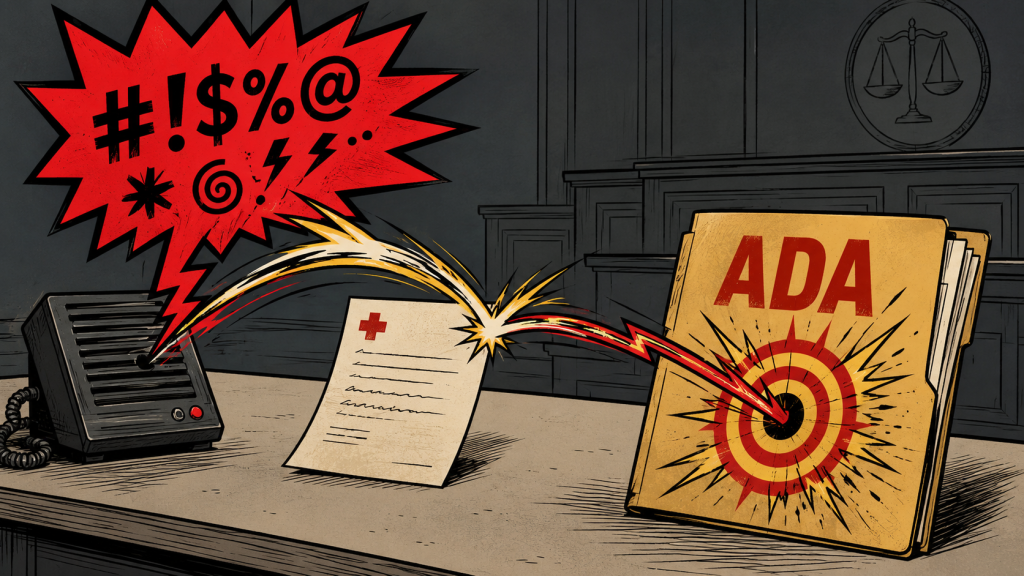
He claimed that when he told his employer he had cancer, his boss reacted by saying, “Are you f*****g kidding me? Your obligations are here.” As it turned out, the diagnosis was wrong. That did not spare his employer from facing an ADA trial.
TL;DR: An employee told his employer that he had cancer and needed three days off. The diagnosis was wrong, but the employer allegedly believed it when it fired him four days later. A federal court granted the employer summary judgment on his FMLA and ADA accommodation claims while allowing his ADA discrimination and retaliation claims to proceed to a jury.
A cancer diagnosis, three days off, and one spectacularly bad response
A car salesperson received a call from his doctor telling him that his Cologuard test was positive for colon cancer. He informed his manager and HR, provided a doctor’s note, and requested three days off.
According to the employee, his manager responded: “Are you f*****g kidding me? Your obligations are here.” HR reminded him that the dealership was in “peak workload season.”
Four days after requesting leave, on his first day back, the employer fired him. Follow-up testing later revealed that he did not have cancer. The original result was a false positive.
The employee sued. At summary judgment, the employer defeated his FMLA claims and his ADA failure-to-accommodate claim. But the court allowed his ADA discrimination and retaliation claims to proceed to a jury.
The wrong diagnosis defeated some claims, but not all of them
The FMLA claims failed because the employee did not actually have a serious health condition. His ADA accommodation claim also failed because an employee whom an employer merely “regards as” disabled is not entitled to a reasonable accommodation.
The discrimination claim presented a different question: What did the employer believe when it fired him?
The court found sufficient evidence that the employer regarded the plaintiff as disabled. He had reported a colon cancer diagnosis to both his manager and HR. Whether the diagnosis later proved accurate did not change what the employer allegedly understood when it made the termination decision.
The employer pointed to poor sales performance. But the firing came only four days after the leave request, and the manager’s alleged reaction supplied something more than timing alone. A jury could find that the stated performance reason was pretext.
Employers cannot evaluate these situations with information learned after the decision. HR must slow down, separate the medical issue from any performance concerns, and assess what the decisionmakers knew at that moment.
Three lessons from a diagnosis that turned out to be wrong
An incorrect diagnosis can still create “regarded as” ADA exposure
The employee did not need to prove that he actually had cancer. He needed evidence that the employer perceived him as having a nonminor, nontransitory impairment. HR’s knowledge of the reported diagnosis helped supply that evidence.
A bad reaction can transform suspicious timing into evidence of pretext
Four days was already tight timing. The manager’s alleged response made it worse. An emotional remark connecting workplace obligations to medical leave can undermine an otherwise legitimate performance explanation.
Preexisting performance records are especially important when timing looks terrible
The employer cited objective sales numbers, but the court viewed the conclusion that those numbers made the plaintiff unqualified as subjective. If termination was already under consideration, contemporaneous documentation showing when, why, and by whom that decision developed becomes critical.
The cancer diagnosis was false. The evidence of the employer’s alleged reaction was real enough to require a trial.