Search
 The Employer Handbook Blog
29 Absences, 120 Late Arrivals, and an HR Discrimination Claim That Punched Out Early.


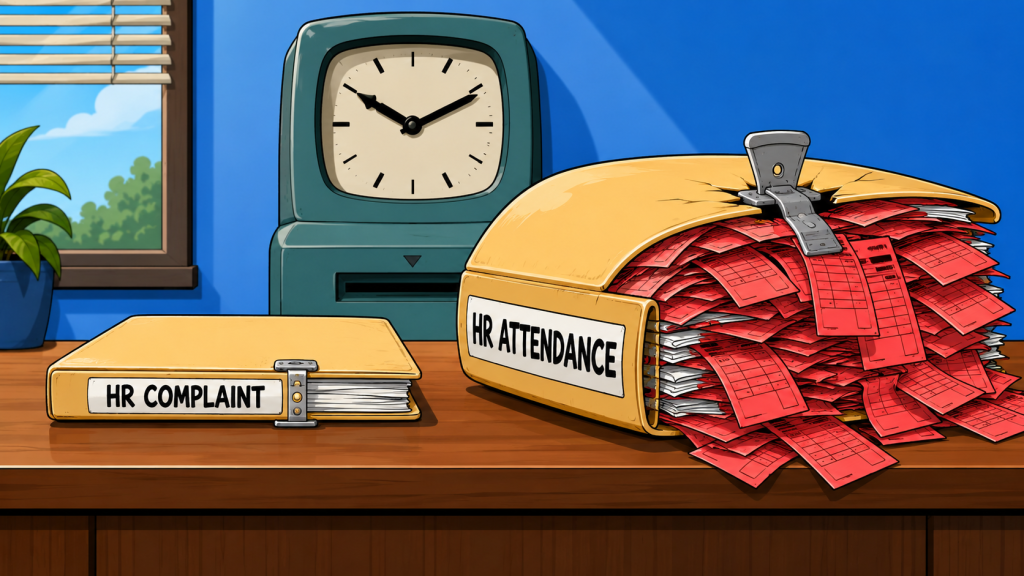
Her job was tracking employee attendance. Unfortunately, someone was tracking hers, too.
TL;DR: A federal appeals court upheld summary judgment for an employer after an HR employee alleged discrimination, retaliation, and a hostile work environment. Documented attendance problems, incomplete work, and internal investigations helped defeat her claims.
A Job Fair, a Missing Photo, and a Growing List of Complaints
After a poorly attended job fair, an HR employee’s manager let her leave early. A photographer arrived later, and the employee believed her manager had excluded her so corporate photographs would feature only white employees.
She also complained about a white coworker’s preferable schedule, although her initial complaint did not mention race or sex. An HR vice president investigated and found no intentional exclusion. The employee later received her preferred schedule and a promotion.
After the promotion, the employee objected to a workstation reassignment. In November, an HR director investigated, explained the business reason for the move, and discussed her earlier concerns about the job fair and work schedule.
In December, she emailed the director again and accused her manager of embarrassing her in front of coworkers because she was Black. The director met with her, said he would speak with coworkers, and learned that she had also filed a charge with a state civil rights agency.
The Person Tracking Attendance Had Attendance Problems
The employee’s new position required her to record attendance violations by plant employees. Meanwhile, her manager had raised concerns about her own attendance before learning about the discrimination charge.
After learning of the charge, the HR director advised the manager against counseling the employee one-on-one. The manager instead addressed attendance during a group meeting.
By March, the employee’s review identified 29 absences, 120 late arrivals, and 136 unrecorded attendance points. Card-swipe records supported the attendance concerns, and the employee acknowledged falling behind.
The employer placed her on a performance improvement plan. After meetings about the plan and a period of FMLA leave, she resigned and alleged constructive discharge.
The Performance Problems Had to Be a Cover for Something Unlawful
The employee sued for discrimination, retaliation, and a hostile work environment. Even assuming the employer effectively forced her to resign, she still needed evidence that discrimination or retaliation motivated its actions.
Once the employer identified attendance problems and incomplete work as its reasons, she had to show those explanations were false, did not actually motivate the decision, or were insufficient to justify it.
She could not. Card-swipe records confirmed the attendance issues, she acknowledged the incomplete work, and her manager raised attendance concerns before learning about the discrimination charge. Several months also separated the charge from the performance plan.
The employee testified that her manager instructed her not to hire people from Pontiac, which she described as predominantly Black. But the court concluded that the instruction was not direct evidence of discrimination against her because it required an inference about the manager’s motives and did not concern an employment action taken against her.
The court rejected the discrimination and retaliation claims without deciding whether a constructive discharge occurred. The hostile-work-environment claims failed separately because the employee did not challenge an independent basis for their dismissal on appeal.
Four Pressure Points When HR Becomes the Complainant
Complaint Ownership Requires an Independent Decision-Maker
When an HR employee accuses an HR manager, the usual reporting chain may be compromised. Assign the review to an uninvolved senior leader, outside investigator, or counsel.
Performance Documentation Carries More Weight When It Predates the Complaint
The employer documented attendance concerns before the manager learned about the discrimination charge. Preserve contemporaneous records and confirm that discipline follows established expectations.
Every Complaint Deserves a Prompt, Documented Response
The employer investigated multiple complaints, interviewed relevant employees, and communicated its findings. Evaluate new allegations on their own merits and document the response.
Protected Activity Does Not Suspend Performance Expectations
A discrimination complaint does not prohibit employers from addressing attendance or performance problems. Apply ordinary standards consistently without allowing the complaint to influence the assessment.
The employee was responsible for tracking attendance. Her employer’s records explained why her discrimination and retaliation claims never made it to trial.