Search
 The Employer Handbook Blog
Who’s Responsible If Your Benefits Vendor Drops the Ball on ADA Leave?


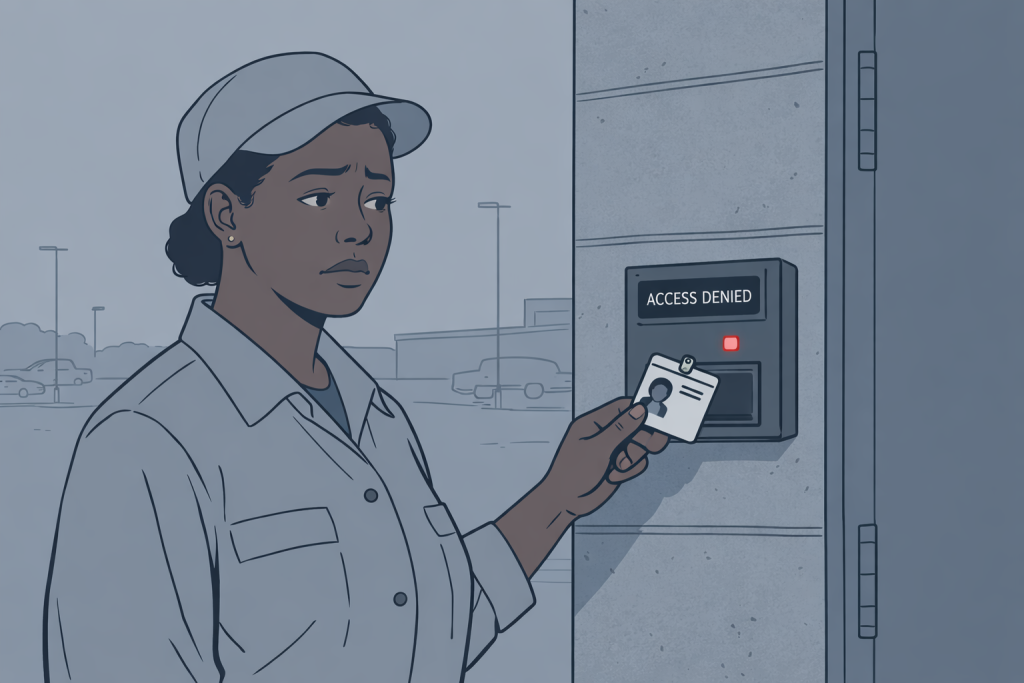
She showed up to work one morning, scanned her badge, and nothing happened. That’s allegedly how a 10-year employee learned she’d been fired while undergoing chemotherapy.
TL;DR: The EEOC sued a turkey processing employer, alleging it violated the ADA by refusing to accommodate an employee undergoing breast cancer treatment and then firing her under its attendance policy for missing shifts during chemotherapy. The complaint highlights how outsourcing leave administration to a third-party vendor doesn’t insulate employers from ADA liability.
Fired During Chemo for Missing Shifts During Chemo
According to the EEOC’s complaint, the employee worked at the employer’s North Carolina processing facility for about a decade before being diagnosed with breast cancer in August 2023. She contacted the employer, with her daughter translating from Haitian Creole, to disclose her diagnosis and request leave for chemotherapy treatments. The employer allegedly told her to contact its third-party benefits administrator.
That’s where things supposedly fell apart. The EEOC alleges the third-party administrator never actually opened a leave request. Instead, the employee and her daughter were shuffled between the administrator’s Supplemental Health Benefits Department and its Leave Management Department without anyone processing the leave. Meanwhile, the employee racked up attendance points for every chemo-related absence, even after submitting doctor’s notes.
When the employee returned to work on September 5, 2023, the employer allegedly handed her a final attendance warning. She worked the next day, missed several more shifts for chemo between September 7 and 11, and was removed from the schedule on September 11. The employer fired her on September 13, but according to the complaint, nobody told her. She found out on September 18 when her badge wouldn’t scan. An HR representative then confirmed the termination and, per the complaint, rejected another doctor’s note on the spot.
The EEOC filed suit in the Eastern District of North Carolina, alleging two ADA violations: failure to provide a reasonable accommodation and termination because of a disability.
The Vendor Did the Paperwork. The Employer Owns the Liability.
The EEOC’s position here is blunt: hiring a third-party administrator to handle leave does not transfer the employer’s ADA obligations. The complaint alleges the employer “washed its hands” of the situation and left a non-English-speaking employee with cancer to navigate a vendor’s claims process alone. As the EEOC’s regional attorney put it, “Even when an employer hires a third-party benefits administrator, the employer remains responsible for complying with anti-discrimination law.”
If the allegations hold up, employers relying on similar vendor setups should take notice. Having a process on paper is useless if employees who need leave cannot actually use it.
Practical Steps for Employers Right Now
Vendor oversight is an ADA compliance obligation, not an HR preference. If your third-party leave administrator is the front line for accommodation requests, you need a mechanism to confirm those requests are actually being processed. Build periodic audits of open and denied claims into your normal HR and legal workflow
Attendance policies need an accommodation carve-out that works in practice. A no-fault attendance point system is not inherently unlawful, but it becomes a problem fast when disability-related absences are counted the same as unexcused ones. The EEOC specifically flagged the employer’s failure to exempt the employee’s chemo absences from its point system.
Language barriers multiply ADA risk. The employee here spoke almost exclusively Haitian Creole. According to the complaint, the employer relied on bilingual coworkers as informal translators and did not ensure non-English-speaking employees understood its leave and accommodation processes. If your workforce includes employees with limited English proficiency, your interactive process needs to account for that, or it isn’t really interactive.
Termination notice itself can compound damages. The allegation that the employee was never told she was fired, and discovered it only when her badge failed, is the kind of fact that resonates with juries. Even if your termination decision is defensible, the method of communicating it can take on a life of its own.
This case hasn’t been decided, and the employer will get its say. But the EEOC’s theory here, that outsourcing leave administration without maintaining oversight creates ADA exposure, is one that applies to every employer with a third-party benefits vendor. If you haven’t stress-tested that relationship recently, this complaint is a good reason to start.