Search
 The Employer Handbook Blog
Who Should Investigate a Harassment Complaint? Not the Harasser.


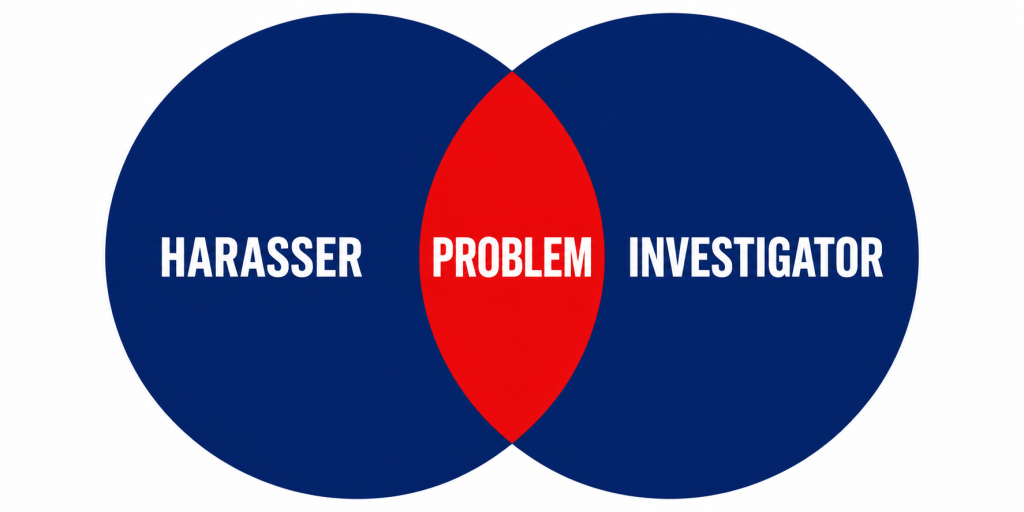
The answer seems obvious. The facts of this case suggest otherwise.
TL;DR: A bisexual Army police officer was called a homophobic slur multiple times by a coworker. Less than two months after reporting the harassment, management launched an investigation into the officer — and appointed the slur-using coworker to run it. A federal appeals court reversed summary judgment for the Army on Title VII discrimination, retaliation, and hostile work environment claims, finding sufficient evidence of subordinate bias to create a genuine dispute of material fact.
A Coworker Called Him a Slur. Then Got Put in Charge of the Investigation.
Between mid-2015 and early 2016, a fellow officer referred to the employee — who is bisexual — using homophobic slurs multiple times, including at a work presentation and while introducing him to a new colleague in front of five or six other officers. The employee reported the harassment to management. His supervisor counseled the offending officer and required him to apologize.
Less than two months later, management opened an investigation into the employee for alleged workplace misconduct — and assigned the officer who had used the slurs to conduct it. That officer took statements only from people with personal vendettas against the employee, refused to take statements from witnesses favorable to him, and had already telegraphed his attitude, stating at the outset that the employee had “already been doing some other stuff . . . that’s going to get him in trouble.” The investigating officer also testified he was “disappointed” and had “less trust” in the employee after the employee reported the harassment.
The supervisor then reassigned the employee, removed his police powers, and initiated termination proceedings — based solely on the statements the investigating officer provided, without independently assessing their credibility or giving the employee a meaningful opportunity to respond. A federal appeals court reversed summary judgment for the Army on all three Title VII claims.
Putting the Wrong Person in Charge of the Investigation Tainted Everything That Followed
On discrimination and retaliation, the court found the adverse employment actions occurred under circumstances giving rise to an inference of discrimination, and that subordinate bias may have compromised the stated reasons for those actions. Under the subordinate bias doctrine, a biased subordinate’s discriminatory or retaliatory motive is imputed to the employer if the subordinate influenced, affected, or was involved in the adverse employment decision.
The supervisor’s own statement made things worse: he maintained that the slur could be appropriate and was inappropriate here only because the employee complained about it.
On hostile work environment, the district court had treated the slurs as three isolated offensive utterances. The appeals court found that error: the totality of the circumstances — repeated use of a highly offensive slur, in front of colleagues, including outing the employee to the department — was enough to survive summary judgment.
The lesson for employers isn’t confined to Army police units. Any time a biased subordinate drives an investigation, the employer risks inheriting that bias — even if the ultimate adverse action was fully justified on other grounds.
Three Investigation Failures That Created the Liability
When an employee reports harassment, the investigation that follows is as legally significant as the underlying conduct. These facts illustrate how quickly a defensible situation becomes an indefensible one.
- The investigator’s relationship to the complaint is not a technicality: Assigning the accused — or anyone with a stake in the outcome — to investigate the reporter is the kind of process failure that can taint an otherwise legitimate adverse action. The subordinate bias doctrine means the investigator’s motive can become the employer’s motive. Neutrality isn’t a formality; it’s what separates a defensible outcome from a reversible one.
- Crediting one side without independent verification is its own liability: The supervisor here acted solely on statements provided by the investigating officer without independently assessing their credibility. Courts treat that as a red flag. An investigation that collects only hostile witnesses and ignores favorable ones doesn’t just look bad — it can defeat the employer’s legitimate nondiscriminatory reason at the pretext stage.
- What the supervisor says during the process becomes evidence: The supervisor’s statement that the slur was inappropriate only because the employee complained about it is the kind of comment that follows an employer into litigation for years. Remind managers that their off-hand remarks about protected activity — before, during, and after an investigation — can surface at trial as evidence of discriminatory intent.
An employer can do everything right on the underlying conduct and still end up in court because of how it ran the investigation. The process is the exposure.