Search
 The Employer Handbook Blog
If Full-Time Remote Work Would Eliminate an Essential Function, You Don’t Have to Offer It


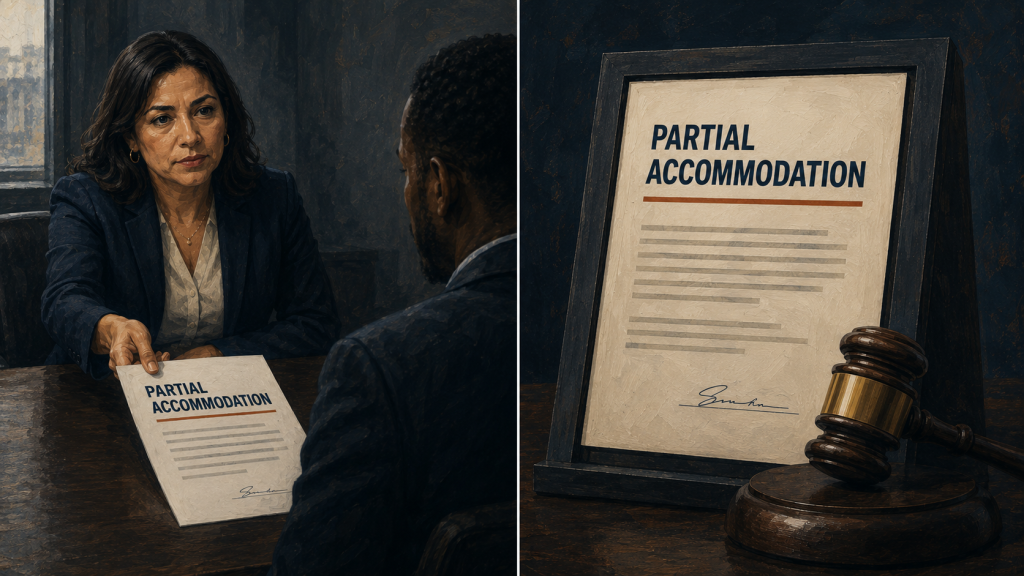
COVID-era telework was an emergency exception. Courts aren’t treating it as a permanent rewrite of job requirements.
TL;DR: An IT systems administrator working as a government contractor requested full-time telework as an ADA accommodation after being diagnosed with Autism, Major Depressive Disorder, and Social Anxiety Disorder. His employer offered two to three days per week of remote work, but the Army — which controlled the contract — vetoed full-time telework. After a mental breakdown and missed work, the employee was terminated. The Fifth Circuit affirmed judgment on the pleadings for the employer, finding the employee was not a qualified individual under the ADA because full-time telework would have eliminated an essential function of the job.
The Army Controlled the Telework Decision
The employee had actually been teleworking during COVID, which made the eventual dispute feel unfair to him. When the Army and his employer transitioned back to in-person work in February 2022, the return overstimulated him. He was later diagnosed with Autism, Major Depressive Disorder, and Social Anxiety Disorder, and in August 2022 he was hospitalized for suicidal ideations.
In October 2022, he submitted a physician’s note and an accommodation request asking to work from home full-time. His employer’s project manager was initially on board, but Army officials determined that full-time telework “would not be in the best interest of the organization.” Under the contract, the Army held express authority over whether employees could telework. The employer threaded the needle by offering two to three days per week of remote work, which was in place from December 2022 through January 2023.
It wasn’t enough. On January 16, the employee had a mental breakdown and stopped coming in. He eventually told the employer he “needed to work from home.” He was terminated on January 25 for absenteeism and other concerns. The Fifth Circuit affirmed judgment on the pleadings for the employer.
COVID Telework Didn’t Rewrite the Essential Functions of the Job
The core holding: in-person attendance was an essential function of this job. The Army said so, current employees in similar roles weren’t teleworking, and the court flagged several instances where the employee and his supervisor were unable to communicate effectively while remote.
On the COVID argument, the Fifth Circuit was blunt: the fact that an employer temporarily allowed telework during a public health emergency “does not transform the essential functions of his job.” The ADA doesn’t require employers to permanently convert a job to remote work just because they once made an emergency exception.
The partial accommodation — two to three days per week — also satisfied the ADA. The statute doesn’t entitle employees to their preferred accommodation, only a reasonable one. Because the employee couldn’t perform the in-person functions even with that accommodation, the court found he wasn’t a qualified individual at all.
What Employers Facing Post-COVID Accommodation Requests Should Lock Down
The partial accommodation here was the employer’s strongest card. Offering two to three days of remote work, documenting it, and sticking with it gave the court a concrete basis to say the ADA obligation was satisfied. Employers who simply deny accommodation requests without attempting any middle ground are in a much harder position.
- The COVID baseline trap: Employees who teleworked during the pandemic will argue it proves the job can be done remotely. Get ahead of this now. If in-person attendance is a genuine requirement post-COVID, document why: supervision needs, team coordination, client-facing duties, contract requirements, or operational considerations. A contemporaneous paper trail beats a retroactive explanation in litigation.
- When someone else controls the workplace conditions: If a client, customer, facility operator, or other third party constrains what accommodations you can offer, document that constraint. The contract language here was central to the court’s analysis, but the same principle applies to any employer whose workers operate at a client site or under a service agreement — staffing firms, facilities contractors, professional services providers, healthcare workers placed at hospital systems. An oral “the client won’t allow it” is a weak foundation for a denial. Get the restriction in writing before you need to defend it.
- The alternative accommodation isn’t a consolation prize: Offering an another accommodation — if it’s genuinely reasonable and documented — can be the difference between a defensible denial and a failure-to-accommodate finding. “We offered X, which was reasonable; we couldn’t offer Y because it would eliminate an essential function” can be a complete legal defense. Employers who bypass and go straight to denial give up that ground entirely.
The broader lesson here isn’t unique to military contractors. Any employer whose workforce operates outside its own walls — at client sites, on service contracts, in leased facilities — needs to think about what constraints exist on the accommodations it can actually deliver, and get those constraints documented before a request arrives. Reactive documentation is harder to sell than the kind that was already in place.