Search
 The Employer Handbook Blog
When Off-Duty Speech Crosses the Line: Lessons for Private Employers from a Public Employee’s Termination


What happens when an employee posts something offensive online—off the clock, but under their real name—and it causes a workplace backlash?
In one recent case, a government communications staffer wrote an inflammatory blog post opposing the Equality Act. The language he used was graphic and anti-LGBTQ+. The employer received complaints, workplace disruption followed, and he was suspended, ordered to attend anti-discrimination training, and eventually fired.
He claimed the First Amendment protected him. A federal appeals court disagreed. And while the decision binds only public employers, the lessons extend well into the private sector.
TL;DR: A public employee was terminated after publishing an off-duty blog post containing inflammatory anti-LGBTQ+ rhetoric. The Eleventh Circuit upheld the termination, citing the disruption and reputational harm the speech caused. While private employers aren’t bound by the First Amendment, this decision offers clear guidance on managing off-duty speech when it undermines workplace culture or creates legal risk.
Off-duty, online, and deeply offensive
The employee published a blog post condemning the Equality Act, using language like “sodomy cake,” warning of being forced to hire a “child-molesting tranny with a beard,” and describing drag queen story hours as featuring a “flamboyant, homosexual pedophile in a dress.” The post was signed with his real name.
The article triggered a flood of public complaints and internal disruption. Coworkers raised concerns. The employer suspended him without pay and required anti-discrimination training. He refused—and was fired.
He sued under the First Amendment. The court upheld the termination, emphasizing that the employer’s actions were justified by the disruption—not the content of the speech alone.
Key Takeaways for Private-Sector Employers
1. It doesn’t have to go viral to justify discipline
You don’t need headlines to take action. If an employee’s off-duty conduct undermines morale, damages culture, or creates legal risk—even internally—you can respond. Quiet disruption is still disruption, and your policies should give you room to address it.
2. Belief is protected—but harmful expression is not
Employees have a right to their religious beliefs. But one of the lessons from this earlier EEOC case involving religious social media posts is that belief doesn’t shield expression that creates a hostile environment or violates anti-discrimination policies. You can respect belief while holding employees accountable for how they express it.
3. Focus on workplace disruption—not personal beliefs
When employees say or post something controversial off the clock, the key question isn’t whether you agree with the viewpoint—it’s whether the speech creates disruption or legal exposure in the workplace. Avoid the trap of becoming the “morality police.” Base decisions on workplace impact, not personal offense or ideology.
4. Enforce clear policies—and apply them consistently
Your conduct and social media policies should make clear that off-duty behavior may still have consequences if it affects the workplace. When responding to problematic speech, document the specific impact—disruption, coworker complaints, or reputational harm. And be consistent. Uneven enforcement can invite claims of disparate treatment.
5. Consider state and federal protections before taking action
Some states (like California, Colorado, and New York) protect lawful off-duty conduct, including political speech. And under the NLRA, even non-union employees may be protected when speaking out about workplace conditions. Before disciplining off-duty speech, review applicable laws that could limit your options.
The bottom line
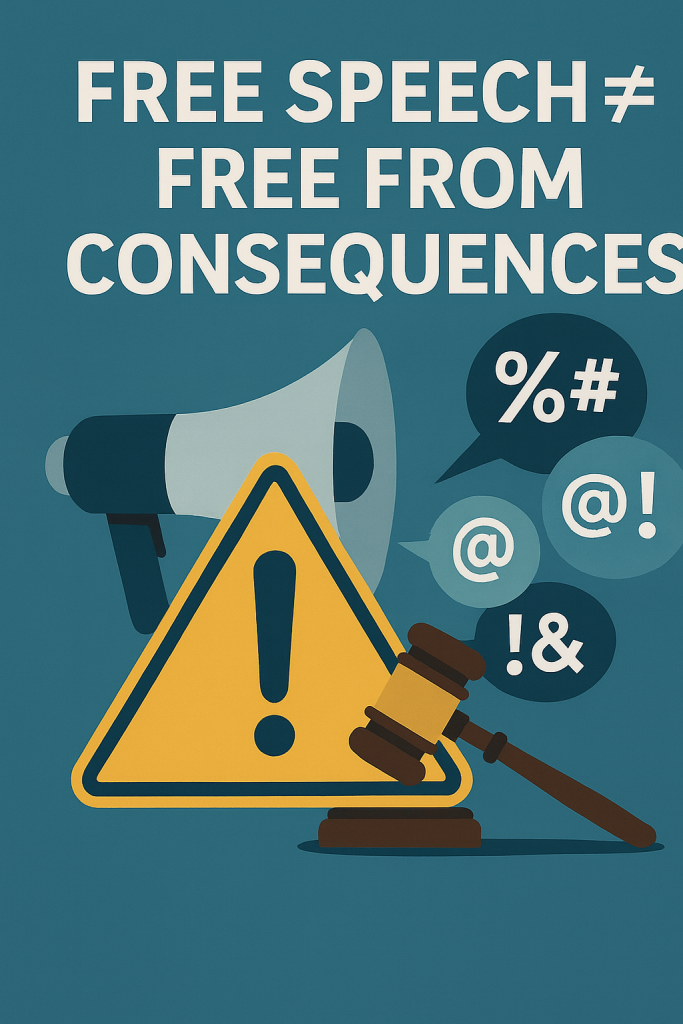
Off-duty speech isn’t immune from consequences—especially when it disrupts the workplace, causes reputational harm, or undermines employee morale. While the First Amendment constrains public employers, private-sector companies have more flexibility. Just make sure your response is grounded in clear policy, consistent enforcement, and documented impact.