Search
 The Employer Handbook Blog
Social Causes on Company Uniforms? A Court Just Gave Employers Some Much-Needed Clarity (and Caution)


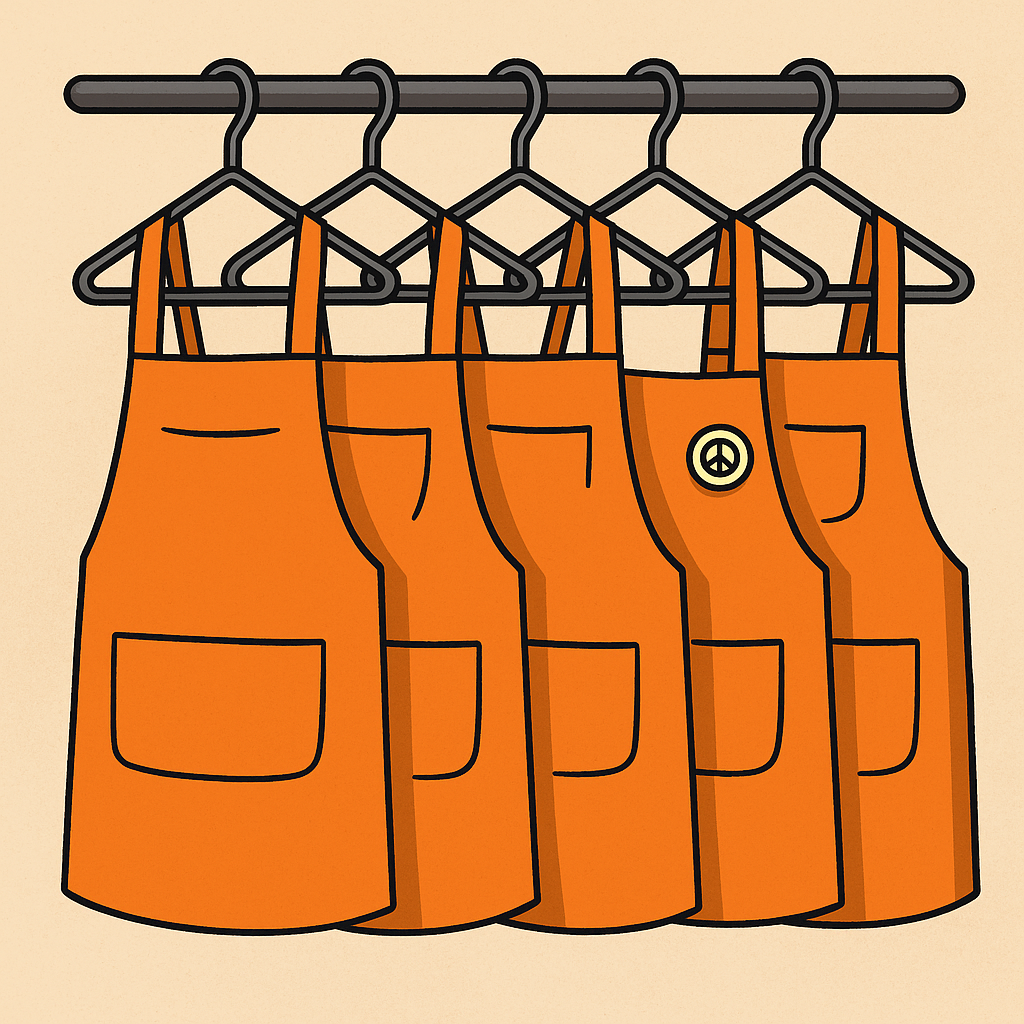
From lapel pins to lanyards to slogans on uniforms, employees are bringing social causes to work, and HR is left balancing expression, inclusion, and workplace order. A recent federal court decision involving a “BLM” message on a Home Depot apron shows where those boundaries start to take shape.
TL;DR: On November 6, 2025, the Eighth Circuit vacated and remanded an NLRB order that said Home Depot violated the National Labor Relations Act (NLRA) by requiring a Minnesota associate to remove “BLM” from a company apron. The court assumed without deciding that refusing to remove “BLM” could be protected under Section 7, but held the Board failed to credit “special circumstances” tied to safety, employee dissension, and public-image concerns in a Minneapolis-area store during a period of heightened unrest. The court declined to reach other issues.
📄 Read the decision (No. 24-1513)
Inside the store that started it all
At Home Depot’s New Brighton, Minnesota location, just miles from where George Floyd was murdered, the company’s trademark orange apron is part of the uniform. Employees may personalize it, but corporate policy forbids religious, political, or cause-related messages unrelated to workplace matters.
In late 2020, an associate added “BLM” to their apron. The store had already faced racial-tension incidents, including repeated complaints about a coworker and vandalism of a Black History Month display. When management asked the associate to remove the lettering, they offered alternatives such as diversity or Black History Month pins that expressed support without politicizing the apron.
During one of those meetings, the store manager told the associate that allowing “BLM” on an apron would also mean permitting other symbols employees might want to display, including a swastika. The manager said he believed “Black lives matter” and “all lives matter,” but insisted the company’s uniform policy had to apply equally.
The associate refused to remove the lettering and resigned. The company had also barred “Blue Lives Matter” and “Thin Blue Line” imagery, evidence that it enforced the policy evenly across viewpoints.
How the case reached the courts
Although Home Depot is not a unionized employer, the National Labor Relations Act protects certain concerted activity for many nonunion employees as well.
An administrative law judge dismissed the unfair-labor-practice complaint, finding no concerted activity. A divided NLRB reversed, concluding the associate’s refusal to remove “BLM” was protected under Section 7 and that Home Depot had constructively discharged them. The Board ordered reinstatement and back pay. Home Depot appealed.
The Court Reaffirms Employers’ Right to Enforce Neutral Rules
The court did not decide whether “BLM” on an apron was protected activity. Instead, it ruled that the NLRB misapplied the “special circumstances” rule, the narrow exception that lets employers limit expression when legitimate business interests outweigh employee rights.
The court said Home Depot’s situation fit that exception. Three facts stood out:
-
Context mattered. The store was minutes from where George Floyd was murdered. It had shut down twice because of nearby unrest, and tensions inside the workplace mirrored those outside. The court said the NLRB “blinked reality” by ignoring those conditions.
-
The rule was neutral and consistently enforced. Home Depot banned all political or cause-based apron messages, including “Blue Lives Matter,” and even offered alternatives like diversity or “Respect for All” pins. That evenhandedness was key.
-
Public image and safety counted. In a customer-facing business still recovering from protests, management did not need to wait for a confrontation to enforce a neutral rule designed to prevent one.
The court concluded that these factors justified Home Depot’s actions. It vacated the NLRB’s order and sent the case back for further proceedings.
What the court did not do
-
It did not declare that “BLM” or other social messages are never protected under the NLRA.
-
It did not forbid discussion of social or racial issues at work.
-
It did not hand employers a blank check. It simply reaffirmed that context, neutrality, and documentation matter when expression overlaps with safety and brand concerns.
Five takeaways for employers
-
Keep policies neutral and mean it.
State clearly that uniforms and required apparel cannot display any political, social, or cause-related messages unrelated to workplace matters. Apply that rule evenly across the board. -
Document the “why” in real time.
If you restrict a message, memorialize the conditions that made it necessary, such as customer-facing duties, recent unrest, employee conflicts, or local safety risks. Those details become your “special circumstances” record. -
Offer content-neutral alternatives.
When you prohibit one form of expression, direct employees to existing, company-approved ways to show inclusion or support, such as internal diversity initiatives, employee resource groups, or community volunteering, rather than personal slogans on uniforms. -
Train managers on consistent enforcement.
Consistency beats cleverness. Track prior enforcement decisions to show the rule is viewpoint-neutral. Remind managers that inflammatory hypotheticals, such as comparing “BLM” to a swastika, do more harm than help. -
Separate complaints from policy enforcement.
Employees raising discrimination concerns should still be heard. Keep that process separate from enforcing appearance rules to avoid the perception of retaliation.
A quick HR checklist
-
Review and update uniform and appearance policies for clarity and neutrality.
-
Audit prior enforcement examples for consistency across issues and viewpoints.
-
Provide managers with talking points for addressing unauthorized messages calmly and consistently.
-
Track local conditions that might justify a special-circumstances exception.
-
Coordinate HR, legal, and communications teams to ensure unified messaging.
The bottom line
The Eighth Circuit did not draw a bright line, but it did draw a sharper one. Employees can still speak out about workplace issues, yet employers may limit political or social slogans on required uniforms when they can show neutral policies, genuine safety or image concerns, and consistent enforcement.