Search
 The Employer Handbook Blog
Part Three: You Can’t Contract Away Work Time – and Overtime Rules for Commissioned Employees


On January 5, 2026, the U.S. Department of Labor’s Wage and Hour Division issued six opinion letters addressing a range of FMLA and FLSA issues. This post – part three of a three-part series – covers the final two letters, both under the FLSA, and both aimed at assumptions employers sometimes make about flexibility.
One letter addresses whether mandatory pre-shift “roll-call” time can be excluded from overtime calculations based on a collective bargaining agreement. The other addresses how to apply the commissioned-employee overtime exemption when state minimum wage exceeds the federal minimum wage – and what actually counts as commissions.
TL;DR: Time an employer requires and controls generally counts as hours worked for overtime purposes, regardless of what a collective bargaining agreement says. And for commissioned employees, the exemption still turns on federal thresholds and federal definitions.
📄 Read the opinion letters via the Department of Labor’s press release.
Mandatory Roll-Call Time Still Counts
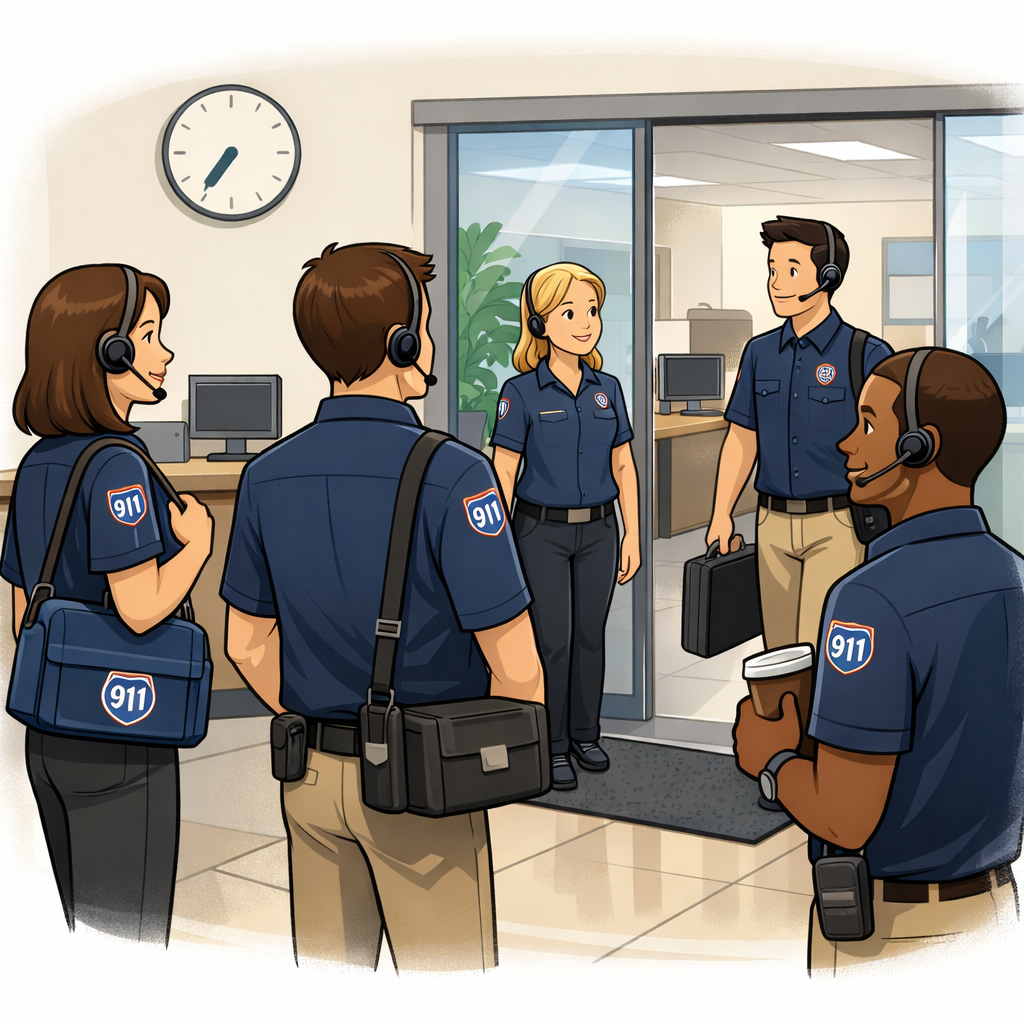
The first letter addresses a collectively bargained requirement that employees attend a 15-minute “roll call” before each scheduled shift. Under the collective bargaining agreement, that roll-call time was excluded from overtime calculations.
That provision did not control the analysis.
WHD explained that when employees are required to report at a specific time, attend roll call, and remain under the employer’s control, that time is compensable hours worked under the FLSA. A collective bargaining agreement cannot waive statutory overtime requirements.
The takeaway is simple and firm:
You can bargain over pay rates. You cannot contract away hours worked.
Contract language may govern how time is paid. It does not redefine whether required, controlled time counts as work for overtime purposes.
Overtime Rules for Commissioned Employees – Under Federal Law
The second letter addresses the commissioned-employee overtime exemption under the FLSA.
Two questions were presented. First, in states where the minimum wage exceeds the federal minimum wage, which rate applies when determining whether the employee earns at least one-and-one-half times the minimum wage for purposes of the federal exemption? Second, do tips count as compensation for purposes of determining whether more than half of the employee’s compensation comes from commissions?
WHD answered both questions under federal law.
For purposes of the federal exemption, the federal minimum wage controls – even in states with higher minimum wages. And tips do not count as commissions, nor do they count as compensation toward satisfying the exemption’s commission requirement.
That conclusion is limited, but important.
State law may still impose higher minimum wages, different overtime rules, or additional limits on exemptions. Employers must comply with those requirements regardless of whether the federal exemption’s thresholds are satisfied. Meeting the FLSA’s math does not guarantee compliance under state law.
What the letter makes clear is narrower: when applying the federal commissioned-employee exemption, the calculations are governed by federal standards, and compensation that is not commission-based cannot be used to make the exemption work.
What Employers Should Take From This
• Time required and controlled by the employer generally counts as hours worked under the FLSA, regardless of contract language.
• Collective bargaining agreements cannot waive federal overtime obligations.
• For the federal commissioned-employee exemption, the exemption turns on federal thresholds and federal definitions.
• Only true commissions count toward satisfying the FLSA’s commission requirement; tips do not.
• Satisfying the federal exemption does not eliminate the need to comply with state wage-and-hour laws, which may impose higher or different requirements.
Bottom Line
Nothing here rewrites the FLSA. The letters simply reinforce a consistent theme across this series: employer flexibility ends where statutory requirements begin. Whether the issue is roll-call time or overtime rules for commissioned employees, assumptions still need to survive the statute.