Search
 The Employer Handbook Blog
Paid Sick Leave Laws Protect Employees Who Follow the Rules. This Fox News Producer Didn’t.


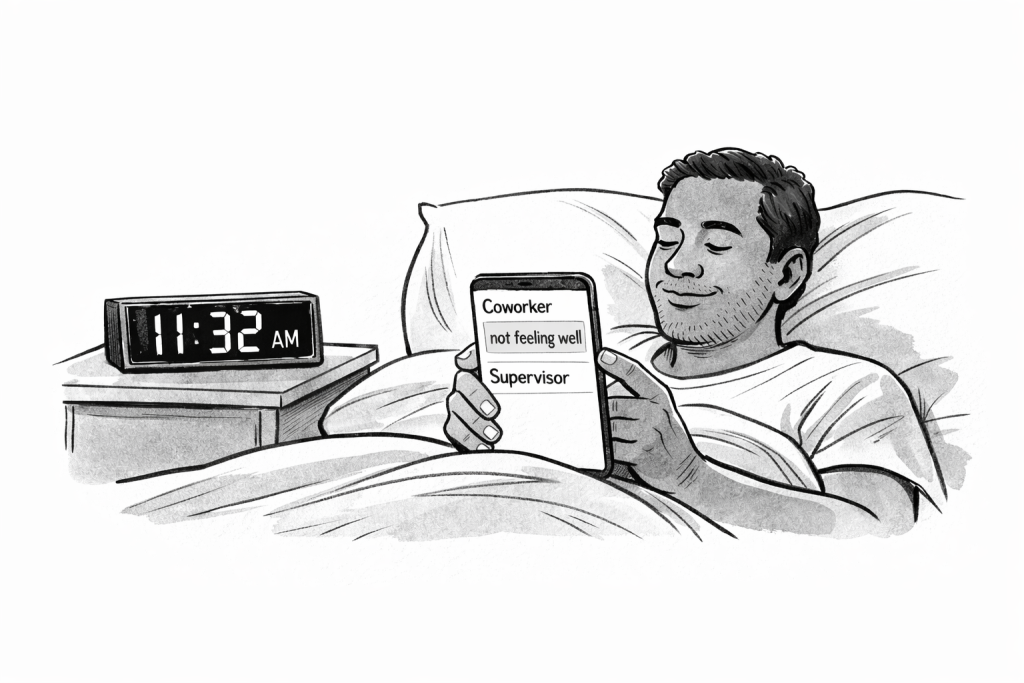
Most paid sick leave laws protect employees who follow the rules. A D.C. federal court just illustrated what happens when one doesn’t, and why a written call-out policy is the difference between a defensible termination and extended litigation.
TL;DR: A Fox News producer sued under the D.C. Accrued Sick and Safe Leave Act after being fired for an absence he failed to report on time. He knew the night before he’d be out, told a coworker but not his supervisor, and didn’t call his boss until midday. The court held his conduct wasn’t protected. Paid sick leave laws, including New Jersey’s, condition protection on reasonable notice, and he didn’t give any. Fox News won summary judgment.
He Knew the Night Before. He Called After Noon. Then He Called His Supervisor a Lousy Manager.
The plaintiff had been a Capitol Hill producer at Fox News since 2018. In September 2022, he got the COVID vaccine, felt ill about a week later, and according to his own father said that Sunday night he “was going to have to call in sick” the next day. Monday morning he didn’t show up. A coworker texted him; he replied he was unwell and was told to call the supervisor. He went back to sleep and didn’t call until after 11:30 a.m.
The supervisor told him to take the day. The next day, she called to discuss the late notice. The plaintiff became defensive and asked her “How would you like it if I called you up out of the blue and told you you were a lousy manager.” The supervisor emailed him calling the conduct “absolutely unacceptable,” looped in Fox’s bureau chief, and the plaintiff was fired the next morning. He sued under the D.C. Accrued Sick and Safe Leave Act (Sick Leave Act), claiming the termination was retaliation for taking sick leave.
The Notice Requirement Isn’t a D.C. Quirk. It’s How Most Sick Leave Laws Work.
Paid sick leave laws now cover a majority of U.S. workers across more than 20 states and dozens of cities. Nearly all condition protection on reasonable notice. The D.C. Sick Leave Act requires notice “as early as possible, in advance of the paid leave.” New Jersey’s Earned Sick Leave Law (NJSL) uses the same structure: for unforeseeable absences, an employer may require notice “as soon as practicable,” but only if the employer has notified the employee of that requirement. No written policy, no enforceable notice standard. The protection is conditional on both sides.
Fox’s policy required notification “as soon as possible and no later than two hours after normal starting time.” The undisputed record showed the plaintiff knew Sunday night he was calling out, told his dad and a coworker, and waited until midday to tell his supervisor. The court rejected each argument: the supervisor’s statement that he “handled it appropriate in calling in sick” didn’t make the notice timely; the “emergency” exception didn’t apply because the illness was foreseeable; and the two-hours provision was an outer limit, not a safe harbor. Fox won summary judgment.
Three Things to Fix Before the Next Sick Day Call
Write down exactly when and how employees must report an absence.
Under D.C., New Jersey, and most other sick leave laws, protection turns on whether the employee followed the employer’s notice procedure. Specify who gets the call, by what method, and the hard deadline. Fox’s policy had all three, and that’s what the court applied.
Train supervisors not to inadvertently ratify late notice.
The supervisor here told the plaintiff he “handled it appropriate in calling in sick.” That comment nearly sank the defense. Letting an employee take a sick day and waiving a call-out violation are not the same thing.
Document the termination reason before the meeting happens.
Fox had HR-prepared talking points and a contemporaneous email describing the outburst. That paper trail gave the court a clean, non-retaliatory reason for the firing. Without it, the two-day gap between the sick day and the termination is a much harder story to tell.
Sick leave retaliation claims are cheap to file and expensive to defend. A written call-out policy won’t prevent the lawsuit. It determines whether you’re defending the merits or just trying to survive them.