Search
 The Employer Handbook Blog
If Free Help Was Available and You Turned It Down, Can You Still Claim Undue Hardship?


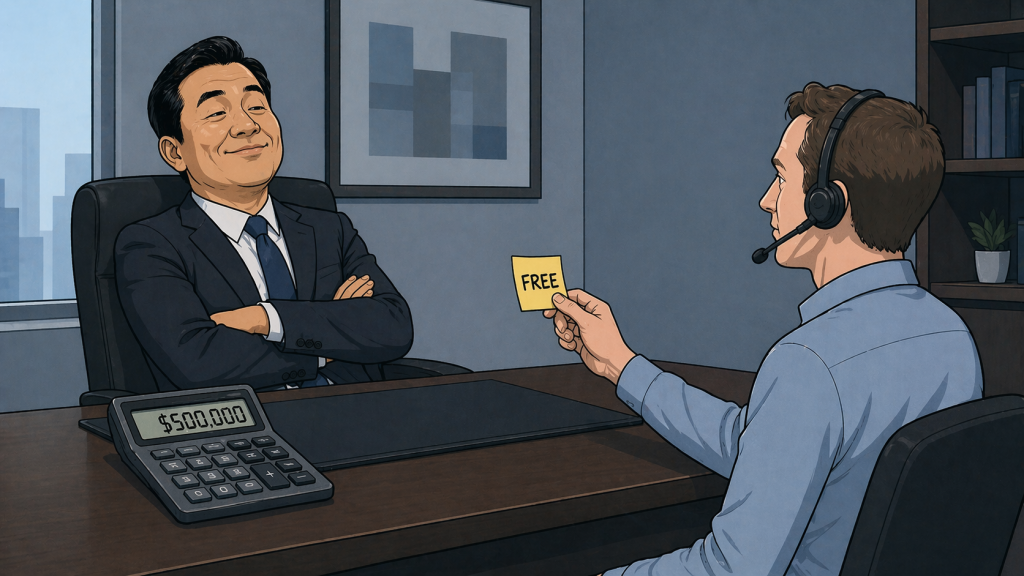
A blind customer care advocate asked for screen reading software. According to the EEOC, his employer tested two products, decided the software wasn’t compatible, turned down a free offer from a state agency to help, and terminated him. That sequence cost $270,000.
This week is EEOC Settlement Week on The Employer Handbook: one recent EEOC settlement per day, with practical takeaways for employers. Today is the fourth installment: a $270,000 ADA consent decree over a blind employee’s screen reader request and the free state assistance the employer turned down.
TL;DR: According to the EEOC’s complaint, a beverage company hired a blind employee as a customer care advocate, then terminated him after concluding its proprietary software was incompatible with screen readers, without engaging a state vocational counselor who had offered free assistive technology assessment and equipment. The EEOC sued under the ADA, and the case settled for $270,000 through a two-year consent decree that also requires the employer to hire an accessibility consultant to make its software screen reader compatible.
Free Help Was on the Table. The Employer Said It Had to Handle Accommodations Internally.
According to the complaint, the employee was hired in April 2022 as a customer care advocate at the employer’s Winston-Salem, North Carolina call center. He is blind. Before his start date, he notified HR, requested screen reading software, and connected the employer with his state vocational counselor, who offered to assess the systems and purchase whatever assistive technology was needed at no cost. The employer declined, stating accommodations had to be handled internally.
According to the complaint, the employer tested two screen reading programs and found three of its twelve proprietary software modules incompatible. In a July 2022 meeting, the employer told the employee that rebuilding the software would take at least a year and cost between $500,000 and $1,000,000. The complaint alleged those estimates were speculative rather than data-driven. The employer also stated that the affected software was used by only 250 of its 300,000 employees, that cloud-based replacement software compatible with screen readers was planned for 2025, and that the timing was not “congruent” with the employee’s employment.
The EEOC sued in May 2024 and reached an amended consent decree entered April 16, 2026, in the U.S. District Court for the Middle District of North Carolina. The $270,000 includes back wages and compensatory damages. The two-year decree requires the employer to retain an accessibility consultant to make its call center software screen reader compatible and file quarterly EEOC progress reports.
Three Things This Case Gets at That Standard Compliance Advice Misses
The takeaways here are different from the rest of the series. According to the complaint, the employer didn’t seriously investigate whether the problem was solvable before deciding it wasn’t. Three things to fix:
Turning away free outside assistance can gut an undue hardship defense before it starts
The ADA’s undue hardship analysis requires good-faith inquiry into available resources, including outside assistance that could offset accommodation costs. The consent decree requires the employer to identify such resources going forward, referencing the Job Accommodation Network by name. An employer that refuses free professional help before any cost analysis is poorly positioned to later claim undue hardship.
A speculative cost estimate is not an undue hardship determination
The complaint alleged the $500,000 to $1,000,000 rebuild estimate was not based on hard data. An undue hardship defense requires objective, documented evidence. When accommodation requests involve technology costs, employers should document how estimates were derived, not just what the number is.
A planned software upgrade doesn’t suspend today’s accommodation obligation
Telling an employee that a planned upgrade is not “congruent” with his employment is not a recognized basis for denying an accommodation. The ADA obligation runs in real time. A future upgrade is relevant context, but it doesn’t eliminate the obligation to find a workable interim solution.
Assistive technology accommodation requests will only become more common as work moves to digital platforms. Knowing how to evaluate them, and who to call, is worth getting right before the next one lands.