Search
 The Employer Handbook Blog
Fasten Your Seatbelts: The Honest Belief Doctrine Lands Again


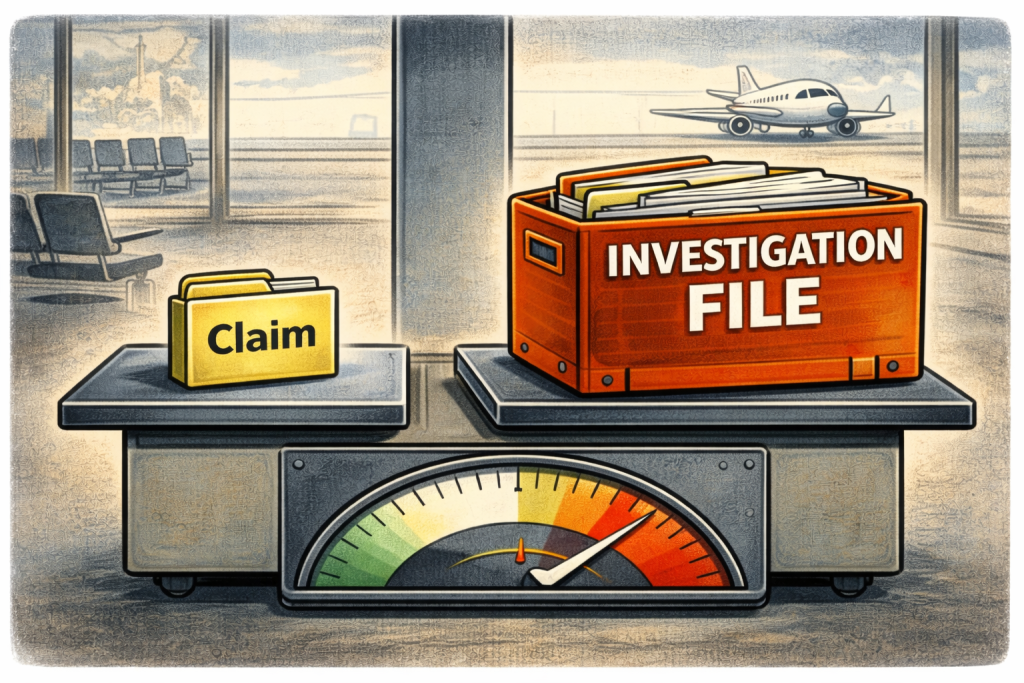
Not every workplace conflict that creates turbulence makes it to a jury. This one didn’t. The employer’s investigation held up under the honest-belief doctrine.
TL;DR: The Sixth Circuit affirmed summary judgment for an airline after a flight attendant received a Final Corrective Action Notice for allegedly violating its Workplace Violence Policy. She denied making the alleged threat, and a witness supported her. Still, the court held that the employer acted on an honest belief based on its investigation — and she failed to show pretext under Title VII and Michigan law.
The incident and the discipline
Two flight attendants clashed after landing in Orlando. One reported that the other said, “I will take you down.” The accused employee denied it.
Management gathered statements and escalated the matter to the employer’s Workplace Violence Committee, which had final authority on policy violations.
After reviewing the reports, the Committee concluded the statement was a verbal threat and violated policy. It recommended a Final Corrective Action Notice, removing the employee from her purser-qualified status for 36 months.
The coworker received Written Coaching because the Committee determined she had not violated the violence policy.
Leadership later requested a follow-up review, including consideration of a statement from the flight captain who believed the accused employee acted professionally. The Committee reached the same conclusion.
The Committee did not know the race of the employees involved.
The disciplined employee sued for race discrimination.
Why the claim didn’t take off
The Sixth Circuit assumed she could establish a basic discrimination case and went straight to the real issue: pretext.
To avoid summary judgment, she had to show the employer’s reason:
- Wasn’t true;
- Didn’t actually motivate the discipline; or
- Wasn’t serious enough to justify it.
She couldn’t.
The record showed the company believed she made the statement and disciplined her for violating its workplace violence policy.
That was enough.
The honest belief doctrine lands again
Even if there was a factual dispute about what was actually said, leadership at least held an honest belief that the statement was made.
The coworker reported it.
A manager stated the employee admitted making it shortly after the incident and later reaffirmed that account.
Under Sixth Circuit precedent, an employer does not violate Title VII when it disciplines based on an honestly held belief after a reasonable investigation.
Courts do not re-try workplace investigations. They look for evidence of discrimination.
There wasn’t any.
Three employer takeaways
1️⃣ Investigate and document.
Statements were gathered. A committee reviewed the matter. Leadership reconsidered it. That process mattered.
A documented investigation strengthens the honest-belief defense.
2️⃣ Apply policy consistently.
The employer distinguished between conduct that violated its Workplace Violence Policy and conduct that violated other workplace standards. That distinction supported the different discipline.
Clarity and consistency reduce risk.
3️⃣ Disputed facts aren’t enough.
She denied making the statement. A captain supported her. Leadership reconsidered.
Still no triable issue.
Title VII requires proof of intentional discrimination — not proof the employer might have been mistaken.
Final approach
When an employer investigates, applies a neutral policy, and acts on an honestly held belief, summary judgment is possible even when the employee disputes the facts.
She insisted the investigation got it wrong. The court wasn’t persuaded.
Surely that can’t be enough to win?
It was. And don’t call it Shirley.