Search
 The Employer Handbook Blog

Clock In, Park the Car, Lose the Job: An FMLA Retaliation Claim Falls Short


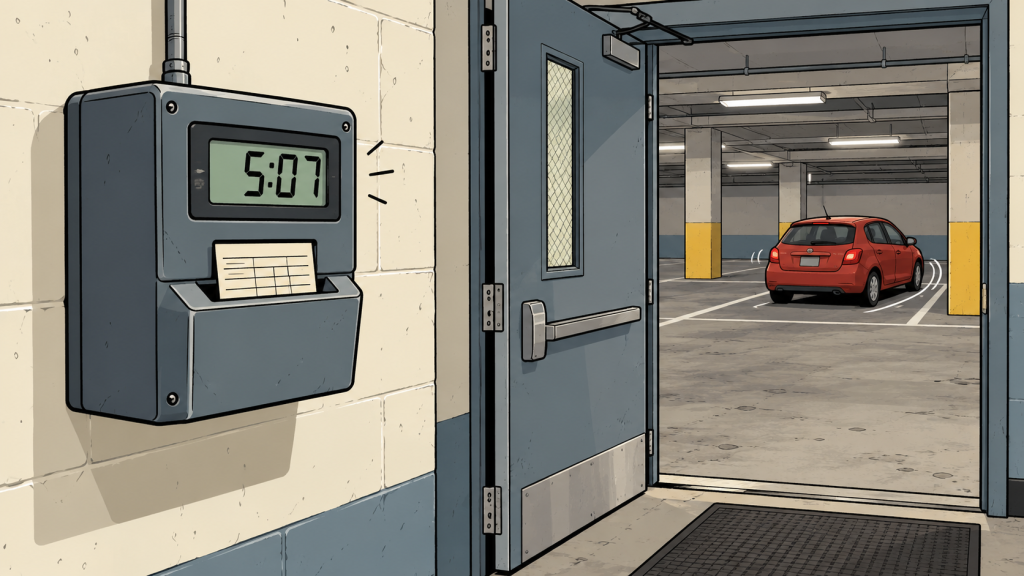
The time clock was inside the store. His car still needed parking. He decided the clock should come first.
Que será.
TL;DR: An employer defeated an FMLA retaliation claim after firing an employee two weeks after his leave ended. Security footage, the employee’s admissions, consistent enforcement, and a decisionmaker unaware of his leave supported the termination. The timing couldn’t overcome that evidence.
A seven-minute grace period became a parking strategy
The grocery employee had worked for the company since 2004 and managed its receiving department. He had taken intermittent FMLA leave for his daughter’s medical condition for years, including December 12–16, 2022.
On December 30, the employer fired him for misrepresenting his time worked. He sued for discrimination and retaliation, including FMLA retaliation, but the employer won summary judgment on all his claims.
The investigation started when managers couldn’t find him for a discussion about performance concerns. An associate store leader checked his timesheets and security footage, discovering something beyond the issues they had planned to discuss.
The employee had clocked in, left the building, and returned minutes later. Reviewing the preceding month’s footage revealed the same pattern nearly every shift he worked, with absences ranging from six to twenty-two minutes.
When HR asked about it, he admitted driving up, clocking in, returning to his car, and parking in the employee garage before coming back to work. He said he had done it for months because he was running late. The employer allowed a seven-minute grace period, and he regularly clocked in at exactly 5:07 a.m. before moving his car.
The paid-break explanation didn’t solve the problem
The employee argued that he was taking his allotted ten-minute paid break, which should have prompted progressive discipline rather than termination. But company policy prohibited adding paid breaks to the beginning of a shift, and several absences exceeded ten minutes anyway.
The employer’s stated reason was misrepresentation of time worked, a violation its handbook identified as potentially warranting discharge. It also supplied evidence of other employees fired for similar conduct, including one who clocked in and then left to park her car.
The decision followed an HR interview and review by a higher-level HR official who didn’t know about the employee’s FMLA leave or earlier discrimination and safety complaints. The store leader he accused of mistreatment did not participate in those termination discussions, and the court found no factual basis for attributing the decision to her alleged bias.
The calendar couldn’t explain away the investigation
For the FMLA retaliation claim, the employee needed evidence connecting his leave to his firing. His timing argument failed against the documented timekeeping misconduct and the fact that the person who decided to fire him didn’t know he had taken FMLA leave.
Before approving discipline close to protected leave, employers should examine the evidence supporting the reason, how similar cases were handled, and who actually influenced the decision. This employer could answer all three questions with specifics.
Three things worth checking before the termination call
The employee’s explanation needs an actual answer
HR heard the parking explanation, and the break argument couldn’t account for all the recorded time. When an employee offers an alternative explanation, test it against the records and policy before treating the misconduct as established.
Comparable discipline strengthens the policy
The employer could identify another termination involving the same parking maneuver. Check actual enforcement involving similar misconduct, rather than relying solely on handbook language permitting discharge.
The person approving termination needs more than a recommendation
Here, HR interviewed the employee before a higher-level official made the decision. Give the person approving discipline the supporting evidence and the employee’s explanation, so the review amounts to more than agreement with a supervisor.
A termination two weeks after FMLA leave invites questions. Here, the employer had more than the calendar to answer them.