Search
 The Employer Handbook Blog
Boss’s Politics, Union Talk, or Religious Views? NJ Says You Don’t Have to Listen


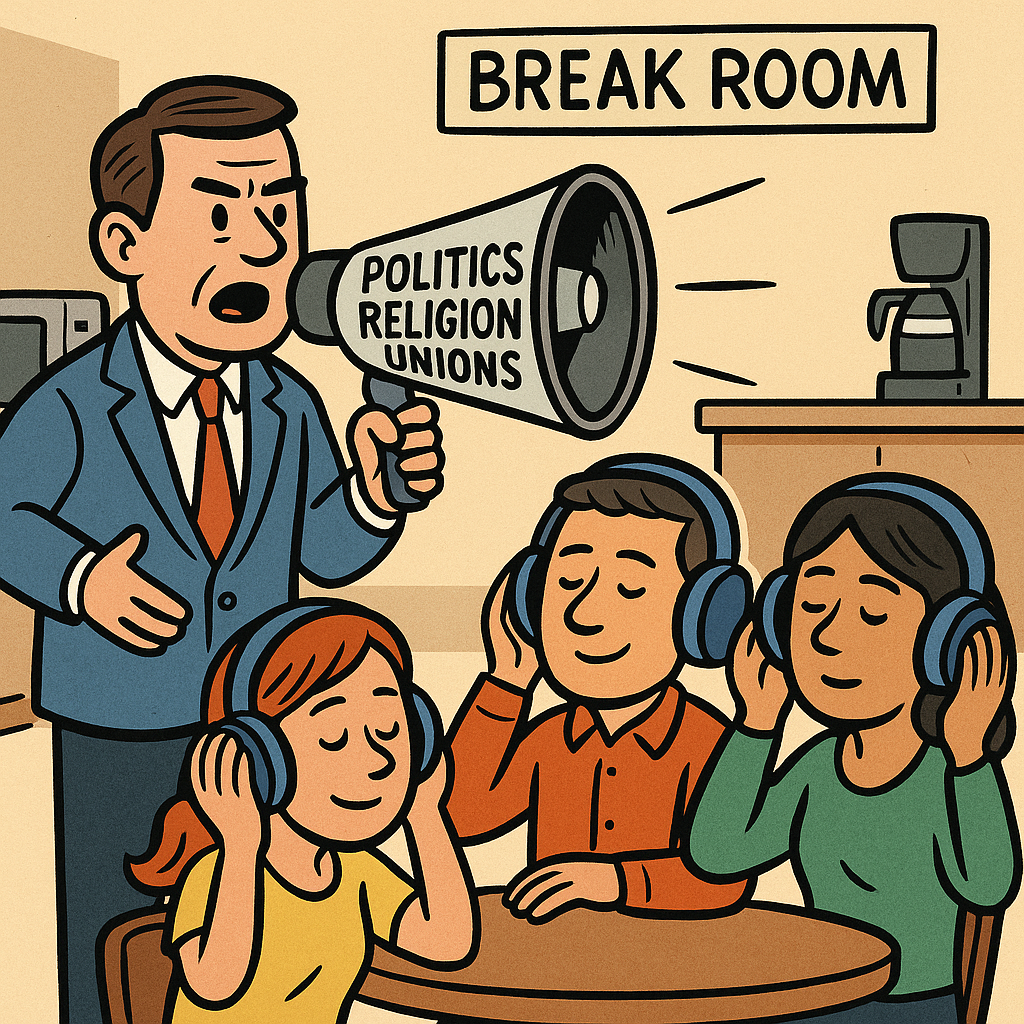
When employees clock in, they expect to do their jobs, not sit through political speeches, anti-union campaigns, or religious lectures from their boss. New Jersey just turned that expectation into a legal right.
TL;DR: On September 3, Governor Murphy signed A4429/S3302 into law. It bans “captive audience” meetings, meaning mandatory employer meetings or communications about politics, unions, or religion. Workers cannot be forced to attend, cannot be punished for refusing, and may bring a lawsuit within 90 days if their rights are violated. Employers must post notices of these rights. The law takes effect on December 2, 2025.
What A4429 Does
-
Prohibits employers from requiring employees to attend meetings or communications about political or religious matters.
-
Political matters are defined broadly to include electioneering and an employee’s decision to join or support a political party, civic group, community organization, fraternal association, or labor union.
-
Religious matters are not separately defined in the statute. The law bars mandatory meetings on religious topics, while making clear that religious organizations may still require employees to attend meetings about their own beliefs, practices, or tenets.
-
-
Protects employees from retaliation for refusing to attend or for reporting violations.
-
Creates a private right of action in Superior Court, with a 90-day limitations period. Remedies include reinstatement, back pay, attorneys’ fees, punitive damages up to treble, and civil fines.
-
Requires employers to post a notice of rights.
Key Exceptions
Employers may still:
- Hold voluntary meetings, provided employees are clearly told they can refuse without penalty.
- Provide information required by law.
- Give instructions necessary for employees to perform their jobs.
- Require anti-harassment or anti-discrimination training.
- Religious organizations may hold meetings on religious beliefs or practices.
- Political committees, certain nonprofits, and lobbyists may require staff to attend election-related meetings if lawful.
- Public employers may require meetings about proposed legislation, regulations, or policy.
Why It Matters
The Governor described the law as protecting workers from pressure at work. Labor advocates stressed its impact on union campaigns, where captive audience meetings are often used to discourage organizing. In their view, the law strikes a balance: employers retain the right to express views, but employees are free to decline to listen.
For more on the signing ceremony and the state’s broader labor agenda, see the official release from the Governor’s office: Governor Murphy Signs Legislation Strengthening Workers’ Rights and Labor Education.
Employer To-Dos
✅ Review practices: Eliminate mandatory meetings or communications on politics, unions, or religion.
✅ Train managers: Make sure supervisors and HR know employees can decline and retaliation is off-limits.
✅ Remember carveouts: Legally required notices, job instructions, and anti-harassment training are still permitted.
✅ Post notices: Display the new employee rights notice once issued.
✅ Plan ahead: Mark your calendar for the December 2025 effective date.
Bottom Line
A4429 marks a significant shift in New Jersey workplace law. Employers can still speak, but they cannot compel employees to listen on politics, unions, or religion. HR and legal teams should move quickly to align policies before the law takes effect.