Search
 The Employer Handbook Blog
Why Constructive Discharge Is Harder to Prove Than Employees Think


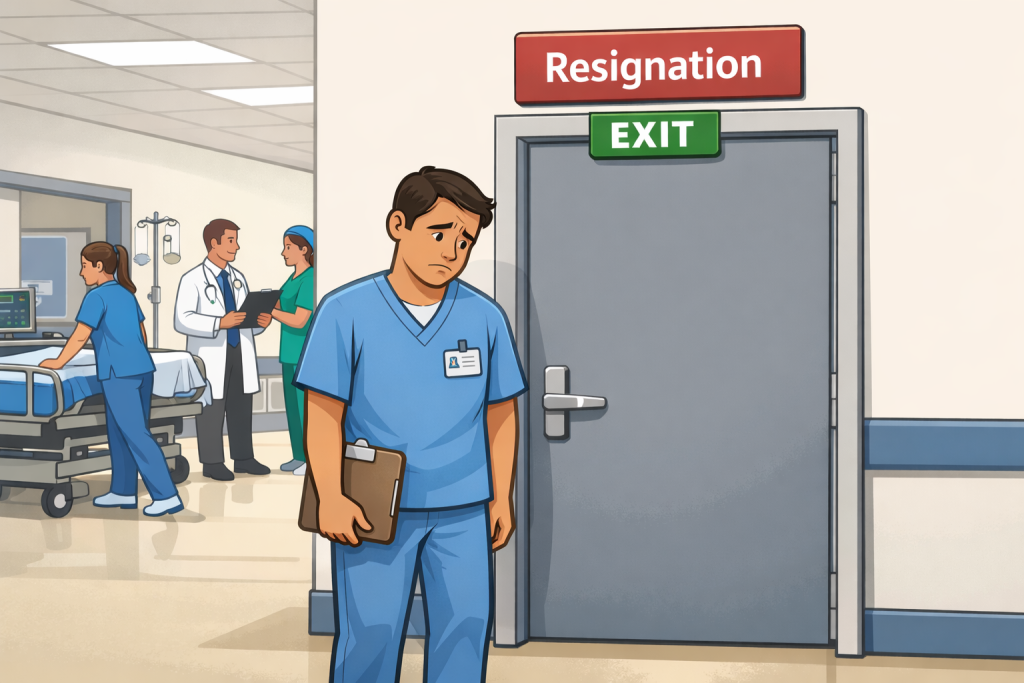
Constructive discharge is one of the most misunderstood concepts in employment law. Employees often assume that feeling sidelined, embarrassed, or treated unfairly is enough to turn a resignation into a legal claim. Courts, however, continue to apply a far stricter standard – one that looks past discomfort and focuses on whether working conditions were truly intolerable.
A recent federal court decision out of Arkansas reinforces that point.
TL;DR: A federal court in Arkansas dismissed the EEOC’s constructive-discharge claim on behalf of a male employee who was excluded from certain job duties by a small number of physicians. The court held that limited restrictions, subjective feelings of humiliation, and contextual considerations did not amount to objectively intolerable working conditions – reinforcing that constructive discharge requires far more than discomfort or frustration.
The setup: limited exclusion, not total sidelining
The employee worked in a labor-and-delivery unit and assisted medical staff before, during, and after childbirth procedures. His role involved hands-on support, interaction with patients, and coordination with physicians during deliveries.
Some physicians permitted him to participate fully in their patients’ deliveries. Others declined to allow his involvement during certain procedures. As a result, his participation varied depending on the physician and the situation.
The EEOC argued that this uneven treatment created working conditions so intolerable that the employee had no choice but to resign.
The court wasn’t persuaded.
Why this didn’t rise to constructive discharge
Constructive discharge is judged by an objective standard, not by how an employee subjectively experienced the workplace. Courts ask whether a reasonable employee, facing the same circumstances, would have felt compelled to resign.
Here, the answer was no. The employee was not removed from the job, stripped of core responsibilities, threatened, disciplined, or harassed. Instead, he was excluded from participating in a limited number of tasks, in limited situations, by a small subset of decision-makers. Other supervisors continued to allow him to perform the same duties, including assisting with deliveries.
Context mattered to that analysis. The duties at issue involved sensitive, third-party considerations, including patient privacy and professional discretion. That context did not excuse discrimination, but it did shape whether the working conditions were objectively intolerable. The court concluded they were not.
The takeaway is broader than this case. Partial limitations, uneven assignments, or workplace frustration – even when legitimately upsetting – do not automatically convert a resignation into a constructive discharge. The bar remains high.
Practical takeaways for employers and HR
- High bar: Constructive discharge requires more than frustration or discomfort.
- Objective test: Courts ask what a reasonable employee would do.
- Context matters: Job structure and operational realities count.
- Partial limits: Uneven or situational exclusions are rarely enough.
- What’s missing matters: No harassment, no discipline, no forced exit.
Bottom line
This decision is a reminder that employers can make context-driven, operationally necessary decisions without automatically inviting constructive-discharge liability. Not every difficult workplace dynamic becomes a legal violation, and courts remain willing to draw that line.
Employment law does not guarantee comfort. It guarantees legality. The standard is intolerable conditions, not uncomfortable ones.