Search
 The Employer Handbook Blog
When “We’re Waiting on Medical Paperwork” Quietly Becomes an ADA Risk


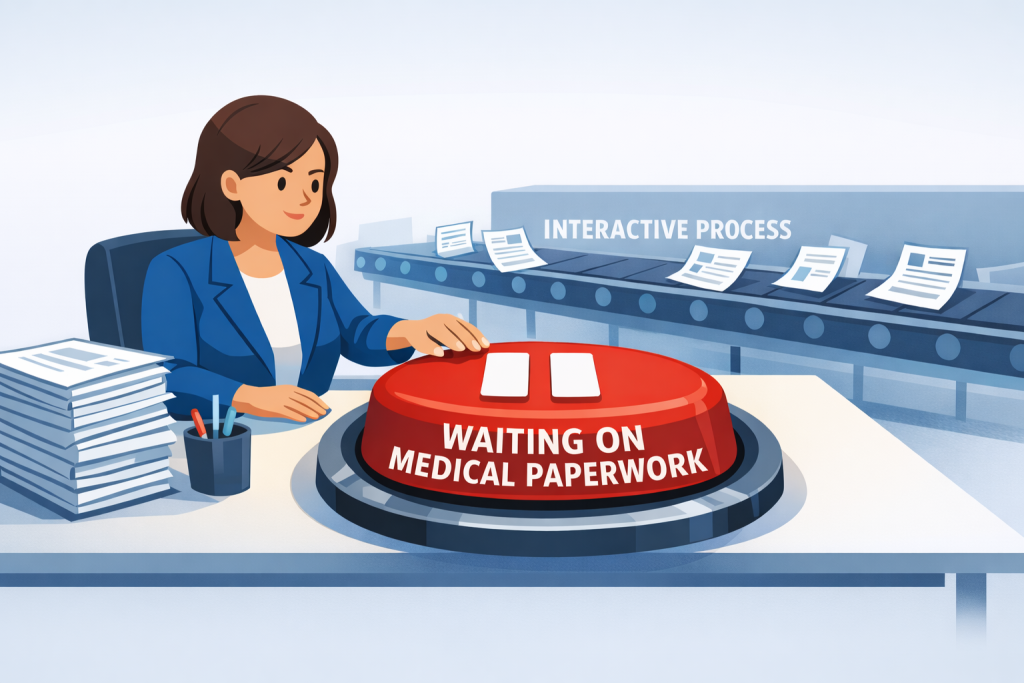
This case is a reminder that the ADA interactive process is about engagement, not just documentation. When an employer waits too long, courts start asking why.
That question sat at the center of this dispute and ultimately kept the case alive.
TL;DR: An employer could not defeat an ADA reassignment claim by arguing that it had no obligation to act until it received updated medical documentation where the employee’s disability was already known, prior accommodations had been granted, and the record showed disputed facts about whether paperwork was required before reassignment consideration. Medical documentation is part of the interactive process, not a legal pause button.
How the reassignment dispute unfolded
The case arose from an enforcement action brought by the Equal Employment Opportunity Commission on behalf of a former nurse who worked for a hospital in Michigan. The EEOC alleged that the employer violated the Americans with Disabilities Act by failing to reassign the employee to a vacant position as a reasonable accommodation.
Several facts were not disputed. The employee had a diagnosed, degenerative medical condition. The employer knew about it, had medical documentation on file, and had previously granted ADA accommodations, including reduced hours.
Later, the employee applied for three internal positions that were posted as vacant, with a dispute about whether one position was actually open. All three positions were filled before she submitted updated medical documentation several months later.
Those facts framed the employer’s argument that it had no obligation to act until additional medical documentation was provided.
Why the documentation argument failed
The employer raised that argument in a motion for reconsideration, which the court noted had not been presented earlier as a case-ending theory. The court nonetheless addressed the substance and rejected it.
Employers may request medical documentation during the interactive process. But the law does not support the proposition that updated medical documentation is required as a matter of law before an employer must take any action, or that an employer may pause the interactive process entirely when it is already on notice of a medically diagnosed disability.
This was not a case where the employer lacked notice of the disability or needed medical documentation to determine whether one existed. The employee had already provided medical information, and the employer had already accepted it and acted on it by granting accommodations. The dispute concerned whether the employer could stop engaging altogether while waiting for updated paperwork.
Under those circumstances, a jury could reasonably find that insisting on additional documentation before doing anything at all amounted to stalling rather than participation in the interactive process.
The factual disputes that kept the case alive
The record also undercut the employer’s position.
There was evidence that the employer requested additional medical documentation. But there was also evidence that the employee was never clearly told that paperwork was mandatory before she could be considered for reassignment.
HR communications encouraged her to apply for open positions and forwarded applications without stating that documentation was a prerequisite. Testimony suggested the medical form would assist or expedite the process, not that it was required to begin it.
Those disputed facts were enough to defeat early judgment.
Vacancies and after-the-fact defenses
The employer also argued that the positions were no longer “vacant” once they were filled before the additional documentation arrived.
The court disagreed, noting that the employee applied while the positions were posted and that at least one decisionmaker declined to consider her application for reasons unrelated to medical documentation.
Courts look at what actually motivated decisions at the time, not explanations built later.
What this decision means for employers
For employers, the significance of the decision lies less in how the case ultimately resolves and more in why it could not be resolved early.
The first lesson is about context. When an employer already has medical documentation and has already granted accommodations, requests for additional information refine the process. They do not reset it.
The second lesson is about clarity. If documentation truly is required before reassignment consideration, that requirement must be clearly communicated and consistently applied. Mixed signals create factual disputes courts will not resolve on paper.
Bottom line
Documentation matters. But it does not replace engagement in the interactive process.