Search
 The Employer Handbook Blog
When Everything Feels Like Retaliation, But the Law Says Otherwise


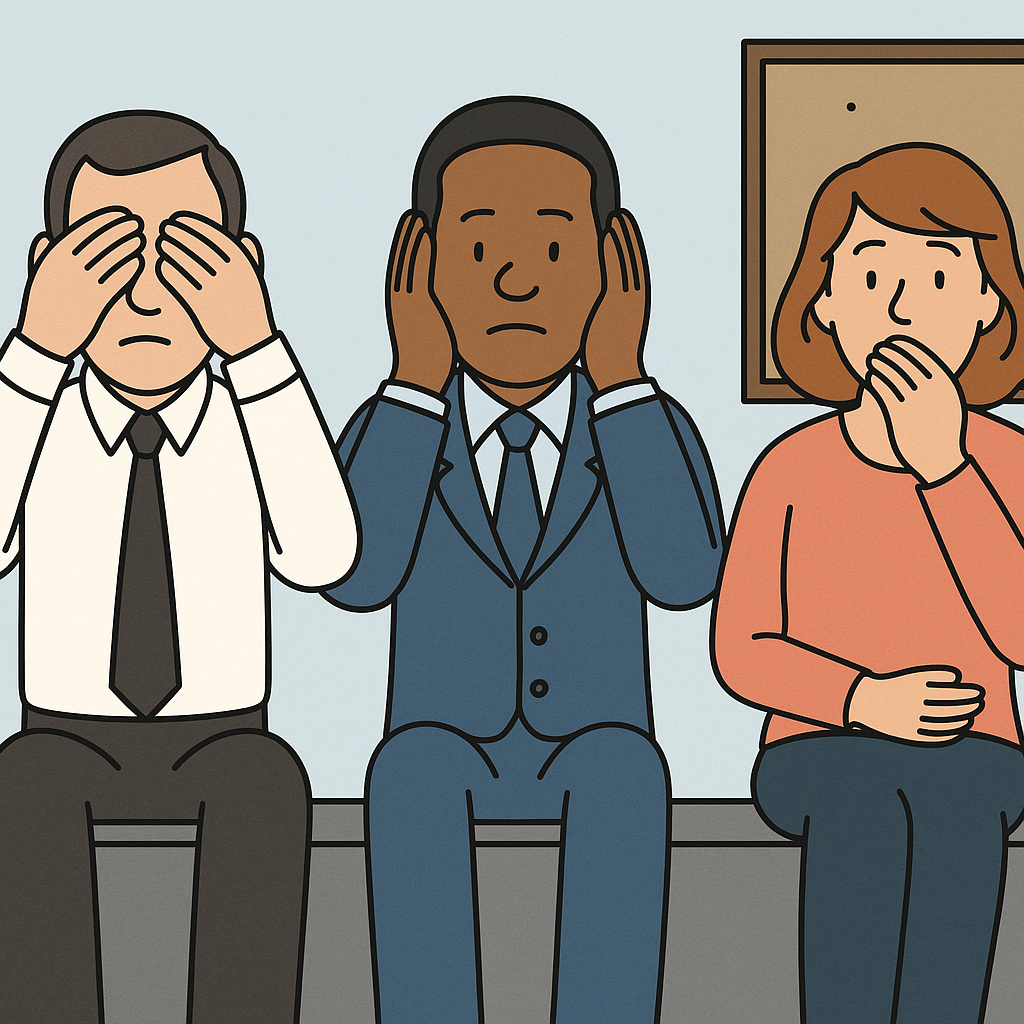
Retaliation requires awareness. Without it, there’s no causal link—no matter how suspicious the timing may feel. A recent Third Circuit decision underscores a see-no-evil, hear-no-evil reality employers should understand.
TL;DR: The Third Circuit affirmed summary judgment on retaliation claims, holding that discipline imposed after internal complaints failed where decision-makers lacked knowledge of protected activity, the employer acted before the complaint was even filed, or neutral processes broke the causal chain. Retaliation claims still require proof of causation, not just workplace conflict.
📄Read the Third Circuit’s decision
The setup: complaints, discipline, and a familiar retaliation theory
An employee working as a corrections sergeant filed multiple internal complaints alleging race and gender discrimination. Over time, she received discipline, including a written reprimand and a twenty-day suspension following a training incident.
She sued under Title VII of the Civil Rights Act of 1964, the New Jersey Law Against Discrimination, and federal civil rights statutes, asserting retaliation.
On summary judgment, the district court sided with the employer. The Third Circuit affirmed.
Retaliation still turns on causation, not vibes
To establish retaliation, an employee must show protected activity, a materially adverse action, and a causal connection between the two.
The court did not need to resolve every dispute about whether the discipline was materially adverse. The claims failed for a simpler reason: causation.
Key problems for the employee:
- No knowledge, no retaliation. Several disciplinary decisions were made by individuals with no evidence that they knew about the employee’s prior protected activity. Without knowledge, retaliation is impossible.
- The timing didn’t work. One alleged retaliatory act happened before the employee filed the complaint she said triggered it. You can’t retaliate against a complaint that hasn’t been made yet.
- Neutral decision-making matters. The most serious discipline followed a hearing before a neutral officer. There was no evidence that the decision-maker knew about protected activity or acted with retaliatory motive.
Put differently, proximity alone did not carry the claim. The record lacked evidence connecting the dots.
What employers should take from this decision
1. Knowledge remains a gatekeeper.
Retaliation claims rise or fall on who knew what, and when. Clean documentation of decision-makers and information flow matters.
2. Neutral processes still work.
Independent investigations and hearings can break the causal chain when done correctly.
3. Timing cuts both ways.
Courts look carefully at sequencing. Discipline that predates protected activity is not retaliation, no matter how it is later characterized.
4. Not every workplace dispute is retaliation.
Internal complaints do not immunize employees from discipline, especially for documented conduct issues.
The bottom line
Timing alone doesn’t make a retaliation case. Knowledge, causation, and clean process still matter – and courts continue to enforce those limits.