Search
 The Employer Handbook Blog
When DEI training becomes part of a hostile workplace claim


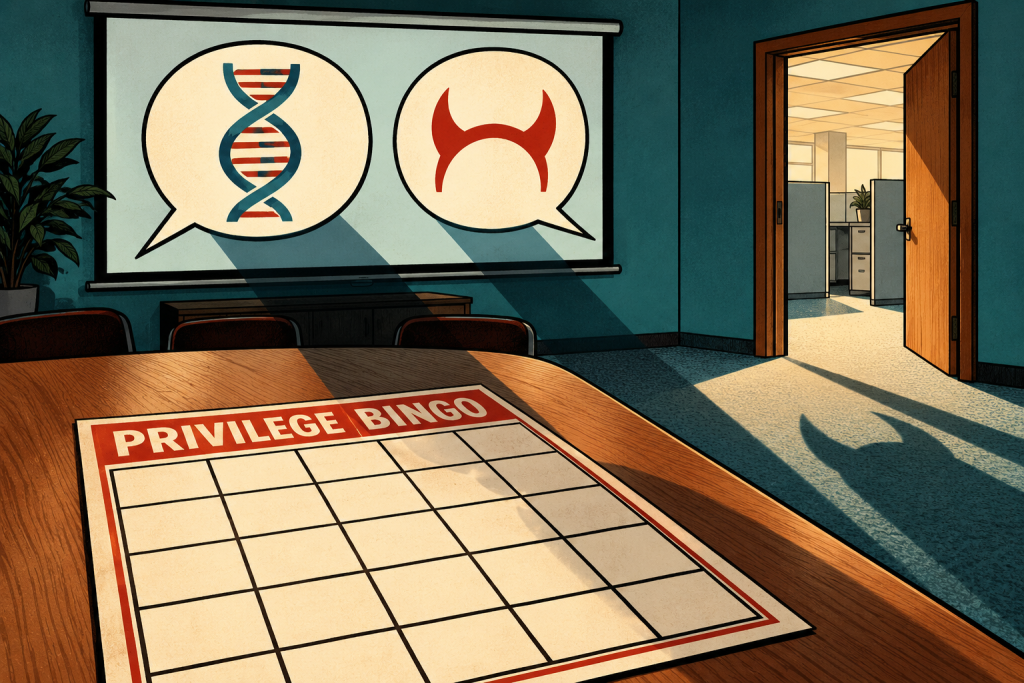
A federal judge dismissed this white employee’s hostile workplace claim last year. On appeal, the Ninth Circuit considered the alleged training remarks alongside years of workplace incidents and gave the claim new life.
TL;DR: A jury could find a racially hostile work environment based on alleged statements during DEI training and other incidents spanning years. Employers may discuss racism and address racial barriers, but the alleged remarks during training and at work could, taken together, amount to unlawful harassment. His other claims remain dismissed.
📄 Read the Ninth Circuit’s opinion
A white employee who assessed applications for utility assistance worked for a city agency with a Race and Social Justice Initiative. The lower court called it the city’s “D.E.I. program.” The employee claimed that statements during training and conduct elsewhere at work created a racially hostile environment.
The district court granted the employer judgment without a trial, a ruling I covered last year. The Ninth Circuit has now revived his hostile work environment claims under Title VII and Washington state law. The employer disputes some of his account, and the disputed facts have not been proved.
What happened in training and at work
At trainings in 2015 and 2017, the employee participated in “Privilege Bingo,” an exercise in which employees identified perceived privileges, including those related to race. At a 2019 training, presenters allegedly said that “racism is in white people’s DNA” and “white people are like the devil.” The employee said coworkers called him a white supremacist after he spoke during that session.
He described other incidents across those years. A manager allegedly asked what he could offer the department as a “straight white male.” Another allegedly told him it was impossible to be racist toward white people.
The employee said a manager discouraged him from applying for a supervisory job. After someone else got it, he allegedly performed many of its duties without the title or pay. A supervisor later allegedly urged him to step down from a lead role because he was preventing a person of color from being promoted. He stepped down.
He also said a supervisor called him a “colonist,” blamed him for injustices in the United States, and physically accosted him.
Why the harassment claim survived
The Ninth Circuit considered the alleged incidents together, including older events that could serve as evidence of a continuing hostile environment. Their number, frequency, and severity could allow a reasonable jury to find a racially hostile workplace. That is why the claim can proceed; the court did not decide whether the employee’s allegations are true.
The court made clear that employers may discuss historical and ongoing discrimination and work to remove racial barriers. Training for those purposes is not inherently discriminatory. But the alleged remarks at the 2019 training, combined with the other incidents, could support this employee’s claim. The opinion describes the earlier Privilege Bingo exercises without holding that the exercises themselves were unlawful.
His separate discrimination and retaliation claims stayed dismissed. So did his claim that conditions effectively forced him to resign.
The affinity groups raised a different legal question
The city also offered racially aligned groups, including a White Caucus and an African Descent Caucus. Its guidance encouraged employees to attend a group aligned with their racial identity, while saying participation was voluntary and “no one will be turned away.” The employee declined an invitation to the White Caucus.
He asked HR about creating a racially diverse group. HR told him to submit a proposal to the team administering the initiative, which would assess whether the group supported the initiative’s goals. He believed the team would reject it, so he never submitted the proposal.
The employee argued that the groups classified workers by race in violation of the Constitution. The Ninth Circuit assumed, without deciding, that encouraging employees toward racially aligned groups might amount to a racial classification. But he had not shown that he was required to join a group, barred from another, denied permission to create one, or penalized for declining to participate. His constitutional claim failed because he could not show that any alleged classification personally injured him. The court reached a similar conclusion about trainings aimed at employees of particular races.
Employers should examine both what happens during training and how participation in related programs works. Three practices follow from the opinion.
1. What presenters say counts
The court distinguished legitimate discussion of racial barriers from the sweeping negative claims about white people attributed to trainers. Review prepared materials and how presenters deliver them. The alleged “DNA” and “devil” remarks helped send the harassment claim to a jury.
2. Managers can give race-based comments workplace consequences
The alleged “straight white male” question and request that the employee step aside concerned his role and advancement. Keep assignment and promotion decisions tied to job-related criteria, and address a manager’s race-based explanation when it appears.
3. Affinity group rules deserve a close look
The court left open whether encouraging employees toward racially aligned groups amounts to a racial classification. The absence of evidence that this employee was excluded, compelled to join, or penalized resolved his constitutional claim. Review eligibility language, invitations, approval criteria for new groups, and any consequences for declining to participate.
The next DEI training case may turn on what was said during the sessions and what happened when employees returned to work.