Search
 The Employer Handbook Blog
When “Boys Will Be Boys” Becomes Exhibit A


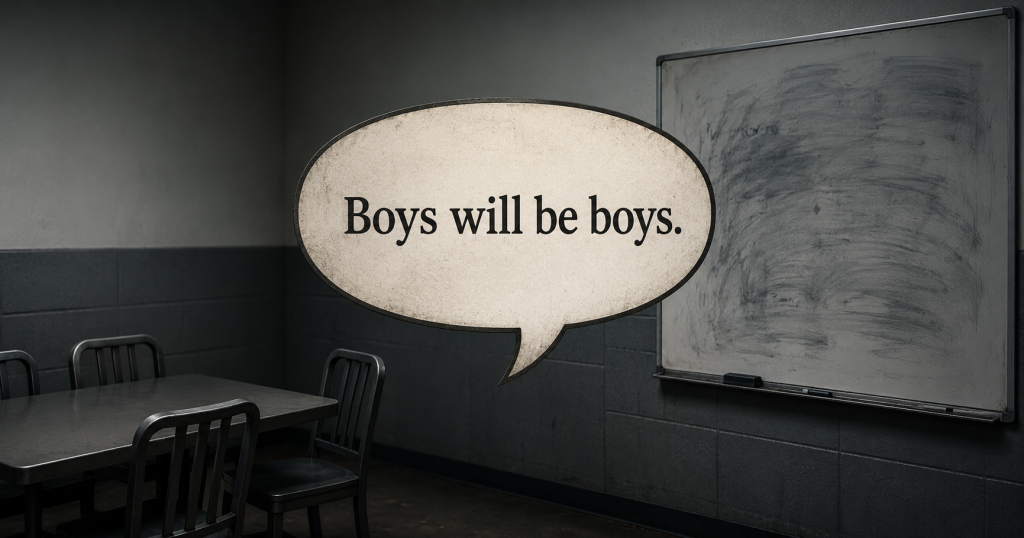
A supervisor was shown a slur drawn across a face on a breakroom whiteboard and shrugged it off. A federal appeals court didn’t.
TL;DR: A federal appeals court affirmed summary judgment for a retail employer on an employee’s other claims, but reversed his hostile work environment claim under Title VII, holding that the lower court excluded relevant evidence and misapplied the legal standard for how much harassment is enough.
Quick aside: yesterday’s post floated a flat-fee retainer idea for readers of this blog. The two-minute survey is still open if you want to weigh in.
Three Wins, One Loss, and a Trial Anyway
The employee, a gay man, sued his former employer, a national retailer, under Title VII and the New Mexico Human Rights Act (NMHRA). A district court granted summary judgment on every claim. The Tenth Circuit, with the EEOC as amicus, affirmed the other claims but reversed and remanded the hostile work environment claim.
What the Employee Says Happened
These facts come from the employee’s disputed deposition testimony, viewed favorably to him on appeal. A assistant store manager allegedly told him expanding rights for gay people would be one step from legalizing pedophilia and bestiality, and a supervisor and a fill-in coworker joked that he walked effeminately and that his hips swayed. A coworker asked if he was afraid to break a nail while doing physical work. An unidentified coworker used a slur-based nickname combining his first name with a term for a gay man.
After a 2019 workload dispute, he was demoted rather than fired. A coworker drew a slur across a face on the breakroom whiteboard, he testified, and when he told a supervisor about it, she dismissed it, saying, “Boys will be boys,” before erasing it. He resigned in 2021.
The Other Claims, Briefly
The demotion claim was too old to support its own lawsuit, and termination and constructive discharge failed on narrow, case-specific grounds. Retaliation failed for a more instructive reason: none of the plaintiff’s complaints, not about his workload, not during the harassment investigation, not about the demotion itself, ever told anyone he believed discrimination was behind them. Without that, there was no protected activity for the company to retaliate against. None of this stopped the underlying conduct from resurfacing once the focus shifted to the harassment claim.
How the Tenth Circuit Rebuilt the Hostile Work Environment Claim
The Tenth Circuit’s biggest move was letting an old, already-dead demotion claim back into the case as evidence. Everything else it fixed was smaller, but still worth knowing.
The Big One: Discrete Acts as Harassment Evidence
The most consequential ruling involved the demotion and the resignation, which the district court treated as separate, already-litigated events that couldn’t double as harassment evidence. That was a question of first impression in the Tenth Circuit, and it disagreed, following Supreme Court precedent that treats a hostile work environment as one continuous violation built from every contributing act, whether or not it could support its own lawsuit. A demotion too old to sue over alone can still be part of the pattern a jury sees.
The Rest of the Evidence Rules, Fixed
The district court had thrown out jokes about the plaintiff’s walk and his toughness because they didn’t use a slur, even though comments like that can still read as anti-gay once you factor in everything else going on. It also excluded a coworker’s slur-based nickname because the plaintiff couldn’t say who used it, and tossed several other comments as hearsay. None of that holds up: harassment doesn’t need a named speaker, and comments used to prove they were said, not that they were true, were never hearsay to begin with.
The district court also acted like harassment had to happen constantly to count. It doesn’t. One bad enough incident, like the whiteboard drawing, can carry a claim on its own. And the plaintiff didn’t need to file a formal HR complaint for the company to be on notice: a supervisor who makes an offensive comment himself, or is shown harassment directly and does nothing about it, is enough on his own.
The lesson for HR is about scoping: closed conduct can resurface later as evidence in a claim nobody expected.
Building a Harassment Defense That Actually Holds Up
A supervisor’s in-person reaction can outweigh what HR never heard about
The employer’s knowledge defense weakened because a supervisor was shown evidence of harassment directly and ignored it. Train supervisors that being told about or shown harassment, and doing nothing, creates its own exposure, separate from anything HR ever hears about.
Vague pushback isn’t protected activity, but treating it as though it might be still pays off
The plaintiff’s complaints failed to support retaliation because none of them ever named discrimination as the concern, a low bar for employers to clear in litigation but a poor one to manage day to day. When a manager hears a vague fairness complaint from someone in a protected class, documenting it and following up costs little and protects the company either way.
The employer walked away with three wins on paper, but the ruling hands plaintiffs’ lawyers a blueprint for turning old, resolved personnel actions into fresh harassment evidence. A closed HR file may really just be a pending one.