Search
 The Employer Handbook Blog
When a Discrimination Complaint Comes Wrapped in Profanity, Can HR Discipline the Employee?


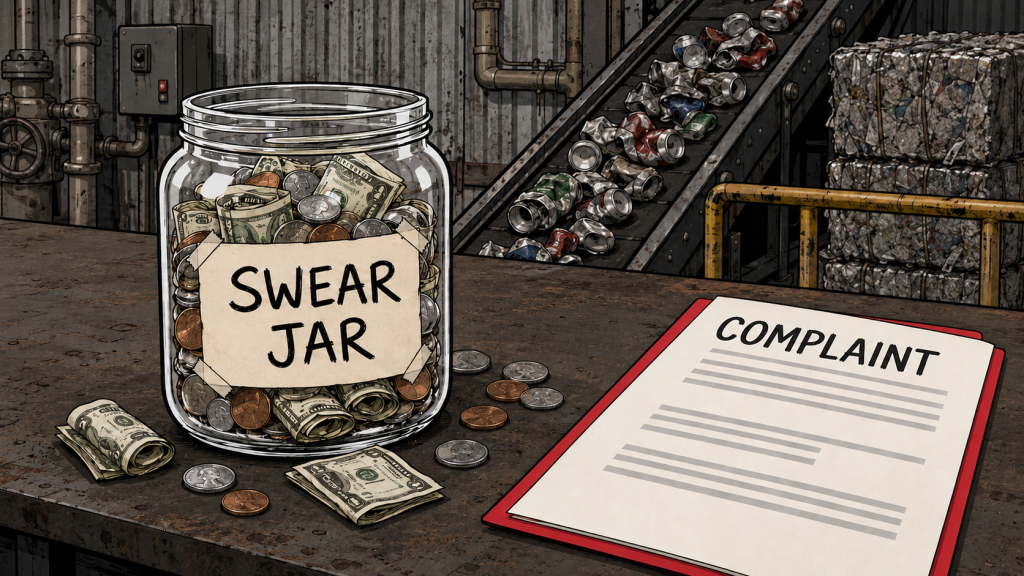
Workplace profanity was business as usual, right up until it accompanied a complaint about racism.
TL;DR: An employee used repeated profanity while complaining to his supervisor about alleged race discrimination. The employer fired him eight days later, but a federal appeals court revived his Section 1981 retaliation claim because a jury could find that the employer’s explanation was false or had changed. HR must separate the misconduct from the protected complaint and investigate both completely.
The complaint and the cursing arrived together
According to the employee, racial slurs and jokes were common at a recycling plant. He claimed that a supervisor tolerated them, warned him to avoid two Black employees who complained about discrimination, and asked whether he was going to quit when he finally complained.
During that confrontation, the employee repeatedly cursed at the supervisor, raised his voice, and complained about racist treatment and lost training opportunities. The employer suspended him, obtained his written statement the next day, and fired him eight days after the confrontation.
The district court granted summary judgment to the employer on his Section 1981 retaliation claim. A divided Fourth Circuit reversed, finding enough conflicting evidence for a jury to decide whether the employer’s stated reason for the termination was pretext for retaliation.
The termination explanation that changed over time
The employee testified that HR told him he was being fired because of how he spoke to the supervisor. Years later, the employer said it fired him for broader “belligerent and insubordinate conduct.”
That distinction was important because a coworker testified that profanity was widely used by employees and management. The parties also disputed whether the employee merely cursed and raised his voice or physically intimidated the supervisor. At summary judgment, the court had to credit the employee’s account.
The majority also criticized the employer’s investigation. Although the employee’s written statement identified three race-related incidents, the employer investigated only one, omitted the alleged racial slur when presenting that accusation to the coworker, and issued him a written warning the day after terminating the employee.
The court did not decide that retaliation occurred. It decided that a jury could disbelieve the employer’s explanation. A dissenting judge thought the employee’s admitted conduct readily qualified as belligerent and insubordinate, even in a workplace where profanity was routine.
For HR, the dangerous cases are often the messy ones in which a legitimate conduct problem and protected activity happen at the same time. The investigation must preserve that distinction from the first interview through the final decision.
Three lessons when a complaint arrives mid-outburst
Commonly tolerated misconduct weakens a sudden zero-tolerance explanation
If profanity is routine until someone uses it while complaining about discrimination, the timing invites a pretext argument. Before imposing discipline, HR should compare how the employer handled genuinely similar misconduct that did not accompany protected activity.
The first explanation becomes the measuring stick
A later declaration may add precision, but it can also look like a changed justification. The decisionmakers should identify the specific conduct supporting discipline, confirm that the evidence supports it, and communicate the same reason to the employee and in the termination record.
A misconduct investigation cannot swallow the discrimination complaint
The employee’s behavior warranted investigation, but so did each racial allegation in his written statement. Running separate investigative tracks helps prevent the misconduct issue from narrowing, sanitizing, or delaying the employer’s response to the protected complaint.
The employee admitted repeatedly cursing at his supervisor. Even so, two appellate judges concluded that a jury should decide why the employer fired him.