Search
 The Employer Handbook Blog
When a Blanket Medical Policy Becomes a $25 Million ADA Problem


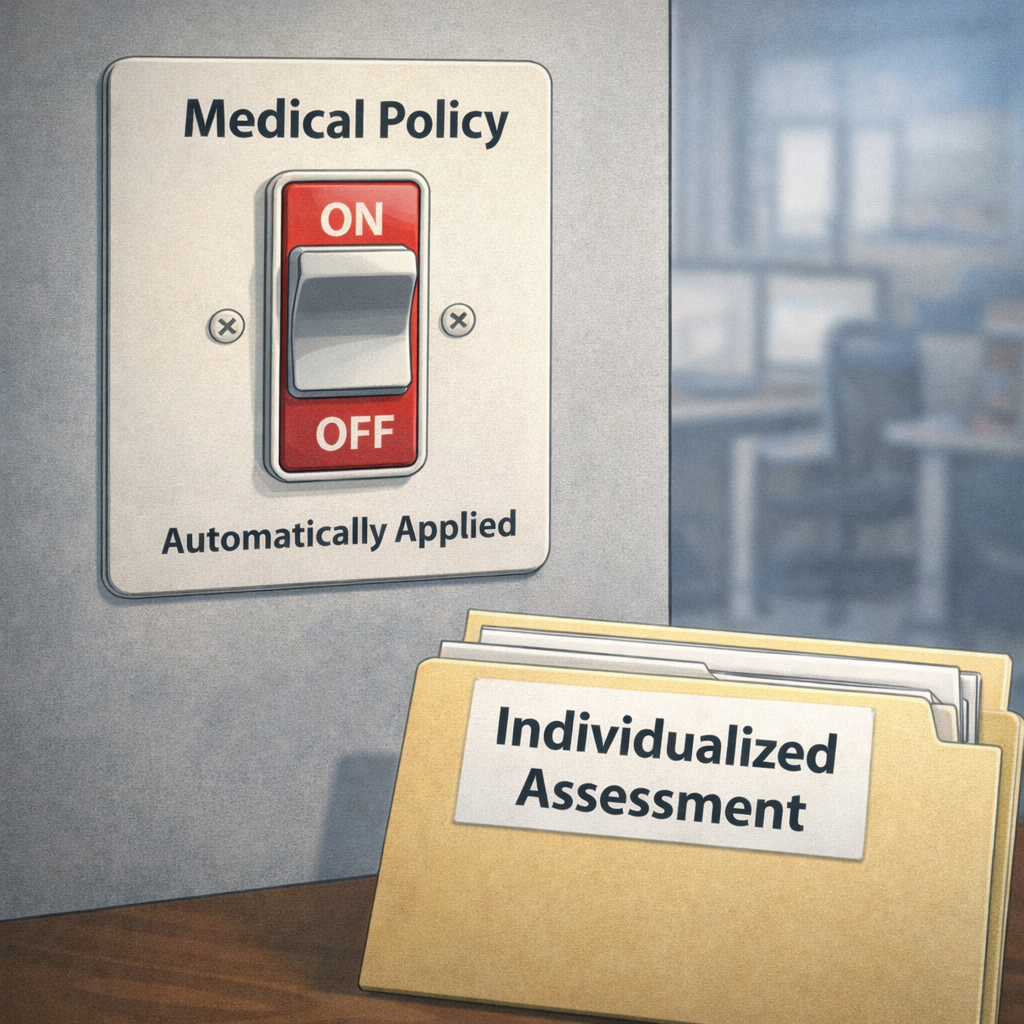
Safety policies should protect workplaces, not produce eight-figure ADA exposure. This case shows how a rigid medical rule, applied without individualized assessment, can turn a routine injury into a litigation disaster.
TL;DR: A jury found that an employer violated the Americans with Disabilities Act and Oregon disability law by enforcing a blanket medical policy that unlawfully screened out an employee instead of evaluating his actual abilities. The jury issued an advisory award that included $25 million in punitive damages, and the court declined to disturb the verdict.
How a routine injury became a career-ending decision
The employee worked in a safety-sensitive role. Outside of work, he dislocated his shoulder while doing ranch work.
After treatment and physical therapy, he took a leave of absence that included heavy construction work. According to the trial evidence, he was medically cleared, physically capable, and eager to return. The jury heard testimony that he loved his job and could perform the essential functions of his position.
The employer still would not let him come back.
The policy that did the damage
The employer relied on a medical policy that treated anterior shoulder dislocations as automatically disqualifying. The policy was defended as a safety measure, based on the belief that the injury carried a one-percent annual risk of recurrence and sudden incapacitation.
The problem was not concern for safety. The problem was rigidity.
The evidence showed that:
- Expert witnesses described the policy as not grounded in sound scientific reasoning.
- The employer did not meaningfully evaluate the employee’s actual capabilities.
- Treating physicians testified that recurrence risk could range from zero to ten percent over the employee’s lifetime.
- The employee’s doctors cleared him for full duty.
- The policy excluded employees based on diagnosis rather than function.
The jury concluded that this amounted to unlawful medical screening under the Americans with Disabilities Act and Oregon law and rejected the employer’s business-necessity defense.
Why the verdict stood
After the verdict, the employer asked the court to wipe it out or reduce it. The court said no.
Rather than re-litigating the facts, the judge emphasized that the jury was entitled to credit evidence showing the policy operated as a categorical exclusion and ignored individualized assessment. The record supported the conclusion that the policy was applied no matter what the medical evidence showed.
The court also upheld the punitive damages award, finding substantial evidence that the employer acted with reckless and outrageous indifference to a highly unreasonable risk of harm by rigidly applying the policy despite clear warning signs.
What employers should take away
Blanket medical rules invite ADA trouble
Policies that automatically disqualify employees based on injury type or diagnosis are litigation magnets.
“Safety-sensitive” is not a free pass
Safety concerns matter. They do not eliminate the ADA’s individualized assessment requirement.
Individualized assessment is not a technicality – it’s the ADA’s core requirement
The ADA requires evidence-based judgment and flexibility, not automatic disqualification.
Big verdicts come from broken processes
This case was not about a single bad call. It was about a system that left no room for individualized judgment. Juries see that immediately.
Bottom line
Medical policies that operate as automatic exclusions are difficult to defend under the ADA.