Search
 The Employer Handbook Blog
The six words that helped turn a layoff into a lawsuit


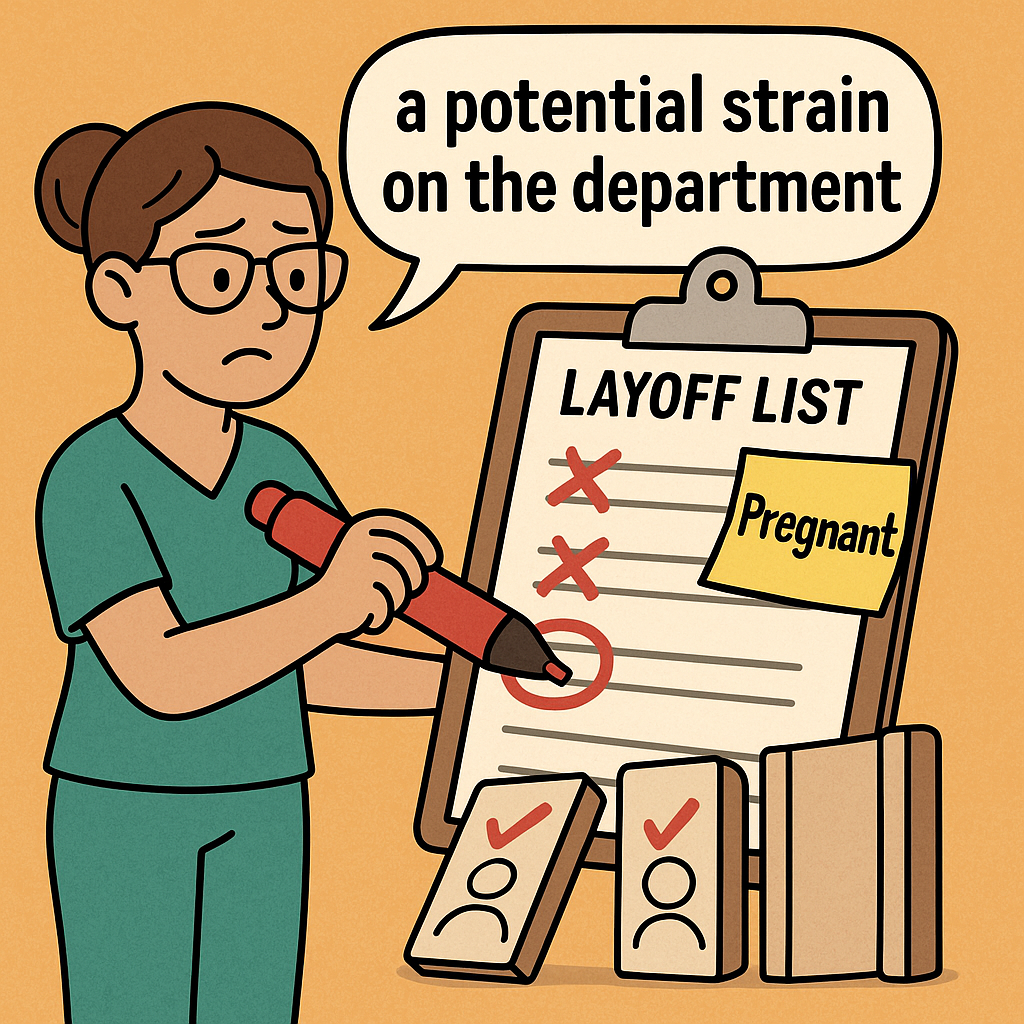
Sometimes it is not the reduction in force itself that creates risk, but the combination of what is said and how the data is applied. In this case, six words from a supervisor, “a potential strain on the department,” together with disputed productivity metrics and the treatment of a pregnant employee returning from FMLA leave, convinced the Sixth Circuit that a jury should decide.
TL;DR: The Sixth Circuit revived pregnancy discrimination and FMLA interference claims after a pandemic-era layoff where a supervisor’s remark, disputed performance metrics, and silence about a job opening created enough factual disputes to move forward. Disability and retaliation claims were dismissed.
Pregnancy, layoffs, and the comment that stuck
The case involved a hospital ultrasonographer who had worked there since 2017. In late 2019, she told her supervisor she was pregnant. At first, the conversation was positive, and her supervisor excused her from x-ray exposure during the pregnancy. But when she later provided a doctor’s note restricting her from contact with infectious patients, the tone shifted.
According to her testimony, the supervisor became upset and told her she was “a disappointment,” had “an unwillingness to bend,” and that her requests “could be a potential strain on the department.” Although the supervisor later apologized, the words became central evidence in the litigation.
Soon after, COVID hit. The hospital laid off more than 2,000 employees. The supervisor ranked her team by 2019 productivity data. The pregnant ultrasonographer and another expectant colleague landed at the bottom of the list and both were selected for layoff.
She gave birth in June 2020. Even while on layoff status, the hospital approved her for FMLA leave from late July through late October. On the very day her doctor cleared her to return, another hospital unit asked her supervisor if she might be interested in a full-time opening. The supervisor did not mention her clearance and never told her about the position, instead saying patient volumes were too low to bring her back.
Why two claims survived summary judgment
The district court had thrown out all of her claims. On appeal, the Sixth Circuit agreed that most could not stand. But it ruled that pregnancy discrimination and FMLA interference required a jury’s review.
Pregnancy discrimination
Title VII prohibits discrimination based on pregnancy. To move forward, an employee must show a link between pregnancy and the adverse decision. Here, the supervisor’s “strain on the department” remark, her role in laying off both pregnant employees in the unit, and disputes about the productivity data created enough evidence for a jury to find pretext.
The plaintiff argued that she had fewer opportunities for portable scans because her supervisor controlled the schedule, her outpatient assignment carried more no-shows that lowered her procedure counts, and she still worked the second-most hours overall. These facts, combined with the supervisor’s remark, gave the appeals court reason to send the case to a jury.
What tipped the balance was the evidence that the supervisor openly tied the plaintiff’s pregnancy to department productivity. She told her that her restrictions “could be a potential strain on the department” and emphasized that the department was under scrutiny for meeting productivity goals. Because the supervisor was the one who recommended her for layoff, those statements created a dispute of material fact about whether productivity was the true reason or whether pregnancy bias played a role.
FMLA interference
The FMLA protects both leave and reinstatement. Employers cannot block a return to work or use leave as a negative factor. On the day she was cleared, another hospital unit asked her supervisor about a full-time opening. The supervisor’s response did not mention her clearance, and the plaintiff was never told about the role.
The hospital countered that job placements after layoff were handled by HR and Talent Acquisition, not by the supervisor. The Sixth Circuit did not decide who was right. It held that a jury could reasonably infer interference if the supervisor’s omission kept the plaintiff from being considered for the position.
Employer takeaways
-
Train managers on what not to say. Offhand comments about pregnancy being a “strain” or an “inconvenience” can later be treated as evidence of bias. Supervisors need practical training on how to respond when employees raise medical or pregnancy-related concerns.
-
Apply layoff metrics consistently and defensibly. If productivity or performance data drives the decision, make sure the inputs are fair, documented, and applied evenly across employees. Skewed assignments, unexplained exclusions, or inconsistent measures can create the appearance of pretext.
-
Recognize that a large RIF is no shield. Even when thousands of employees are let go, courts will examine whether protected workers were disproportionately affected. Each individual selection decision must stand on its own and be defensible.
-
Business judgment is not absolute. Courts generally avoid second-guessing how employers measure productivity, but evidence that a supervisor tied pregnancy to performance and selected both pregnant employees for layoff was enough here to create a jury question.
The bottom line
Even in mass layoffs, sloppy words and shaky data can send you to a jury.