Search
 The Employer Handbook Blog
The Religious Accommodation Lessons Inside MLB’s Pride Night Controversy


Who would have guessed that the most interesting religious discrimination issue of the week would show up on a Major League Baseball field?
TL;DR: Three San Francisco Giants pitchers wrote Bible verses on their Pride Night caps during a June 12, 2026 game. A fourth wore the standard team cap instead and drew no warning. Controversy ensured. Major League Baseball’s issue appears to be solely with the writing on the cap, not with opting out of the Pride cap altogether. The CBA answered the writing question. The accommodation question is trickier.
What the Giants’ Pitchers Did, and What MLB Did About It
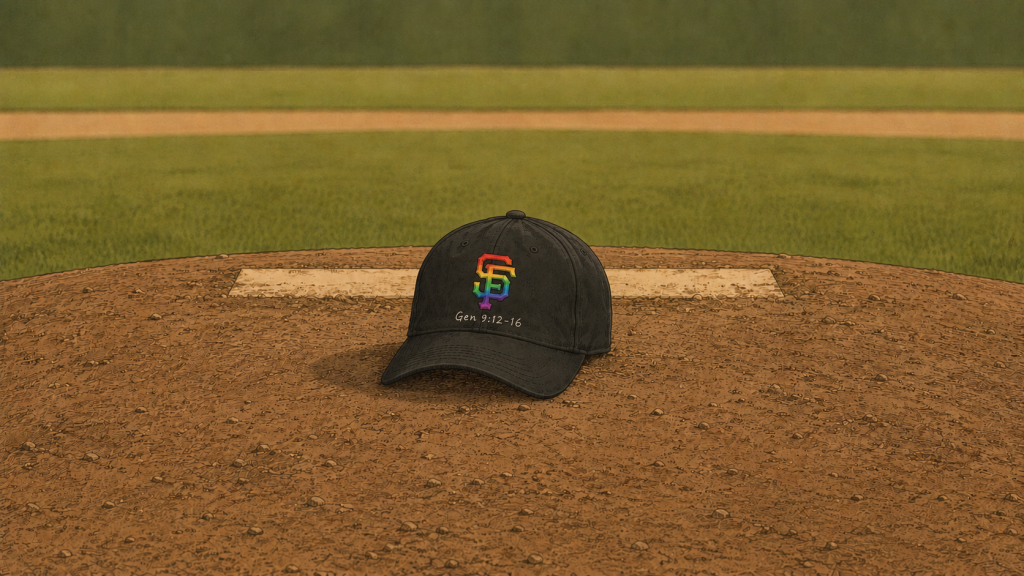
On June 12, San Francisco Giants starting pitcher Landen Roupp took the mound for the team’s Pride Night game against the Chicago Cubs wearing the team’s rainbow-colored cap, with one addition: “Gen 9:12-16” written on the front. The Genesis passage describes the rainbow as a sign of God’s covenant. Relievers JT Brubaker and Ryan Walker also wrote Genesis citations on their caps. A fourth pitcher, Sam Hentges, wore the team’s standard black cap instead and apparently drew no warning from anyone.
According to reports, MLB’s warning went to the three who wrote on their caps, not to Hentges. The league’s collective bargaining agreement prohibits any writing on uniforms. The relevant provision: “A Player may not write, attach, affix, embroider or otherwise display nicknames or messages on apparel or playing equipment.” A first violation under the CBA gets a warning, which is exactly what the three pitchers received. MLB later clarified that the warning “had absolutely nothing to do with the content of the message. We have given the same warning numerous times in the past to players for messages such as ‘Dad,’ ‘Happy Mother’s Day, I Love Mom’ and names of family members.”
The story didn’t stay in the sports section. Senator Josh Hawley (R-Mo.) sent a letter to MLB Commissioner Robert Manfred on June 16 demanding answers. Hawley argues that MLB is applying its uniform rules selectively, warning players for religious expression while having authorized political messaging in 2020. His inconsistency argument has some nuance: MLB’s warning here seems to be by-the-book under the CBA. His harder question is about 2020, when MLB authorized “Black Lives Matter” patches on jerseys and stenciled “BLM” on pitching mounds while lifting its cleat restrictions for social justice messages. If the rule applies to Genesis citations but not to BLM patches, the content-neutrality claim gets complicated.
The Employer Parallel Is Direct
MLB’s situation is a workplace religious accommodation problem dressed in a Giants uniform. Title VII requires employers to accommodate sincerely held religious beliefs unless doing so creates an undue hardship. After the Supreme Court’s 2023 decision in Groff v. DeJoy, that bar is harder to clear than it used to be: the hardship must be substantial in the overall context of the employer’s business, not merely more than de minimis.
Consider this a warning track. Here’s what employers should take from it.
Four Employer Takeaways
Religious accommodation requests tied to Pride Month events deserve the same structured process as any other accommodation
We don’t know whether the Giants had an accommodation process in place or whether players were required to wear the Pride caps or simply provided them. The Giants’ manager told reporters that nothing was discussed with any of the pitchers beforehand, and it was “just kind of a general knowledge” that players “have the freedom to do what they think is best.” Employers who require employees to participate in Pride Month events, with no channel for them to raise religious objections in advance, risk finding out how employees feel about it at the worst possible moment.
The sincerity of the belief is almost never the right fight
Title VII’s definition of religious belief is extremely broad, and courts are highly deferential on sincerity. Sincerity can be hard to disprove. The better question is whether a reasonable accommodation exists that doesn’t create substantial hardship.
Opting out of a Pride-branded item and modifying one are two different requests
An employee who wants to wear the Pride item but add a religious counter-message is making a different request, one the employer has a stronger basis to decline, especially when there’s a clear, content-neutral policy already on the books prohibiting modifications. A written policy applied consistently is a much stronger defense than an ad hoc judgment call about which messages are acceptable.
Consistency in what expressive items you allow is as important as the policy itself
Hawley’s real target isn’t the warning issued here. That appears to have followed the CBA to the letter. His argument is that MLB previously authorized BLM messaging on jerseys and mounds and lifted its cleat restrictions for social justice messages, then seemingly invoked those same uniform rules when players wrote religious citations on their caps six years later. Employers face the same potential issues. A neutral dress policy only holds up if it has actually been applied neutrally. Carve out exceptions for some messages and later deny only religious expression, and a content-neutral policy alone won’t save you.
MLB’s warning addressed the uniform rule. It didn’t answer the harder question of what your organization owes employees with religious objections to Pride events. That question doesn’t answer itself, and it doesn’t go away between June and next June either.