Search
 The Employer Handbook Blog
Maybe Don’t Ask ChatGPT How to Make Emails Disappear During Litigation


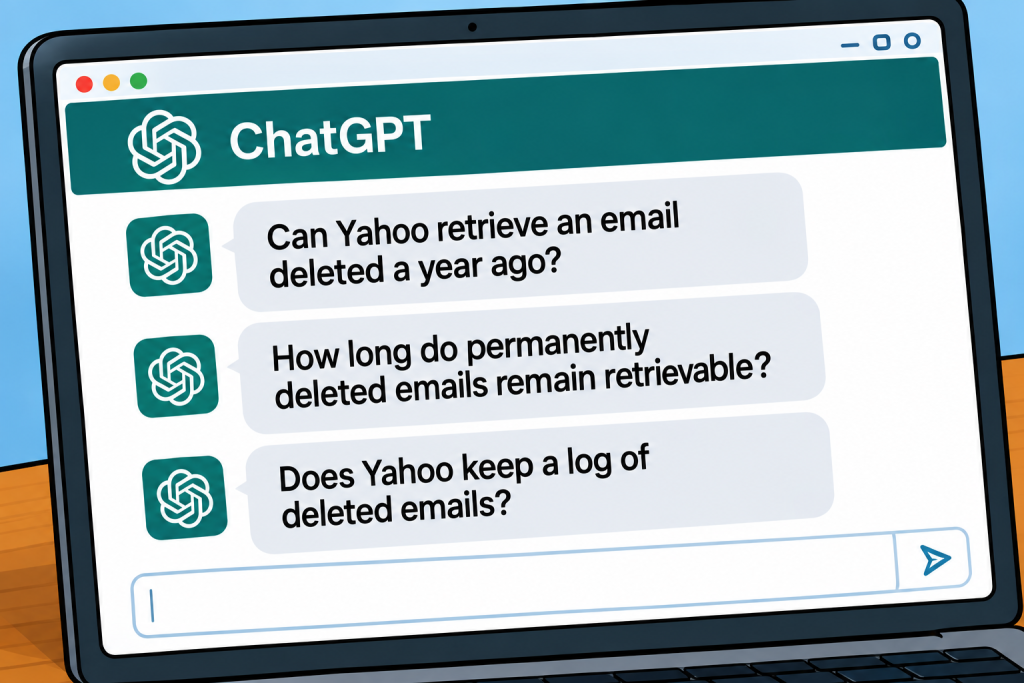
There are probably better things to ask ChatGPT during litigation than how quickly permanently deleted emails disappear.
Especially when the other side is looking for those emails.
TL;DR: A former employee denied signing a non-solicitation and confidentiality agreement. A forensic examination later uncovered ChatGPT searches about permanently deleted Yahoo emails. A federal judge found “compelling evidence of intentional deprivation of information,” awarded the employer certain fees and costs, and ordered more discovery before deciding whether an adverse inference was warranted.
How did a fight over whether an employee signed an agreement turn into a fight over his ChatGPT history?
The employer fired the employee and accused him of soliciting its customers for his new employer. It had a non-solicitation and confidentiality agreement bearing his purported signature. He said he never signed it. The resulting discovery fight eventually produced a partial sanctions win for the employer.
But first, the parties had to determine whether electronic evidence could answer the basic question: Did he sign the agreement? That led to forensic discovery.
Then the forensic examiner found his ChatGPT searches
In April 2025, the employee testified that he did not recall signing the agreement.
Then came June 10.
He asked ChatGPT whether Yahoo could retrieve an email deleted a year earlier, even under subpoena. He also asked how long a permanently deleted email remained retrievable and whether Yahoo kept a log of permanently deleted emails.
Six days later, he submitted a declaration saying he “never agreed to nor personally signed” the agreement and had made a “conscious decision not to sign.”
The court later ordered Yahoo access. Although he provided Yahoo’s authorization form on June 27, the forensic examiner did not receive full account access until July 7.
The employer sought sanctions.
The employee had an explanation. The judge didn’t buy it.
The employee said he researched Yahoo’s deletion practices to determine whether the employer had a legitimate basis to examine his iCloud account.
The judge found that explanation neither “convincing” nor “credible.” The court saw no rational connection between Yahoo-specific questions and an iCloud examination.
The timing hurt, too. ChatGPT had told him permanently deleted Yahoo emails could become unrecoverable within seven days. Yet full Yahoo access did not arrive until July 7.
The court also noted that his certainty about never signing the agreement appeared six days after the ChatGPT searches. The judge said the coincidence “strains credulity.”
The court found “compelling evidence of intentional deprivation of information under Rule 37(e).” It awarded the employer reasonable fees and costs related to litigating the existence of the emails and allowed broader forensic discovery.
But the judge stopped short of an adverse inference. First, the court wanted to determine whether additional discovery could restore or replace the missing information.
Three lessons for employers when electronic evidence starts disappearing
1. Relevant ESI must be preserved, including when it lives somewhere unexpected.
When the duty to preserve applies, relevant ESI must be preserved wherever it resides. Think beyond email to devices, cloud accounts, backups, messaging platforms, AI tools, and other electronic sources.
2. Conduct during discovery can become evidence itself.
The court considered the ChatGPT searches alongside the delayed Yahoo access and changed testimony. What parties do after the preservation duty arises can become part of the evidentiary record.
3. Intentional deprivation does not automatically produce an adverse inference.
Even after finding compelling evidence of intent, the court still had to determine whether the missing information could be restored or replaced through additional discovery.
The employer went looking for evidence about a disputed signature. Its forensic examiner found ChatGPT searches about permanently deleted emails instead.
Those searches ended up in a federal judge’s sanctions decision.