Search
 The Employer Handbook Blog
How One Phone Call Can Make an Employee’s Commute Very Expensive, According to the DOL


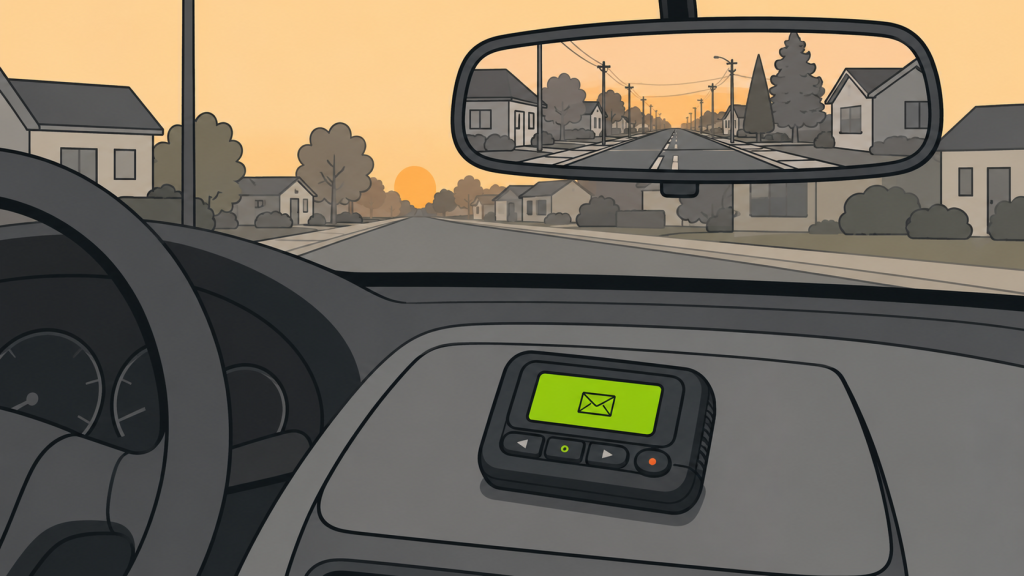
Answering a page takes fifteen seconds. Making the follow-up call can quietly turn your commute into paid time.
TL;DR: A companion DOL opinion letter addresses a field service engineer’s pre-shift routine: receiving pages, calling clients to schedule appointments, and driving to the first job site. WHD concluded that receiving pages isn’t compensable, but calling clients and coordinating other engineers is, and once that work happens immediately before or during the drive, the drive itself becomes compensable too.
📄 Check out the opinion letter (FLSA2026-10)
A Different Workforce, the Same Underlying Question
Yesterday’s post about FLSA2026-9, addressed office staff splitting their workday between home and office. This companion letter, issued the same day, asks a related question: what happens when an employee’s pre-shift routine, not a voluntary schedule change, blurs the line between commuting and working? Both letters are federal FLSA guidance only, not a substitute for checking how court have ruled on these issues (and state wage and hour law).
A Morning Routine Built Around Pages and Phone Calls
The opinion involved a field service engineer who installs and services MRI systems at hospitals and imaging centers, with no fixed office. He drives an employer-provided vehicle between home and each day’s first appointment. Between 7:00 and 8:00 each morning, he receives service requests by pager, then calls clients, and sometimes other engineers, to schedule the day’s stops, sometimes at home, sometimes en route.
Receiving Pages and Making Calls Get Different Answers
WHD split its analysis. Receiving a page isn’t compensable, since it’s incidental to using an employer-provided vehicle for commuting under the Employee Commuting Flexibility Act, a 1996 amendment to the Portal-to-Portal Act. However, calling clients and coordinating other engineers is compensable, since it’s integral to the job rather than a byproduct of the commute.
The Drive Itself Can Flip From Unpaid to Paid
This letter makes clear that part of the drive, not just the calls, can become compensable once real work starts, at home or mid-route. That’s a bigger exposure than most employers assume, since the portion of a commute following the first work call can carry the same wage obligation as the calls themselves.
Before assuming a field or dispatch workforce’s drive time is safely unpaid, map out what employees are actually doing between the first page and the first mile of driving.
Receiving an Assignment and Working the Assignment Are Different Things
For any workforce dispatched by page, text, or app, the acknowledgment isn’t the risk. The risk starts once an employee calls a client, reroutes a schedule, or coordinates coverage before the shift begins. Audit the dispatch process for that line, not just whether a notification went out.
A Short Phone Call Can Convert a Long Drive Into Paid Time
This letter makes clear the drive, not just the calls, can become compensable once real work happens immediately beforehand or during it. That’s a bigger exposure than most employers assume, since a lengthy commute can carry the same wage obligation as the brief calls that triggered it.
Not Every State Follows the Portal Act’s Commute Exemption
The federal ordinary-commute rule rests on decades of case law separate from the Portal-to-Portal Act itself, but a handful of states never adopted that framework for their own wage and hour law. A multistate employer relying on this letter’s federal analysis for dispatch workers in certain state that haven’t adopted the Portal-to-Portal Act needs a separate state-law check first.
A Written Time-Tracking Agreement Beats Guessing at Home-Work Minutes
WHD pointed employers to the regulation letting employer and employee agree in writing on a reasonable estimate of hard-to-measure at-home work time. That agreement beats reconstructing minutes after a DOL audit or a plaintiff’s lawyer starts asking questions.
Two letters, one day, the same lesson twice over: the DOL will hand you a genuinely useful “not compensable” answer, but only for as long as the employee, not the dispatch system, is actually running the clock.