Search
 The Employer Handbook Blog
FMLA Travel Time and Snow Days: What the DOL Just Clarified


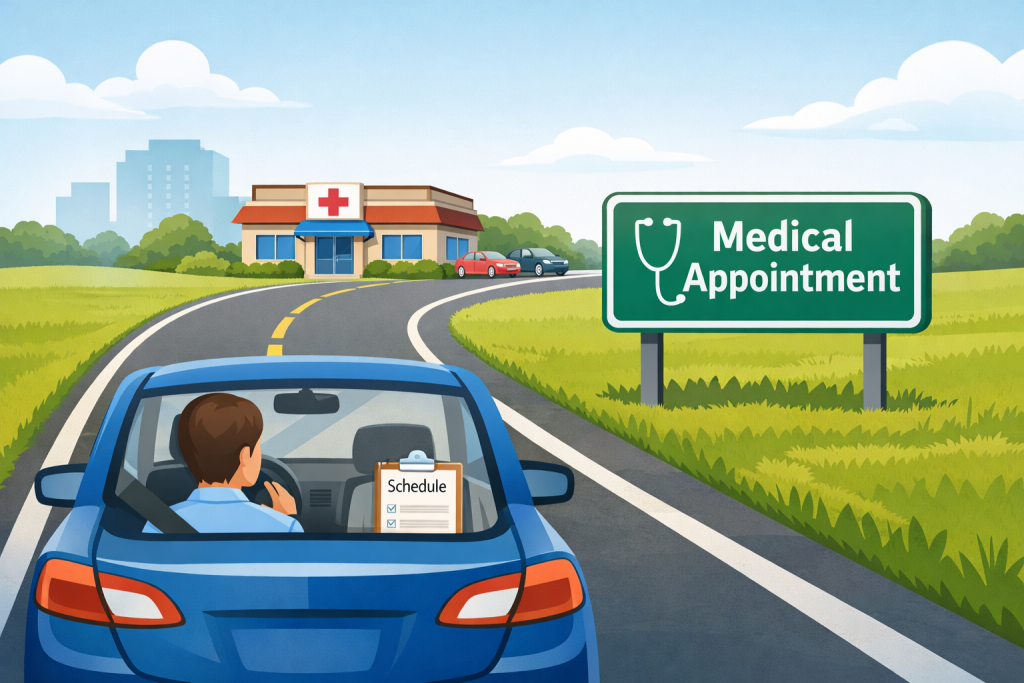
Two different HR questions triggered two formal FMLA opinion letters this week – and both answers will feel uncomfortably familiar to the employers they affect.
On January 5, 2026, the U.S. Department of Labor’s Wage and Hour Division issued six new opinion letters in total, addressing a mix of FMLA and FLSA issues. One addresses a routine leave-administration issue faced by virtually all employers; the other zeroes in on a recurring leave-accounting problem unique to school employers. This post covers the two FMLA letters and kicks off a three-part series unpacking what employers should take from the full batch. Neither answer here is surprising. Both are easy to get wrong.
TL;DR: Employees can use FMLA leave for travel time to medical appointments, even if the certification is silent on travel. And partial‑week school closures do not magically increase or decrease FMLA entitlements.
📄 Read the opinion letters via the Department of Labor press release
FMLA Covers the Appointment – and the Drive There
This letter answers a question employers keep asking: if an employee has approved intermittent FMLA leave for medical appointments, does the Act also protect travel time to and from those appointments?
Yes. It does.
The Wage and Hour Division explained that FMLA leave is not limited to the minutes an employee spends in an exam room. When an employee needs treatment for a serious health condition, obtaining that treatment necessarily includes getting to and from the health care provider. As a result, employees may use FMLA leave for the appointment itself and for reasonable travel time connected to that appointment.
WHD also addressed a common administrative sticking point: medical certifications often confirm the need for periodic appointments but say nothing about travel. According to the letter, that omission does not make the certification incomplete or insufficient. Employers may not deny or limit FMLA leave simply because the health care provider did not estimate commute time.
At the same time, the letter draws clear operational boundaries. FMLA leave for travel time must be tied to the medical visit. It does not cover unrelated errands, extended detours, or additional time that is not reasonably connected to obtaining care. In short, travel counts – but only travel that actually serves the medical purpose.
When Schools Close Mid‑Week, FMLA Math Doesn’t Budge
The second letter tackles a deceptively common problem for school employers: how to calculate FMLA leave when a school closes for less than a full workweek due to weather or other disruptions.
WHD grounded its analysis in a basic principle – FMLA leave is measured in workweeks, and employees may not be charged for leave they did not actually take. From there, the outcome turns on how the employee is using FMLA leave.
If an employee is approved for intermittent or reduced‑schedule FMLA leave, only the time the employee would otherwise have been required to work counts against the entitlement. When the school closes for a day or two and the employee is not expected to report to work, those closure days do not reduce available FMLA leave.
By contrast, when an employee is on FMLA leave for the entire workweek, the full week counts as FMLA leave even if the school closes mid‑week. In that scenario, the closure does not pause the leave, credit time back, or change the weekly calculation.
The letter also makes clear what does not matter: whether the closure was planned or unplanned, whether the school later schedules make‑up days, or why the closure occurred. None of those variables affect how much FMLA leave is used. What matters is the structure of the approved leave and whether the employee was scheduled to work.
What Employers Should Take From This
- FMLA leave can include reasonable travel time to medical appointments.
- Medical certifications do not need to micromanage commute estimates.
- Partial‑week closures do not expand or shrink FMLA entitlements.
- For intermittent or reduced‑schedule leave, charge only the time the employee would have worked and actually missed – and nothing more.
Bottom Line
FMLA problems usually come from trying to simplify the math. These letters reinforce that the statute already did the math for you – and it expects employers to follow it exactly.