Search
 The Employer Handbook Blog
Delay It, You May Pay For It: Four Religious Accommodation Lessons for Employers


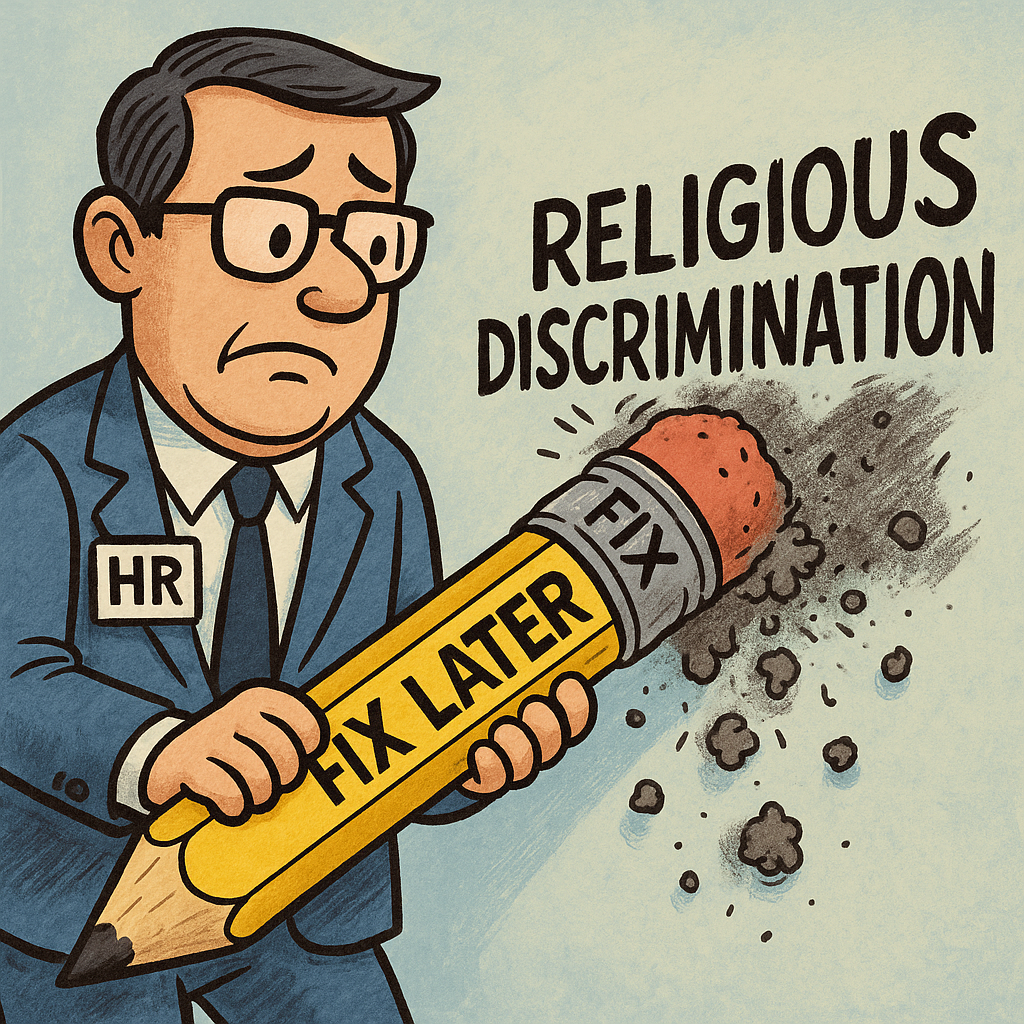
An employee asked for a religious exemption, was denied, suspended, and then reinstated once litigation began. The Fifth Circuit’s majority brushed the case aside on a technicality. But a dissenting judge warned that when it comes to religious accommodations, delay can itself be discrimination.
TL;DR: An employee sought a religious exemption from a flu-shot mandate. The request was denied, the employee was suspended, and only after filing suit was an exemption granted, allowing a return to work with a masking requirement. The Fifth Circuit affirmed dismissal of the Title VII claim, but only because the appeal was inadequately briefed. In dissent, Judge Engelhardt stressed that even short-lived denials are actionable under Title VII: “religious discrimination is religious discrimination, even if it stops.”
Suspension first, accommodation later
The employee, a veteran of more than twenty years, had routinely received the flu vaccine. In 2022, however, a religious exemption was requested. HR denied the request because the employee did not explain how beliefs had changed from prior years. That denial led to unpaid leave as a prelude to termination.
The day before the suspension began, a lawsuit was filed. Two days after the suspension took effect, the employer reversed course, granted an exemption, and required masking during flu season. The employee remains on the job.
Four lessons for employers from the dissent
Judge Engelhardt’s dissent read less like abstract legal theory and more like a warning label for employers handling religious accommodation requests. Here are the four takeaways:
1. Do not impose “religious tests.”
Because the employee had received flu shots in the past, HR demanded an explanation for why her beliefs had changed. Engelhardt said that went too far. In his words: “The hospital reasoned that because [the employee] received the vaccine in the past, there was no good reason she could refuse to receive it again. Unless, of course, she explained her religious beliefs to the employer’s satisfaction. That is itself religious discrimination.” Title VII protects sincerely held beliefs even when they evolve. Requiring employees to justify why or how their faith has developed risks crossing the line into unlawful inquiry.
2. Even short suspensions matter.
The employee was suspended without pay for four days and faced the threat of termination. Engelhardt emphasized that this was not trivial. His point was blunt: “Discrimination is discrimination, regardless of duration.” For employers, that means even a temporary suspension or delay in granting an accommodation can expose you to liability.
3. The bar for harm is low.
Engelhardt tied his analysis to the Supreme Court’s decision in Muldrow v. City of St. Louis, Missouri (2024), which confirmed that Title VII does not require proof of significant or lasting harm. Being treated worse because of religion, however briefly, is enough. Employers should not assume that short-lived adverse actions will escape scrutiny.
4. A late fix is not a cure.
Engelhardt rejected the idea that granting an accommodation after litigation began erased the problem. No one would excuse temporary race or sex discrimination just because it ended quickly, he reasoned. Religion, he argued, deserves the same treatment. Fixing it later may reduce the damages owed, but it does not eliminate liability.
His bottom line was clear: “religious discrimination is religious discrimination, even if it stops.”
One last thing
The majority avoided the hard questions by leaning on briefing forfeiture. The dissent tackled the substance. Employers should take note: when it comes to religious accommodations, delay itself can be discrimination — and “fixing it later” is not a defense you can rely on.